Asia’s Security Order at a Crossroads
The 23rd Shangri-La Dialogue opened against a backdrop of Middle East tensions, an absent Chinese defense minister, and an America still trying to hold the Indo-Pacific together.

The 23rd Shangri-La Dialogue opened against a backdrop of Middle East tensions, an absent Chinese defense minister, and an America still trying to hold the Indo-Pacific together.

Pakistan demonstrated not only military capability but also diplomatic maturity, political coherence in the battle against India.

The ceasefire is on massive life support as Iran sent its counteroffer; Trump called it totally unacceptable.

President Xi arrives in Pyongyang one day after North Korea unveiled a new nuclear plant, the timing is deliberate as Beijing is reasserting its Korean card.

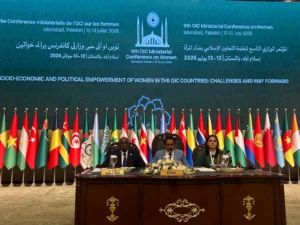
A joint communique co-signed by the EU mentioned Kashmir alongside Palestine, India called it unwarranted.

Ninety-five days into the Iran war, a tentative agreement sits unsigned on both sides. The guns are still firing. The strait is still closed.

Transnational digital networks have quietly replaced physical trade routes as the primary levers of global power.

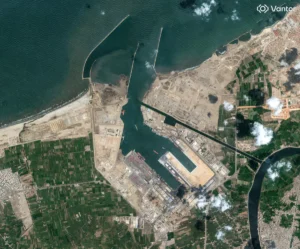
In just 24 days, Karachi processed more containers than it did in all of 2025; two months later, Gwadar broke that record too.

Military success means nothing if Pakistan cannot convert its new strategic relevance into real economic outcomes.

Modern conflict is turning territories into apocalyptic wastelands by dismantling the systems that sustain human life.

As global demand outpaced supply, water bankruptcy threatens food security, social stability, and the very survival of humanity.

India has killed activists abroad, crushed dissent at home, and denied self-determination to three nations, but the world looks away.

Bengal is burning, the Dravidian duopoly is dead, and Kerala’s communists are gone; India’s 2026 results rewrote the democratic map.

Marka-e-Haq teaches us that today’s battles aren’t fought just with weapons but won through truth and a strong narrative.

Twenty-eight years after Chagai, Pakistan’s nuclear deterrent has been tested in live conflict, restructured, and is being rebuilt stronger.

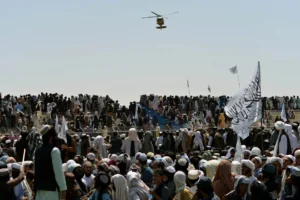
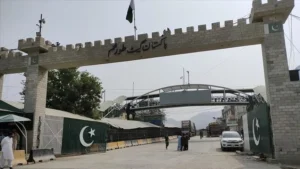
Five years in, the Taliban still govern like a resistance movement; Pakistan is paying the price with closed borders and open terrorism.

The conflict fundamentally changed how Pakistan is viewed internationally, turning it into a strategically capable actor.

Afghanistan’s Decree No. 18 says a girl’s silence at puberty can be interpreted as consent to marriage.

The violent manifestation of a steady rise in anti-Muslim sentiment is normalized by toxic political discourse and amplified across digital platforms.

Whatever harms online is directly transferred to the physical world of a person, their relationships, and career.

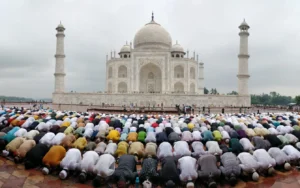
As Muslims around the world prepare for Eid ul Adha, India’s 200 million Muslims face a reality that turns a sacred obligation into a legal and physical risk.

Pakistan is one of the most hospitable places on earth, where travellers find safety and a uniquely open culture.

Afghanistan is not just restricting women; it is systematically removing the professionals its own health and education systems cannot survive without.

President Xi arrives in Pyongyang one day after North Korea unveiled a new nuclear plant, the timing is deliberate as Beijing is reasserting its Korean card.

A joint communique co-signed by the EU mentioned Kashmir alongside Palestine, India called it unwarranted.

Ninety-five days into the Iran war, a tentative agreement sits unsigned on both sides. The guns are still firing. The strait is still closed.