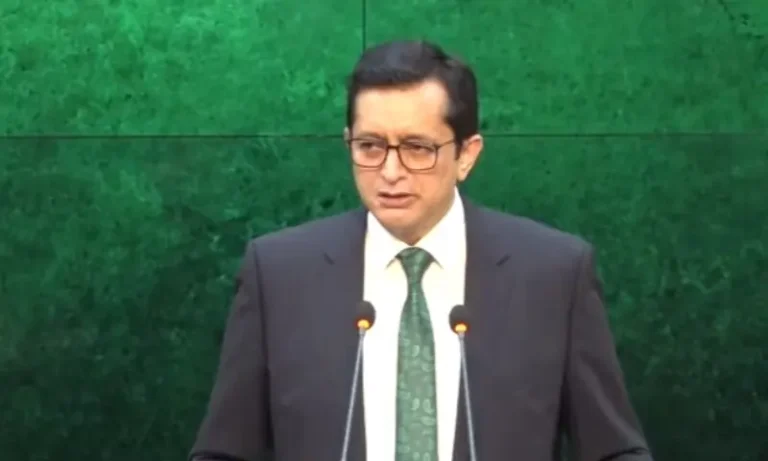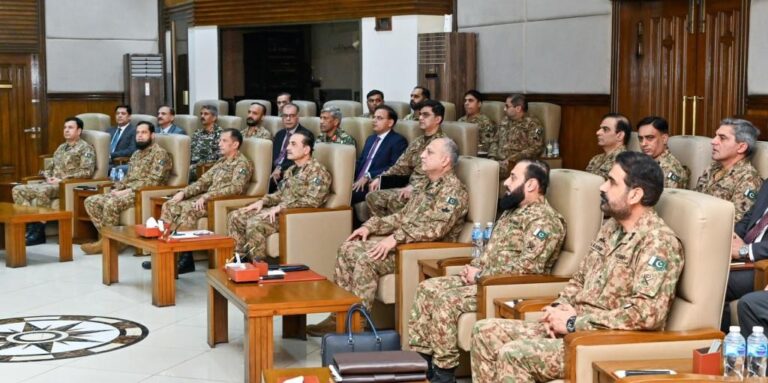
Islamabad spent the past two days playing host to the Muslim world’s conversation on women’s empowerment. The 9th OIC Ministerial Conference on Women began on 12th July with technical sessions, attracting about 190 delegates from 57 member states, and the conference will come to an end with the Prime Minister Shehbaz Sharif launching the ministerial segment, spearheaded by Law Minister Azam Nazeer Tarar. Pakistan formally accepts the OIC chairmanship from Egypt and will present the “Islamabad Declaration” as its capstone document. On paper, this looks like diplomatic momentum. In practice, it lands awkwardly beside a number that Pakistan cannot talk its way around: 148th out of 148.
That is where Pakistan sits in the World Economic Forum’s Global Gender Gap Report 2025, dead last globally, with overall gender parity slipping to 56.7 percent. It is the second consecutive annual decline, following a peak of 57.7 percent in 2023. It is ironic that the nation that is leading a multi-lateral discussion on women’s socio-economic and political empowerment is also ranked last on the parameters of equality it is supposed to be discussing.
The selected theme, “Socio-Economic and Political Empowerment of Women in the OIC Countries,” could be a diagnostic checklist for the shortcomings in Pakistan. The WEF data shows exactly where the gaps sit. The percentages of women in the federal cabinet were reduced to zero in 2025, down from 5.9 percent in 2024, and that of political empowerment decreased to 11 percent in 2025 from 12.2 percent in 2024, which put Pakistan in the company of Saudi Arabia and Hungary, having all-male federal cabinets. Economic participation and opportunity are abysmal at 34.7 percent. The only positive figure is education, with a slight improvement to 85.1 per cent, but much of that is due to a drop in male enrollments.
All this is no secret to the officials who are planning the summit. The Ministry of Human Rights used the opportunity to discuss the theme of increasing women’s access to education, healthcare, jobs, entrepreneurship, and online opportunities, all categories where Pakistan’s scorecard is not looking good. Hosting the conversation is not the same as winning it.
Declarations Are Cheap, Delivery Is Not
There is genuine value in Pakistan taking the OIC chair for the next two years. It puts the country at the centre of a policy dialogue covering 57 countries and provides it with a forum for influencing a regional agenda on women’s rights. But an “Islamabad Declaration” that emerged at the end of a two-day conference will prove to be hollow if it isn’t accompanied by concrete political reforms, such as a law to protect women’s labour, specific measures to increase female labour force participation and a cabinet representative of the parity it preaches abroad.
The Pakistani experts themselves have emphasised this. After the WEF report, comments following emphasized that gender inequality is not an isolated problem but a national emergency with tangible economic consequences, with women representing a small proportion of the workforce and not being well represented in senior management in various industries.
It is very easy to host a conference. It is simply a matter of logistics to convene the ministers, draft a declaration, and issue statements of steadfast commitment. What Pakistan cannot outsource to a communique is the harder work of closing a gap that has now widened for two straight years, under its own watch, on its own soil. The Islamabad Declaration will be evaluated not based on its content but on whether or not the state that drafted it can live up to the standards set out in its content.

Our Editorial Desk is the intellectual engine of Digital Debate, responsible for the rigorous research that anchors every conversation. Our team deep-dives into data, checks every source, and consults academic literature to move beyond headlines and identify the questions behind the questions.