On July 23, Delhi Police announced it had identified and blocked around 480 social media handles allegedly originating from Pakistan for spreading fake and misleading content related to the ongoing NEET-UG paper leak protests. The same groups were behind Operation Sindoor in May 2025, the police said. The notification came on Day 34 of the protest at Jantar Mantar by thousands of students demanding the resignation of Education Minister Dharmendra Pradhan. The framing was familiar. When India faces a domestic crisis it cannot explain, the explanation arrives from outside.
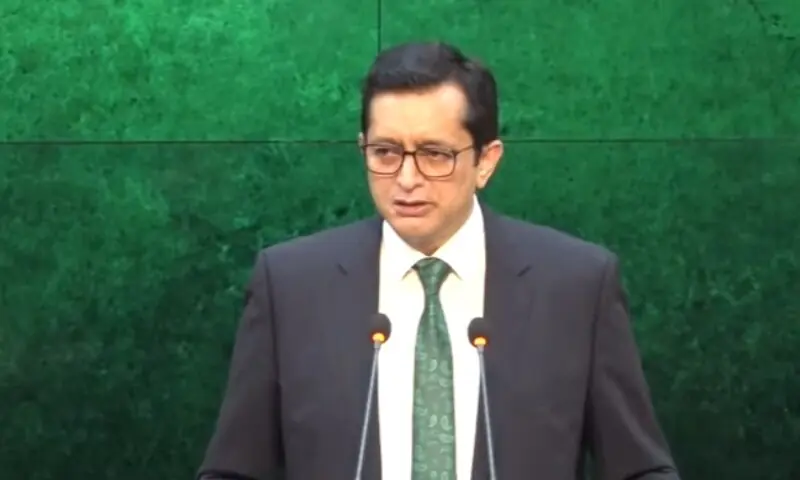
Pakistan’s Foreign Office spokesperson Tahir Andrabi responded the same day. “This is an internal matter of India. We do not offer comments on such matters.” That restraint was the appropriate response. What Delhi Police presented as a foreign interference operation is, on examination, a deflection from a domestic institutional failure of considerable scale.
What Actually Happened to India’s Students
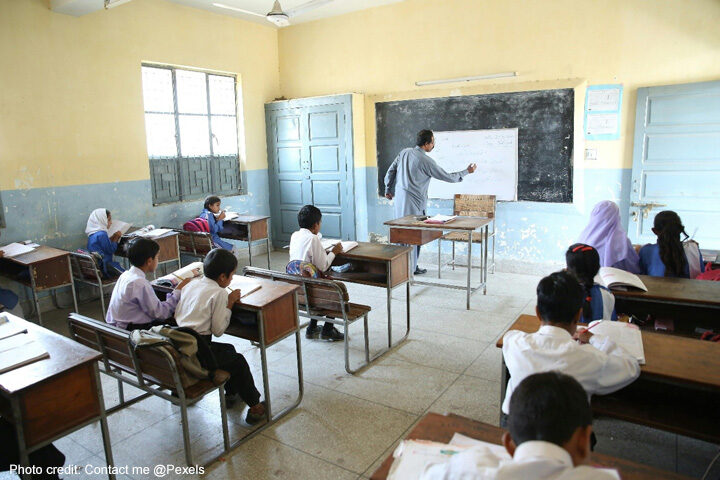
More than 2.27 lakh students appeared in the National Eligibility cum Entrance Test (NEET), a common exam for admission to both medical and dental colleges across India, on May 3, 2026. The exam was cancelled nine days later after investigations revealed overlaps between a pre-circulated guess paper and the actual question paper. Over a dozen students were reported dead by suicide after the cancellation. Millions who had spent years preparing, some attending coaching institutes at a cost of several lakh rupees, were told to start again.
This was not an isolated failure. India has recorded 148 paper leak cases in eleven years, with only one conviction. The NEET 2026 leak comes in the wake of the cancellation of the UGC-NET exam in 2024, the 2025 exam irregularities linked to BPSC and UPSC, and the CBSE’s internal dry run of its computer-based evaluation, which was conducted in January 2026 and had 36 major technical and oversight issues that were highlighted. Teachers had warned the system needed at least one to two more years of preparation. It was rolled out anyway.
Congress spokesman Priyank Kharge has publicly said that more than 2.2 million students are being cheated, and the pattern can be attributed to “the nexus between the RSS and BJP. Opposition leader Rahul Gandhi has repeatedly brought the issue up in parliament, and the Congress party officially accused the BJP of running a paper leak network. In a detailed statement, the Congress party’s media wing pointed out that the failure of the NEET 2026 is part of a larger picture of institutional failure in NEET, UGC NET, CUET and CBSE under BJP rule.
Delhi Police Commissioner was granted National Security Act detention powers while denying any link to the CJP protests. A petition was filed in the Delhi High Court seeking an NIA probe into alleged foreign funding of the CJP. BJP ministers termed the student protesters “deep state agents,” “Pakistanis,” and those who were “working for Soros”. Dharmendra Pradhan, the education minister whose resignation is the demand, led the student protest against a paper leak in 1997, a fact that surfaced and went viral online.
The Pakistan Playbook and Its Limits
Delhi Police identified 480 Pakistan-linked accounts spreading misinformation. It did not identify who leaked the NEET paper. It did not arrest the NTA officials who oversaw a failed examination for 2.27 million students. It did not come up with one measure of accountability for the institutional chain that caused the leak.
The protest is now in its 35th day. Thousands remain at Jantar Mantar. Police used tear gas and baton charges on the July 20 Sansad Chalo march. Sonam Wangchuk was forcibly hospitalized after 20 days of hunger strike. The movement’s 22.5 million social media followers did not come from Pakistan. They came from Indian students, Indian parents, and Indian professionals who watched a generation of medical aspirants lose years of preparation to a system that protected its own.
The Pakistan attribution is not a new tool in India’s political toolkit. It came into existence following the anti-CAA protests in 2019. It appeared during the farmers’ protest of 2020 and 2021. It emerged in the Kashmir solidarity movement. Each time, the structure is identical: a mass domestic grievance surfaces, state institutions cannot credibly address its legitimacy, and a foreign hand is identified and amplified. The foreign hand does not explain the grievance. It is designed to bring discredit to those who wear it.
The RSS-BJP-paper leak nexus is on the parliamentary record now due to the opposition from within India. India’s own students are on their 35th day of protest. The numbers indicate that there were 148 paper leak incidents and one conviction in India, over a span of 11 years. None of that originated in Islamabad.
Delhi Police blocked 480 handles. It did not fix the examination system that failed 2.27 million students, produced over a dozen suicides, and is now in its second month of street protest. It’s the responsibility that Indian students are demanding. The answer they are receiving is Pakistan’s social media accounts. The question answers itself.

Our Editorial Desk is the intellectual engine of Digital Debate, responsible for the rigorous research that anchors every conversation. Our team deep-dives into data, checks every source, and consults academic literature to move beyond headlines and identify the questions behind the questions.