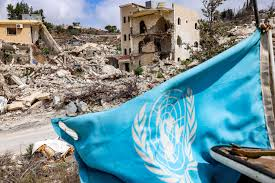
The credibility of the United Nations depends not only on the principles it defends, but on whether those principles can be applied when powerful states find them inconvenient.
Every 24 October, the world marks the founding of the United Nations, an institution created from the ruins of the Second World War with the ambition of preventing another global catastrophe through collective security, international law and cooperation among sovereign states, yet the most important question facing the organisation today is not whether the world still needs the United Nations, but whether the institution established in 1945 can adequately serve a world whose political, economic and strategic realities have changed dramatically since its creation.
The UN Charter entered into force on 24 October 1945, establishing a framework intended to make peace a shared international responsibility rather than a temporary arrangement dependent entirely on the calculations of individual powers, but eight decades later, the distance between this promise and the realities of international politics has become increasingly difficult to ignore.
A Universal Institution with an Unequal Power Structure
The central contradiction within the United Nations lies in the difference between the principle of sovereign equality and the distribution of authority within the Security Council, where five permanent members, China, France, Russia, the United Kingdom and the United States, retain the power to veto substantive decisions, regardless of how much support a proposed resolution receives from the remaining members.
This arrangement emerged from the political realities of 1945, when the architects of the post-war order understood that the participation of major powers was essential to the survival of any international security system, but a compromise designed to secure the cooperation of the strongest states has gradually become a source of frustration for countries that believe international rules should apply consistently, irrespective of the identity of the state involved.
The problem is not simply that the veto exists, since great-power cooperation remains necessary for managing nuclear risks, preventing wider wars and addressing international crises, but that the mechanism can leave the organisation struggling to respond when the interests of a permanent member, or those of its strategic partners, collide with demands for collective action.
Research published by Security Council Report in March 2026 examines how disagreements among permanent members have obstructed meaningful Security Council engagement on conflicts and crises including Syria, Myanmar, Sudan, Ukraine and the Middle East, illustrating how institutional paralysis can emerge precisely when international cooperation is most urgently required.
The result is a damaging perception that the effectiveness of international law may depend less on the seriousness of a violation than on the political relationships surrounding it, a perception that weakens confidence in multilateral institutions even among states that continue to regard them as indispensable.
The Cost of Selective Multilateralism
The consequences extend beyond diplomatic disagreements in New York, because when the international community appears unable to respond consistently to conflict, civilian suffering, displacement and violations of international law, the credibility lost is not confined to a single resolution or crisis but affects the willingness of states and societies to trust the wider international system.
Smaller and developing countries, which often lack the economic leverage or military capacity to protect their interests independently, have particularly strong reasons to support a rules-based international order, yet they also have legitimate grounds to question a system in which their formal equality as UN members does not translate into equivalent influence over decisions concerning international peace and security.
For countries such as Pakistan, this distinction matters because diplomacy, international law and multilateral engagement provide important avenues for advancing national interests, participating in regional security discussions and supporting peaceful settlements without relying exclusively on material power.
Pakistan’s long-standing engagement with the United Nations reflects the broader importance of multilateral institutions to states whose interests are closely connected to regional stability and the consistent application of international principles.
However, the value of such institutions ultimately depends on whether their rules command confidence across political divides, rather than being treated as binding principles in one dispute and optional considerations in another.
This does not mean that the United Nations has failed in every meaningful respect, nor that its achievements in humanitarian assistance, development, public health, peacekeeping and the creation of international legal standards should be dismissed because the Security Council faces political constraints.
The organisation provides a forum in which states can negotiate, coordinate responses to shared problems and establish standards that would be difficult to develop through isolated national action, while its humanitarian agencies continue to serve populations whose needs frequently exceed the political attention given to their crises.
The more precise criticism, therefore, is that the UN possesses considerable diplomatic and operational value but remains constrained by a decision-making structure that can prevent this capacity from being translated into effective collective action.
Reform Must Begin with Accountability
The way forward requires more than repeating calls for a stronger United Nations, particularly because comprehensive Security Council reform remains politically difficult and amendments to the Charter require ratification by the permanent members themselves.
Nevertheless, meaningful progress does not have to wait for a complete restructuring of the international system, since governments can strengthen transparency around vetoes, demand clearer explanations when permanent members block collective action, improve the participation of underrepresented regions in decision-making and make greater use of the General Assembly’s capacity to debate crises when the Security Council is unable to agree.
The General Assembly’s veto-accountability mechanism, adopted in 2022, already provides for a formal meeting following the exercise of a veto, creating an opportunity for wider membership to scrutinise decisions that might otherwise remain confined to the Council’s political calculations.
Reform should also address the representation of the contemporary world, particularly the longstanding demand for a greater voice for Africa, Asia-Pacific and Latin America, whose populations and political interests are not adequately reflected by a structure inherited from the immediate aftermath of a global war.
The objective should not be to replace one exclusive group with another, but to create a more representative institution while preserving the cooperation necessary to prevent disputes between major powers from escalating into wider conflict.
On United Nations Day, the international community should therefore move beyond the choice between defending the organisation unconditionally and dismissing it as ineffective, because both positions overlook the central issue: the world needs multilateral cooperation, but cooperation cannot remain credible if accountability is weakened by the unequal distribution of power.
The real test of the United Nations is not whether its members can agree on the importance of peace when their interests align, but whether they are prepared to uphold the principles of the Charter when doing so becomes politically costly. Until that question is confronted honestly, the promise of a world governed by shared rules will remain stronger in diplomatic declarations than in the lives of those who depend on those rules for protection.

Our Editorial Desk is the intellectual engine of Digital Debate, responsible for the rigorous research that anchors every conversation. Our team deep-dives into data, checks every source, and consults academic literature to move beyond headlines and identify the questions behind the questions.