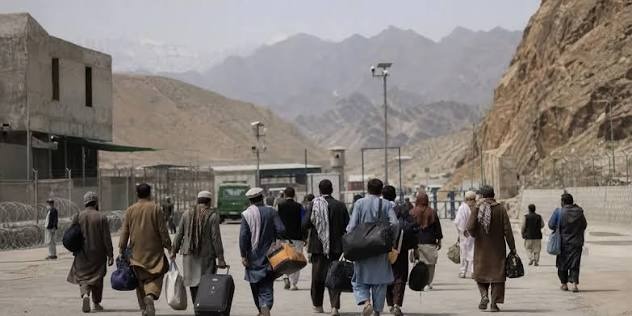

Undocumented Afghan nationals and Afghan Citizen Card holders continue to face arrest and detention in Pakistan, according to a joint flash update from the UN refugee agency UNHCR and the International Organization for Migration. The report recorded 517 arrests and detentions between October 11 and 17, 2026, across Balochistan, Sindh and Khyber Pakhtunkhwa. That is 47 percent fewer than the previous week.
Afghan Citizen Card (ACC) holders and undocumented Afghans accounted for 97 percent of the arrests and detentions in the period, with the cases concentrated in Chagai in Balochistan, Peshawar in Khyber Pakhtunkhwa and Karachi in Sindh. Proof of Registration (PoR) cardholders made up the remaining 3 percent. Between January 1 and October 17, the agencies recorded 86,644 arrests and detentions across Pakistan. The agencies note that arrest data should be considered underreported.
During the same week, an estimated 3,883 Afghans returned to Afghanistan through the Torkham, Chaman and Bahramcha crossings, including 499 who were deported. Compared with the previous week, returns fell by 10 percent and deportations by 48 percent.
Undocumented Afghans made up 83 percent of returnees, followed by ACC holders at 9 percent and PoR cardholders at 8 percent. Among those deported, 99 percent were undocumented, while PoR and ACC holders accounted for 1 percent each.
Fear of arrest was the main reason for returning among respondents, cited by 95 percent of undocumented Afghans and ACC holders and by 68 percent of PoR cardholders.
From September 15, 2023, to October 17, 2026, an estimated 2,744,068 Afghans have returned from Pakistan. Since April 1, 2025, 1,890,035 Afghans have returned, of whom 237,387, or 13 percent, were deported. The returns come as Pakistan continues to implement its repatriation policy for undocumented foreign nationals and ACC holders.

Our News Desk represents a rapidly expanding frontier in contemporary journalism, focusing on the intersection of technological advancement, geopolitical narratives, and the shifting dynamics of public information.