
The United Nations has just published its second Global Risk Report, and the headline finding is hard to ignore: for the first time, the people running governments, companies, and international institutions around the world believe large-scale war is not just possible, but close. In the 2024 edition of this survey, war barely registered as an urgent concern. Two years later, it has jumped sixteen places on the list of risks expected to happen soon, the single biggest jump in the entire study. More than a third of the 1,300 experts and officials surveyed think a large-scale war could break out within the next year. Three in four think it will happen within seven.
That alone should be enough to make anyone sit up. But the more troubling part of the report isn’t the war itself, it’s what’s supposed to stop it.
The survey asked the same experts how ready the world’s institutions are to deal with these threats. The answer, again and again, was: not very. Political risks like war and rising tensions between states are seen as more dangerous than ever, but the bodies meant to manage them, the UN system among them, are seen as weaker and slower than they were two years ago. This is the real story buried in the data: the gap between how serious a threat looks and how prepared anyone is to handle it.
The report traces a kind of chain reaction. Geopolitical tension is the strongest single link to large-scale war, stronger than any other connection the researchers found among the 28 risks they studied. And that tension, in turn, is being pushed higher by four things: shortages of natural resources, economic fragmentation, the spread of disinformation, and the slow decay of multilateral institutions. None of these are new problems. What’s new is how tightly they now feed into each other, and how little runway is left to intervene before they harden into conflict.
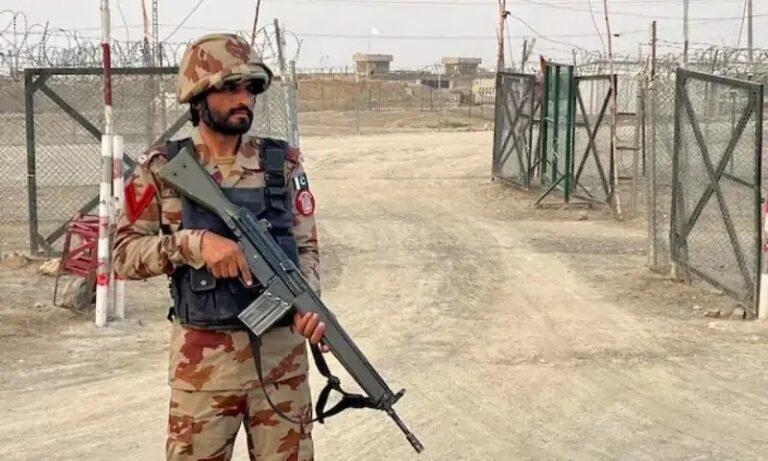
There’s a lesson here that should resonate strongly in this part of the world. South Asia knows, better than most regions, how quickly resource disputes, economic strain, and information warfare can escalate into military posturing. The report’s own “backcast” exercise, working backward from a hypothetical war in 2030, reads less like a distant warning and more like a description of dynamics already familiar in this neighbourhood: contested resources, fraying alliances, weak crisis-management channels, and public fed a steady diet of propaganda from all sides.
What makes this report worth taking seriously, rather than filing away as another glossy UN publication, is its honesty about its own limits. It admits that rankings of risk are perceptions, not certainties, a threat doesn’t vanish just because attention has drifted elsewhere, and a risk can rise to the top of everyone’s mind while the system remains just as unprepared as before. Funding for actually reducing risks, as opposed to just identifying them, is called “inadequate” by 86 percent of respondents. Identifying a fire is not the same as putting it out.
Yet amid all this pessimism, one finding stayed remarkably consistent from 2024 to 2026: nearly everyone surveyed still believes that countries acting together is the most effective way to prevent catastrophe. Not unilateral action, not private-sector fixes, joint, coordinated action between governments, ranked far above every other option.
That is perhaps the report’s most important message, buried under the more dramatic headlines about war. The tools for prevention are not a mystery. What’s missing is the political will to use them while there’s still time.
Read more:https://digdebate.com/pakistan-fo-rejects-india-jammu-kashmir-map-statement/

Our Editorial Desk is the intellectual engine of Digital Debate, responsible for the rigorous research that anchors every conversation. Our team deep-dives into data, checks every source, and consults academic literature to move beyond headlines and identify the questions behind the questions.