
When India took over the BRICS chair this year, the summit was billed as a coronation of sorts, a chance for New Delhi to stand at the center of a bloc it helped found in 2009, and to present itself as the natural voice of the Global South. BRICS was conceived as a counterweight to Western-dominated institutions, a grouping of rising economies that would eventually rewrite the rules of global finance and governance. Seventeen years later, with the bloc expanded well beyond its original five members, hosting its summit was supposed to be India’s moment to demonstrate it could convene, not just attend. Instead, the summit became a study in the gap between hosting a stage and controlling what happens on it.
Narendra Modi opened with an ambitious vision, of a reformed multilateral order, of developing nations finally claiming their due influence, of India as a bridge between the Global South and the major powers. It was a speech built for headlines. But the substance of the summit quickly slipped out of Indian hands.
Xi Jinping’s presence itself was notable, his first visit to India in seven years, and Beijing used the occasion not to defer to its host but to set the agenda. China arrived with concrete proposals: a BRICS digital ecosystem, an open-source AI cooperation framework. These weren’t ceremonial gestures. They were attempts to define what BRICS actually does next, on technology governance that will shape the bloc’s economic future. And that exposed India’s first real problem. Modi could set the stage, host the leaders, deliver the speeches, but Beijing had the capacity to define the outcomes. A summit meant to project Indian diplomatic stature ended up demonstrating whose institutional muscle is actually deeper.
Modi did register one significant intervention: a warning against the weaponisation of critical minerals. It was a pointed message, and not a subtle one, given that China controls the overwhelming share of global rare earth processing, the choke point behind everything from electric vehicles to defense manufacturing. It was arguably the most substantive strategic point India made all summit. But raising the alarm and controlling the leverage are different things, and everyone in the room knew which side of that equation Beijing sits on.
Then there was the optics problem money can’t buy its way out of. Modi hosted BRICS leaders for a gala dinner at Bharat Mandapam, the kind of set-piece meant to signal India’s arrival as a world capital. Putin attended. Xi did not. For a summit built around projecting India’s convening power, the empty seat at the head table was hard to ignore, and harder still to spin.
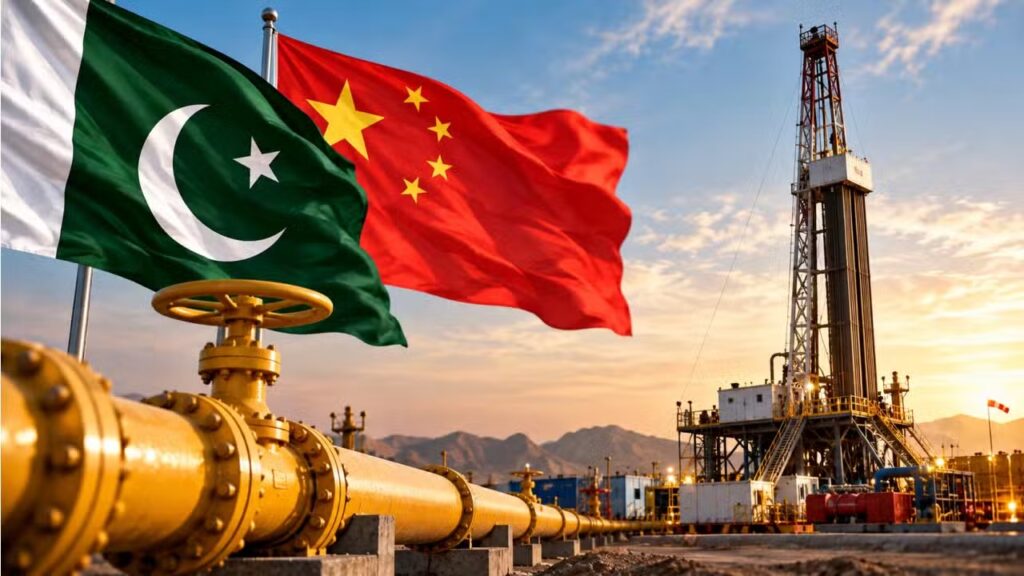
The summit also reopened a fault line New Delhi would rather not discuss: Palestine. Throughout the gathering, Modi argued that the international system gives developing countries too little say, a familiar and not unreasonable grievance. But the argument sits awkwardly next to India’s own record of selective solidarity, and it became harder to sustain when set against another uncomfortable fact: Pakistan has formally sought BRICS membership since 2023. A bloc India chairs, built partly on the premise of giving underrepresented nations more voice, now has to reckon with a membership question India has every incentive to avoid answering.
India didn’t fail because the summit collapsed, it didn’t. Communiqués were issued, photographs were taken, the chairmanship passes on schedule. India’s problem is more consequential than a bad news cycle: it hosted BRICS but could not resolve the contradictions sitting at the heart of its own leadership claim. It wants to lead the Global South, yet blocks Pakistan’s membership in the very bloc built on giving underrepresented nations a voice. It wants to counter Chinese dominance, yet remains economically dependent on China in the sectors, from rare earths to manufacturing inputs, that matter most. A country cannot convene the world’s rising powers while its own position remains this unresolved. That, more than any empty chair at a gala dinner, is the story of this summit.

Our Editorial Desk is the intellectual engine of Digital Debate, responsible for the rigorous research that anchors every conversation. Our team deep-dives into data, checks every source, and consults academic literature to move beyond headlines and identify the questions behind the questions.