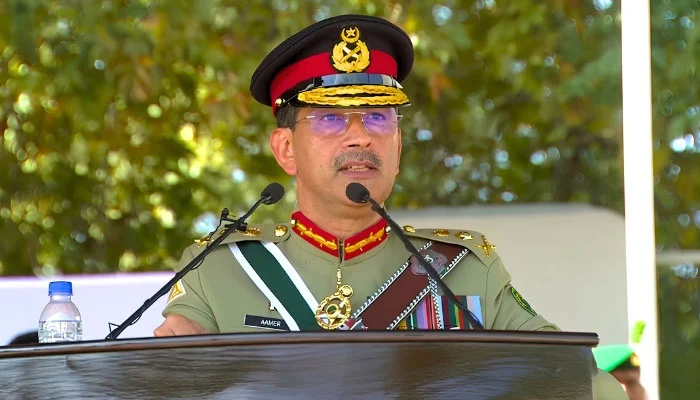
The Pakistan–China exercise “Karakoram 2026,” which opened at a training base in Korla in Xinjiang, is easy to file away as another entry in a long calendar of bilateral drills, yet its location, its terrain and its stated curriculum point to something more specific than the familiar language of “exchanging counter-terrorism experience.”
China’s defence ministry spokesman, Colonel Chen Xi, said the training would concentrate on “joint anti-terrorism clearance operations at high altitudes,” and Xinhua’s account added drone operation, on-the-move target search and firing, long-range sniping and joint command and live-force exercises to the list, which together describe not the urban cordon-and-search work associated with earlier Pakistan–China drills held in Khyber Pakhtunkhwa, but the thin-air, low-density, small-unit style of operation that suits the high country straddling the Karakoram Highway. The contrast with the Warrior series, which has been built around simulated counterterrorism scenarios at Pabbi, is instructive, because it suggests that the partnership’s training agenda is following the geography of Chinese interest, and that geography runs from Xinjiang through Khunjerab and Hunza down to the plains, a single corridor whose security cannot be divided neatly between two sovereign jurisdictions.
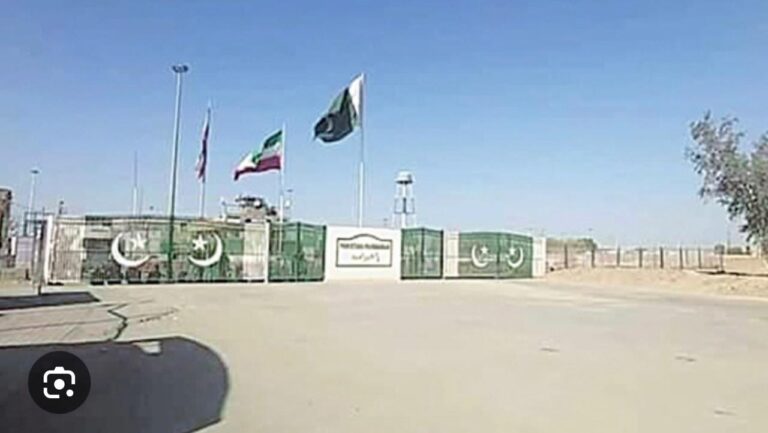
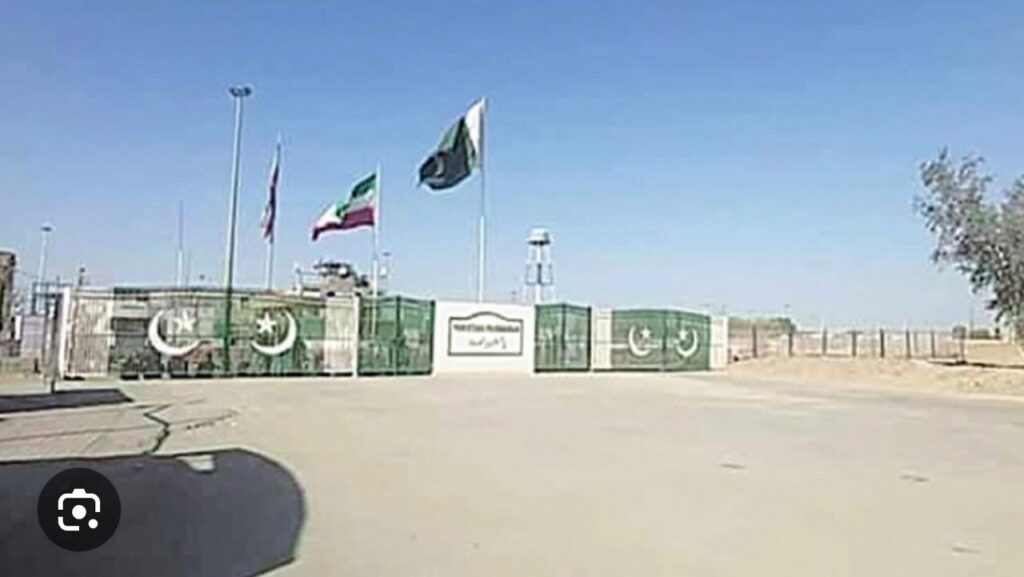
In September the two armies held a joint patrol at Mantika Pass, at roughly 4,700 metres near Khunjerab top in upper Hunza, and only weeks later Pakistani troops are training on Chinese soil in Korla, so that a border that was patrolled together in the field is now being rehearsed together in a classroom of live fire, which looks less like coincidence than like a deliberate progression from presence to practice. Pakistani soldiers have also been permitted to observe some Chinese weapons and equipment, a modest detail on its face, though in a relationship where hardware dependence is already deep it quietly extends familiarity from platforms to doctrine.
The distinctive argument, then, is that Karakoram 2026 is best understood not as a lesson in fighting terrorists but as an exercise in rehearsing the defence of a corridor, and that the counterterrorism label, which is politically comfortable for both capitals, also happens to describe skills that transfer readily to any contingency in extreme terrain. Drone-enabled surveillance, precision fire at long range and coordinated command across two armies are valuable against a militant cell hiding in a ravine, but they are equally valuable wherever mountain frontiers become contested, and a careful reader should resist the temptation to treat the stated purpose and the practical utility as the same thing, even while accepting that neither government has claimed anything beyond counterterrorism.
For Pakistan the benefits are real but unevenly distributed. Exposure to Chinese high-altitude doctrine and unmanned systems is a genuine professional gain for an army that already operates at some of the world’s most demanding elevations, and the symbolism of being trained on Chinese soil, rather than hosting visitors, signals a partnership of peers rather than patron and client. At the same time, Islamabad’s central security challenge in the coming years will remain the militancy that emerges from its own western districts and from the Afghan border, a problem of intelligence, governance and local legitimacy that no Xinjiang drill can address, and a policy that invests heavily in corridor-centred cooperation while neglecting those harder foundations would be mistaking the protection of a route for the stability of a state.
What Karakoram 2026 ultimately tests is not the marksmanship of the soldiers on the range at Korla but the clarity of the strategy that sends them there, because a partnership as deep as this one can deliver lasting security only if each drill is tied to a purpose that Pakistan has defined for itself rather than inherited from the priorities of its partner, and the sound course for Islamabad is therefore to treat every such exercise as a means of building its own mountain-warfare and surveillance capacity while insisting that the same energy be spent on the unglamorous work of governing its western districts, policing its cities and winning the trust of the communities in which militancy takes root. A corridor can be protected by drones and snipers for a season, but it can be made safe only by a state whose writ is accepted on both sides of the road, and if the high-altitude rehearsals of October are matched by that kind of patient domestic investment, they will be remembered as a useful chapter in a mature partnership, whereas if they are left to stand alone they will be remembered as an impressive performance that the real threat simply walked around.

Our Editorial Desk is the intellectual engine of Digital Debate, responsible for the rigorous research that anchors every conversation. Our team deep-dives into data, checks every source, and consults academic literature to move beyond headlines and identify the questions behind the questions.