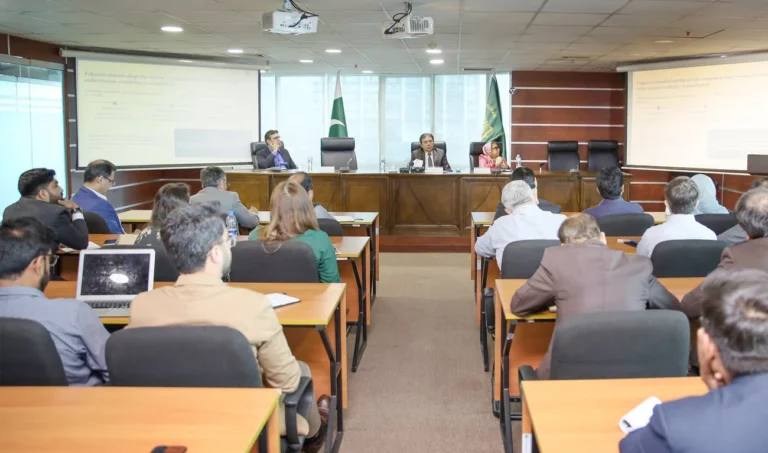
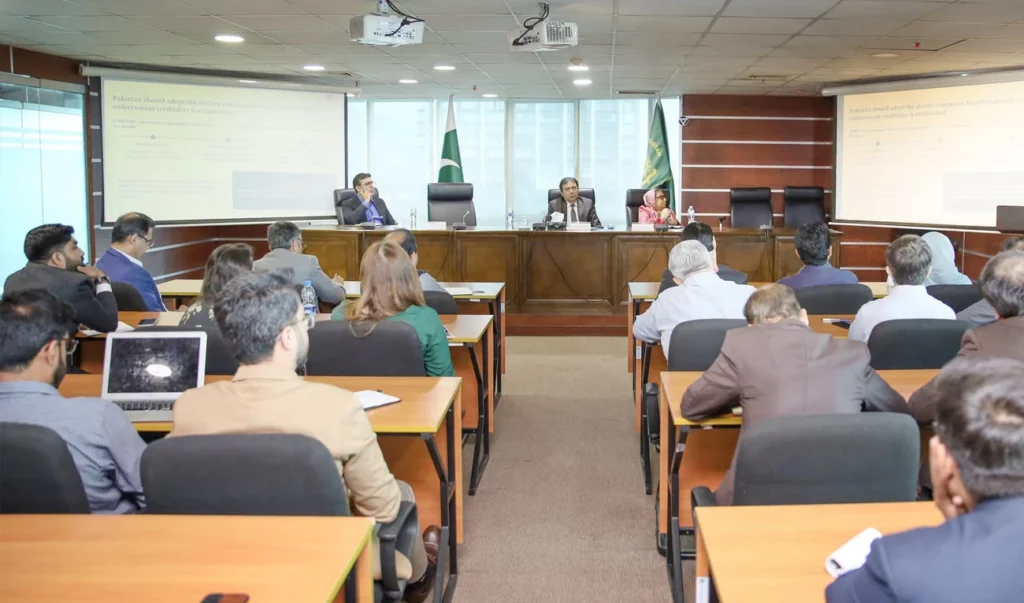
Bid rigging in Pakistan may soon face a new check. The Competition Commission of Pakistan (CCP) has built an AI tool to spot rigged bids on government contracts. Public procurement is estimated at 15 to 20 percent of GDP, about $60 billion a year. If the tool cuts even a small share of cheating, the government could save a large amount of money.
The tool is called the Bid Rigging Detection System, or BRDS. Today, the CCP mostly acts after someone files a complaint, and staff review documents by hand. BRDS would let the commission scan tenders on its own and look for warning signs in the data.
Bid rigging happens when companies secretly work together instead of competing for a government contract. They may agree on prices or decide in advance who will win. They may take turns winning. Some submit deliberately high “cover bids” so the favoured company looks like the best choice. Others use related companies to fake competition. The government pays more, taxpayers get less, and honest businesses lose contracts they should have won.
Scale makes the problem serious. In a market this big, even a small amount of collusion costs a lot. It also teaches firms the wrong lesson. Companies that play fair lose, while those that coordinate win.
BRDS scans large amounts of tender and company data. The CCP says it will flag risky tenders and give investigators leads. It looks for signs such as bid rotation, cover bidding, unusually similar prices, the same group of firms bidding together again and again, and related companies appearing across many tenders. It also links tender records with company ownership data. That can reveal ties between bidders that a manual review would likely miss.
The project has drawn international attention. Stanford University’s Computational Antitrust project featured BRDS in its Computational Antitrust Worldwide: Fifth Cross-Agency Report. The report collected accounts from 30 competition authorities on how computer tools can help enforcement. Pakistan’s inclusion gives other developing countries a chance to learn from its approach.
What the Test Results Show
The numbers look good, but read them carefully. Stanford’s report says BRDS was tested on a mock dataset of 4,000 procurement records from major sectors. It reached 92 percent overall accuracy, with precision of 0.91 and recall of 0.93. In plain terms, precision means that about 91 of every 100 tenders the system flagged were truly suspicious. Recall means it caught about 93 of every 100 suspicious tenders in the data.
A test with mock data is easier than real life. Real procurement records are often incomplete, outdated, or entered in different formats by different offices. BRDS will only work as well as the data it receives.
BRDS is also not running yet. The CCP says it is in the pre-deployment phase, meaning the design and testing are done. The next step is connecting it to federal and provincial procurement authorities and to the corporate registry of the Securities and Exchange Commission of Pakistan (SECP). The CCP has reached understandings with the Public Procurement Regulatory Authority, provincial procurement authorities, and SECP. This stage matters most. Without fast access to reliable tender and ownership records, the system cannot do its job.
Safeguards the System Needs
CCP Chairman Farid Ahmad Tarar says the goal is to promote competition, transparency, and good value for public money. He also set a clear limit. BRDS will screen data and produce leads, and the CCP will check every alert independently under the Competition Act, 2010.
That limit is necessary. AI can spot odd patterns, but it cannot prove a cartel exists or that a company broke the law. An alert should start an investigation. It should never replace evidence, legal review, or a fair hearing.
The project also shows what Pakistan needs next:
- Better digital record keeping across government offices.
- One standard format for procurement data.
- Secure rules for sharing data between agencies.
- Clear audit trails that show who accessed and changed records.
- A skilled CCP team that includes data scientists, forensic analysts, and lawyers who can turn alerts into solid cases.
Public trust matters too. Businesses need to know that alerts rest on verifiable data and that they can respond before any penalty. The CCP needs clear rules on data protection, error correction, and review of the system’s results by trained staff. If these rules are weak, honest bidders may worry about being wrongly flagged. If they are strong, BRDS could discourage collusion.
So the right view is cautious optimism. BRDS is not a working enforcement tool yet, but it is a serious and internationally recognised effort to modernise competition oversight. With good data, strong cooperation between agencies, and fair process, it could help public contracts go to the best bidder and give taxpayers real value for their money

Our News Desk represents a rapidly expanding frontier in contemporary journalism, focusing on the intersection of technological advancement, geopolitical narratives, and the shifting dynamics of public information.