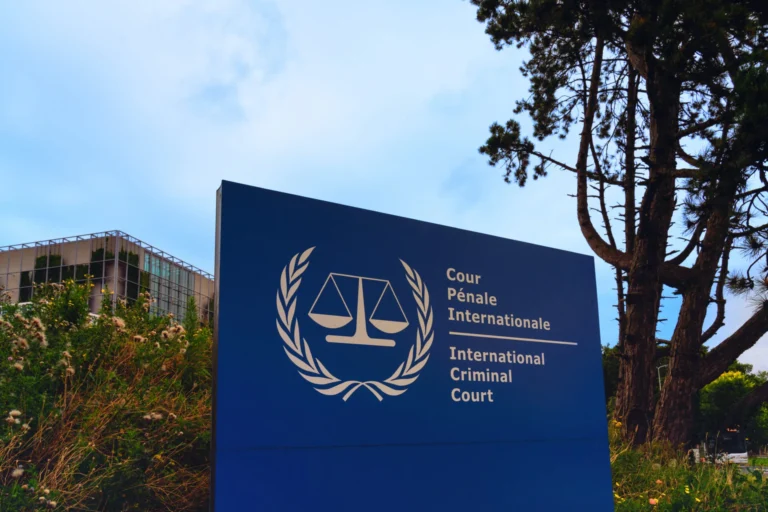
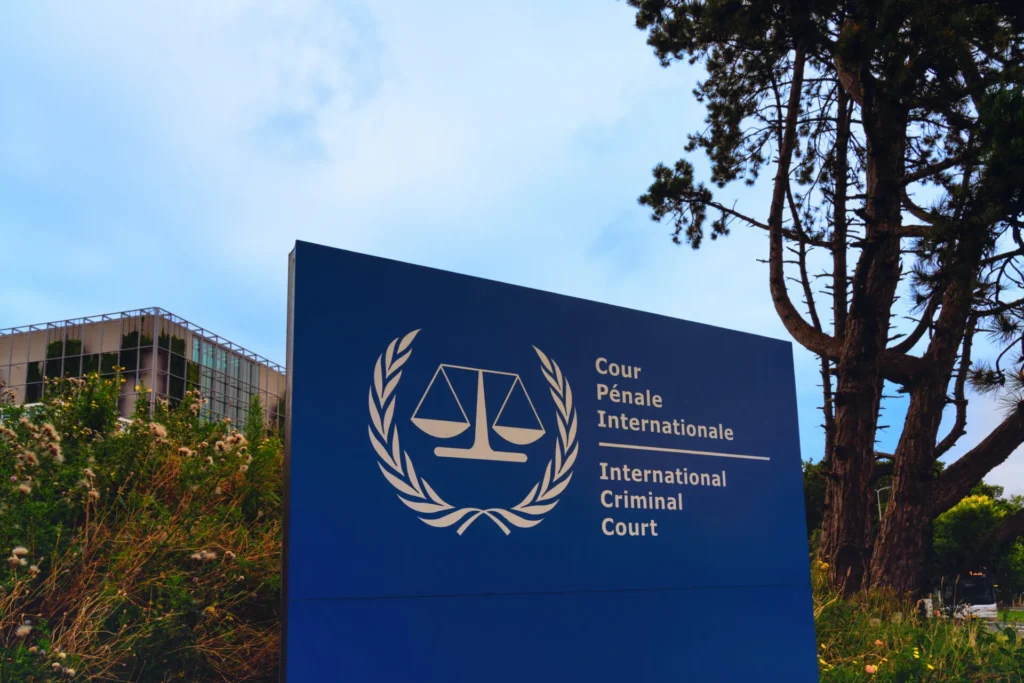
On Friday, only a few hours after Navi Pillay, a former judge of the International Criminal Court’s Appeals Chamber, was named winner of the Nobel Peace Prize, the Trump administration announced sanctions on the court itself, and it is hard to imagine a poorer way to respond to a global honour given to international law. Washington had already sanctioned seventeen judges and officials, but this time it chose to go after the institution, banning American companies from providing banking, software and other services, with the stated aim of “crippling its ability to operate.”
The world is already in a dangerous and lawless state, with wars running in several regions and powerful governments doing as they please, and in such a situation a court that tries to hold the strong to some standard deserves protection and support, not punishment. If the ICC is doing something right, then penalising it for doing so sends the message that the law is welcome only when it does not touch the powerful.
The timing is the part that will stay in people’s minds. It would be wrong to claim that the sanctions were planned as a reply to the Nobel committee, because court officials had been preparing for this day for months, moving from Microsoft software to open-source tools and making new banking arrangements. Still, it is fair to ask whether a president who has not won the prize, and who watched a judge from this very court honoured in Oslo, was in any mood to show patience. There is no proof of that, but perception matters in politics, and Washington has handed its critics an easy story to tell.
The reasons Washington gives are also weak when examined closely. Marco Rubio says the court wants to prosecute Americans, yet his own statement points only to calls from outside experts, and the ICC has taken no step toward any such case. The investigation into American soldiers in Afghanistan, which angered Washington for years, has been described by the court as deprioritised, so the sanctions punish a threat that has not become real. A government that sincerely believed in its own case could have argued it before the court’s member states, instead of reaching for the heaviest tool it owns.
Then there is the question of who is happy about all this. Benjamin Netanyahu welcomed the sanctions and called the court “not a court” but a political body, and he can hardly be called a neutral voice, since the ICC has issued an arrest warrant for him over alleged war crimes in Gaza. Those are allegations, and a court is the proper place to test them, which is exactly why he dislikes this one. When the man wanted by a tribunal is the one cheering the loudest for its destruction, the public can see for itself whose interests these sanctions serve.
The damage will also fall on people who have nothing to do with Washington’s quarrels. If the court cannot pay for lawyers, guards, software and insurance, trials and appeals could stall, and as Professor Ryan Goodman has warned, some detainees might have to be released as a matter of law. These include Rodrigo Duterte, accused of thousands of killings in the Philippines, and men facing war crimes charges in Libya, Sudan and the Central African Republic. Victims who stood up and gave their testimony, hoping that justice would finally come, would be the first to pay for this decision.
The court’s friends have mostly stood firm. Britain, Canada, Germany, France, Italy, Japan, Denmark and the Netherlands all said they regret the sanctions and support the ICC, and the European Union has said it has options to keep the court working. The six-month grace period gives them time to act, and they should use it, because a gap in funding that is filled by words alone will not keep the court alive.
For smaller and weaker countries, including those in our own region that have long complained of double standards, this episode carries a plain lesson: rules and courts are the only shield they have against the strong, and once the strongest country is allowed to destroy a court because it dislikes the cases it might one day bring, nobody else is safe. The ICC says history will judge this moment, and history will probably judge those who cheered for it as harshly as those who carried it out.

Our Editorial Desk is the intellectual engine of Digital Debate, responsible for the rigorous research that anchors every conversation. Our team deep-dives into data, checks every source, and consults academic literature to move beyond headlines and identify the questions behind the questions.