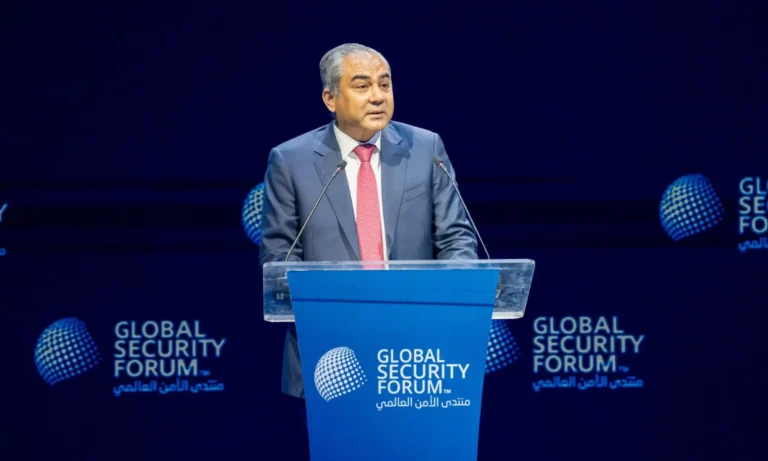
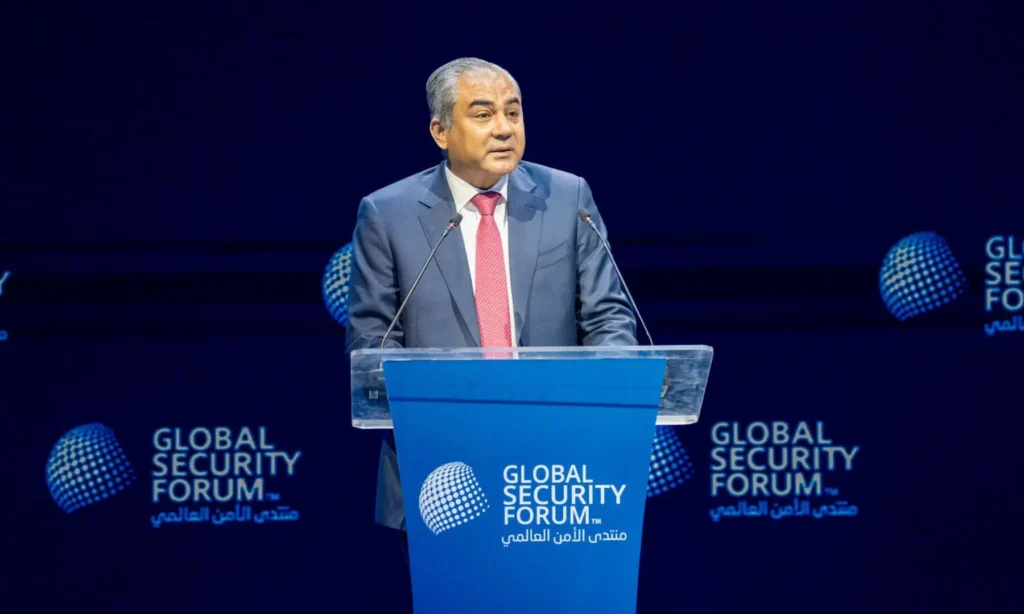
Interior Minister Mohsin Naqvi said Pakistan never gave up on efforts to ease tensions between the United States and Iran. Speaking at the 8th Global Security Forum in Doha, held under the theme “The Future of Alliances,” he called the past few months exceptionally difficult for the region. He warned that the US and Iran conflict threatens countries far beyond the Middle East.
Naqvi said Pakistan chose dialogue over confrontation, even when escalation looked close. Peace, he said, cannot come from one meeting. It takes patience, trust and steady diplomacy. He also credited Chief of Defence Forces and Chief of Army Staff Field Marshal Syed Asim Munir, saying the military leadership played a significant part in Pakistan’s regional peace efforts.
Naqvi recalled the signing of the 14 point Islamabad Memorandum of Understanding between Iran and the United States on June 18. He said Pakistan mediated the framework meant to end the war. The Lake Lucerne Summit in Switzerland followed, organised jointly by Pakistan and Qatar. Mediators there worked for more than 16 hours without a break to keep negotiations alive, he said.
He praised Qatar’s role, saying Doha kept talking when others picked sides. Naqvi said Pakistan worked closely with Qatar and that both aimed to stop further bloodshed, not to claim credit. “We do not want credit for stopping wars. We want a future where wars do not start,” he said.
Naqvi also spoke about the Makkah Joint Defence Agreement, signed by Pakistan, Saudi Arabia and Türkiye in August. He called it “a pact for defence, not for war.” He said it reflects a shared commitment to collective security, and that no country can have lasting peace while its neighbours are in conflict.
On counterterrorism, Naqvi said Pakistan has paid a heavy price in lives and resources. He called for stronger international cooperation, better intelligence sharing and joint action against terrorist networks. He pointed to Pakistani police peacekeepers serving in UN missions as proof of the country’s commitment to global peace.
The negotiations between Washington and Tehran remain unresolved. Iran’s proposal to reopen the Strait of Hormuz is still on the table, but the two sides disagree on the conditions. The talks show Pakistan’s active diplomacy, and also how fragile the peace effort remains.

Our News Desk represents a rapidly expanding frontier in contemporary journalism, focusing on the intersection of technological advancement, geopolitical narratives, and the shifting dynamics of public information.