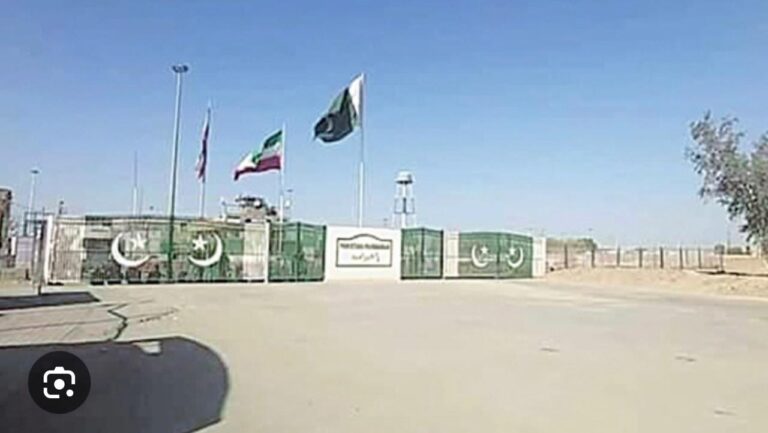
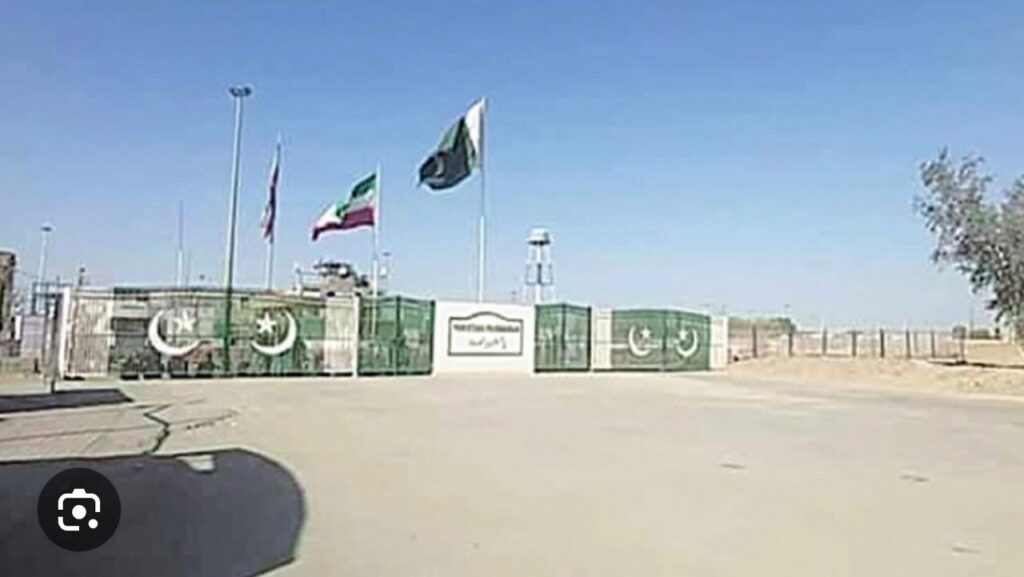
Recent developments along the Pakistan and Iran border should be understood in the context of a serious and evolving security environment, not through misleading claims of a permanent “border closure.” Reports that a crossing has been shut have been amplified selectively on social media.
Fabricated letters attributed to Iranian and Pakistani authorities are circulating to create confusion and discredit legitimate security measures. Iranian fact-checking and official clarifications have described the closure claim as false, while both governments continue to stress that legitimate trade and regulated movement remain a priority.
The immediate trigger for tighter border management is the recent surge in terrorist activity in Iran’s Sistan and Baluchestan province, where Baluch militant networks, including Jaish al-Adl and affiliated groups, have intensified attacks against security forces.
The attack on a Pakistan Coast Guard patrol near the Iranian border has further underlined the risks facing Pakistan’s coastal belt and border regions. These incidents show that militant groups and criminal networks seek to exploit porous frontier areas, weak regulation, and cross-border movement for operational advantage.
Smuggling is another central concern. Pakistan and Iran share a long frontier across which illegal trade, narcotics trafficking, human smuggling, and unregulated movement can provide cover for terrorist financing and logistics.
Both countries have previously agreed to strengthen cooperation in counterterrorism, border management, counter-narcotics, and the prevention of human smuggling. The current measures should therefore be seen as part of a broader effort to build a more effective, coordinated border control mechanism, not as a hostile action against border communities or lawful commerce.
The wider regional situation has added further pressure. The Iran conflict and heightened tensions across the Middle East have increased security sensitivities along Pakistan’s western frontier and coastal areas. In this environment, temporary and calibrated security measures are a necessary precaution to prevent militant infiltration, disrupt smuggling routes, and protect civilians, security personnel, and critical infrastructure.
It is also important to recognise that spoilers have an interest in portraying routine or temporary security steps as a diplomatic rupture. Smugglers affected by stricter enforcement, and militant organisations seeking operational space, benefit from confusion, panic, and distrust between Islamabad and Tehran.
The circulation of fake official letters fits this pattern. It aims to undermine confidence in state institutions and weaken public support for necessary counterterrorism measures.
Pakistan and Iran have repeatedly affirmed that their shared border requires joint management, intelligence coordination, and sustained cooperation against terrorism and criminal networks. The temporary measures reflect this mutual understanding and the recognition that neither country can afford to allow its territory to be used by groups seeking to destabilise the region.
The central issue is not a permanent closure of the border, but the need for stronger, temporary, and coordinated controls at a moment of elevated terrorist activity and regional tension.
The objective is to defeat attempts by militant and criminal actors to exploit the frontier, prevent the border from becoming a channel for instability, and preserve Pakistan and Iran cooperation at a time when regional peace and stability remain under pressure.

Our News Desk represents a rapidly expanding frontier in contemporary journalism, focusing on the intersection of technological advancement, geopolitical narratives, and the shifting dynamics of public information.