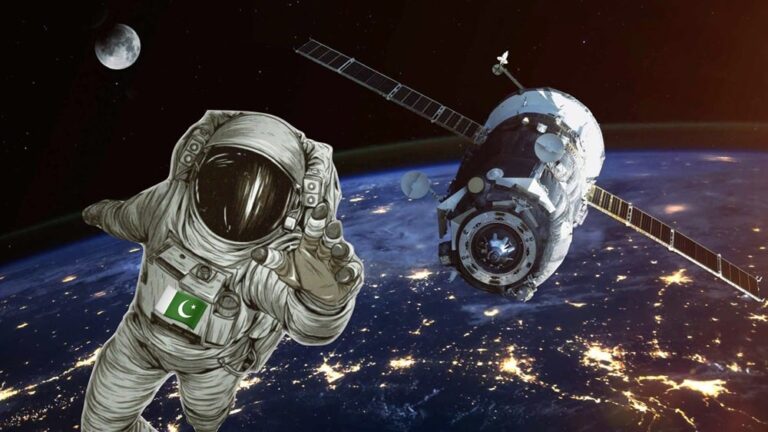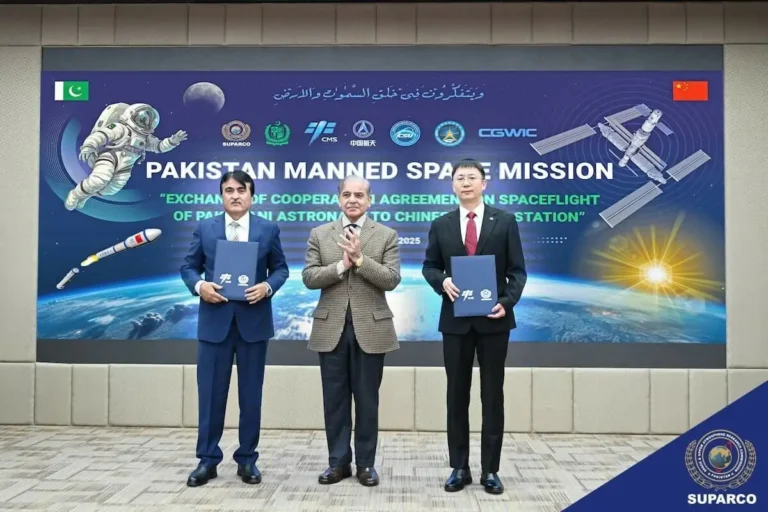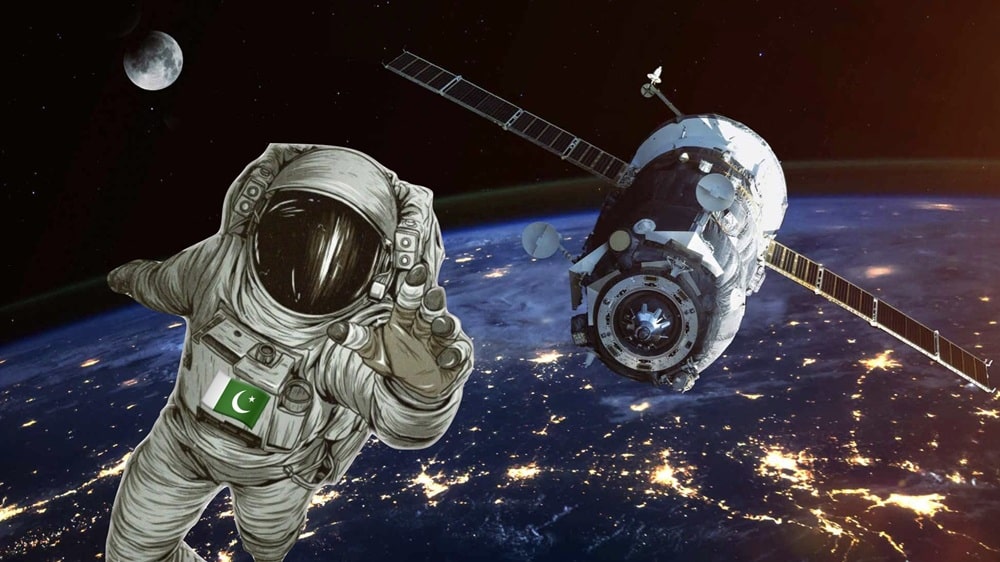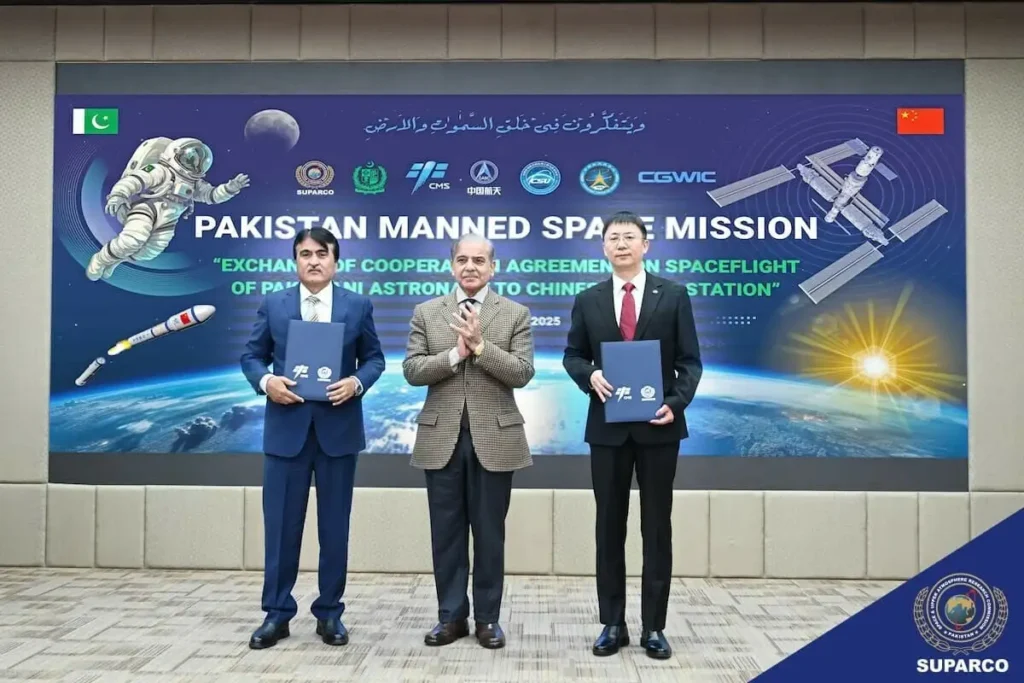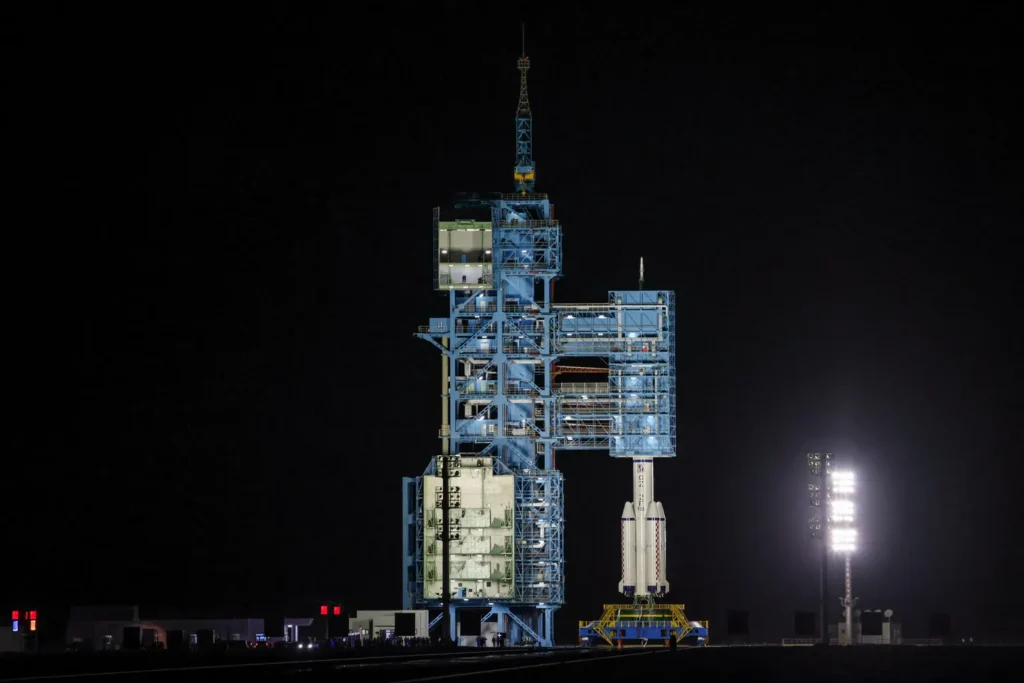

Pakistan is preparing for a landmark moment: one of its citizens may soon travel to China’s Tiangong space station. The mission would make the selected Pakistani pilot the country’s first astronaut and the first foreign national to visit China’s orbital laboratory.
But the real importance of this mission will not be measured only by the launch, the photographs or the national celebrations. Its success will depend on whether Pakistan can turn a symbolic first into a sustained programme of scientific research, technical training and educational opportunity.
Two Pakistani pilots Air Force pilot Muhammad Zeeshan Ali and Navy pilot Khurram Daud are undergoing training in China. One of them is expected to be selected for the mission, with the final decision likely to be announced in October.
The mission has been years in the making. Pakistan and China began developing the idea in 2019. SUPARCO later shortlisted candidates from a national pool of pilots and scientists. After medical, psychological and aptitude testing, Ali and Daud emerged as the final candidates and began intensive training in Beijing in April 2026.
Training for the Mission
The two pilots have been preparing at the China Astronaut Research and Training Center. Their training includes Mandarin, Chinese spacecraft systems, Tiangong operations and the physical demands of spaceflight.
They have also undergone centrifuge exercises that simulate the forces of launch. In addition, they have practised eating, sleeping and working in microgravity, as well as responding to technical problems and repairing equipment.
SUPARCO selected pilots partly because experienced aviators are already accustomed to high-g forces and demanding operational environments. Once the final astronaut is chosen, he is expected to remain in China until the mission and recovery period are complete.
A Short Flight with a Larger Purpose
The Pakistani astronaut is expected to spend about a week aboard Tiangong. He will serve as a payload specialist, meaning his primary role will be to conduct experiments rather than operate the spacecraft.
The short duration should not reduce the importance of the mission. Human spaceflight is expensive and technically demanding, but even a brief stay can provide valuable experience in astronaut training, scientific planning, payload preparation and international mission coordination.
The key question is what Pakistan does with that experience after the astronaut returns.
Pakistan’s Scientific Contribution
The mission’s scientific work comes from Pakistani universities and research institutions. SUPARCO received more than 300 proposals from researchers in cities including Karachi, Lahore and Islamabad.
Four biotechnology experiments were selected for the flight. Their potential applications are connected to food security and climate-related challenges—two areas that matter greatly for Pakistan’s future.
These experiments may be small compared with the wider research programme aboard Tiangong, but they give Pakistani researchers direct access to a microgravity laboratory. They also provide an opportunity to learn how space experiments are designed, tested, approved and managed.
That knowledge could become more valuable than the mission itself provided Pakistan continues to invest in it.
The Strategic Dimension
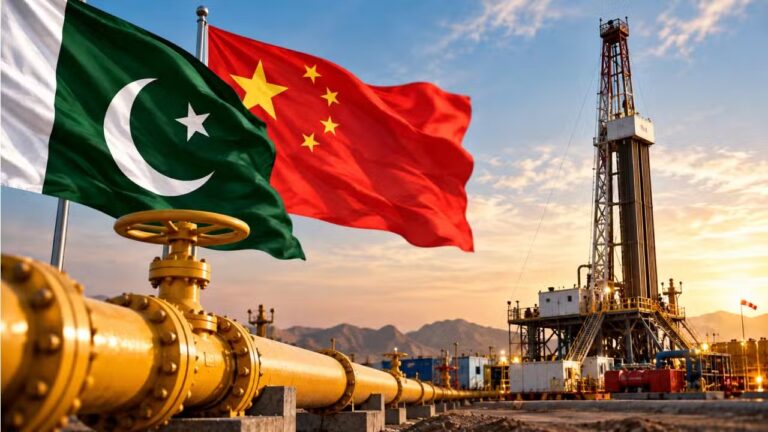
The mission also has diplomatic significance. China is giving a close partner access to its human-spaceflight programme, while Pakistan is receiving an opportunity that it could not develop independently in the near term.
The flight will strengthen cooperation between the two countries in space science and technology. It may also support future collaboration in areas such as satellite systems, biotechnology, robotics and lunar exploration.
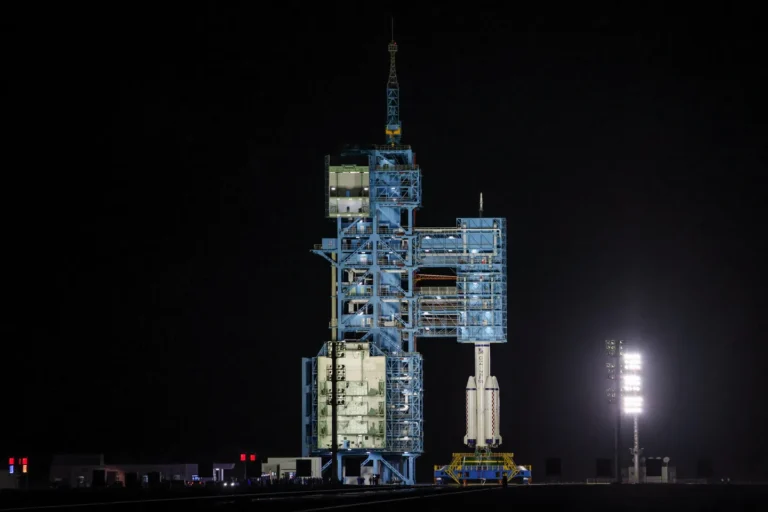
Pakistan should, however, present the mission honestly. This will not be an independent Pakistani spaceflight. The astronaut will travel on a Chinese spacecraft, launch from a Chinese facility and train under Chinese supervision.
Pakistan does not yet have a crewed spacecraft or a launch vehicle capable of sending people into orbit. The mission is therefore an important partnership not evidence that Pakistan has achieved independent human-spaceflight capability.
What Pakistan Can Gain
The benefits can be substantial if the mission becomes part of a larger strategy.
Pakistan can gain experience in astronaut training and mission management, greater expertise in space-based scientific research, stronger links between SUPARCO and Pakistani universities, new opportunities for students in science, technology, engineering and mathematics, greater international visibility for Pakistani researchers and a foundation for future cooperation in satellite, lunar and biotechnology programmes.
But these benefits will not appear automatically. A single flight cannot transform the country’s space sector. It can only create an opportunity.
The Risk of a One-Time Achievement
Pakistan’s economic difficulties make public scrutiny unavoidable. Many people will ask whether human spaceflight should be a priority when the country faces pressure in education, health, employment and public finances.
That question deserves a serious answer. If the astronaut mission ends with a ceremony and a few headlines, critics will be justified in calling it a symbolic achievement with limited long-term value.
The government and SUPARCO should therefore take clear follow-up measures. They should fund another round of experiments and give universities a continuing opportunity to participate.
They should retain the trained astronauts, engineers and scientists within a permanent national programme. They should publish the results of the four experiments and make the research available to universities and industry.
They should establish scholarships, school competitions and research grants connected to the mission. They should also announce a transparent roadmap for future astronaut training and space cooperation.
A National Beginning, Not the Final Destination
Pakistan’s first astronaut could inspire a generation, strengthen scientific cooperation with China and give the country a meaningful place in the international space conversation.
But history will judge the mission by what follows it. The launch will be a moment. The real achievement will be building the institutions, research culture and technical skills needed for the next mission.
Pakistan should celebrate its first astronaut but it should not stop there. If the country turns one week in orbit into years of research, education and capability-building, the mission will mark the beginning of a serious national space programme. If it fails to follow through, it will remain an impressive milestone without a lasting legacy.
Read More: https://digdebate.com/pakistan-first-astronaut-tiangong-space-station-2026/

Our Editorial Desk is the intellectual engine of Digital Debate, responsible for the rigorous research that anchors every conversation. Our team deep-dives into data, checks every source, and consults academic literature to move beyond headlines and identify the questions behind the questions.