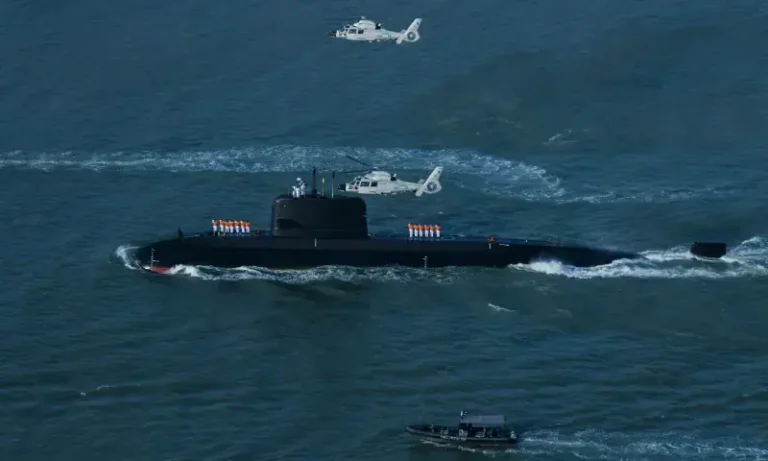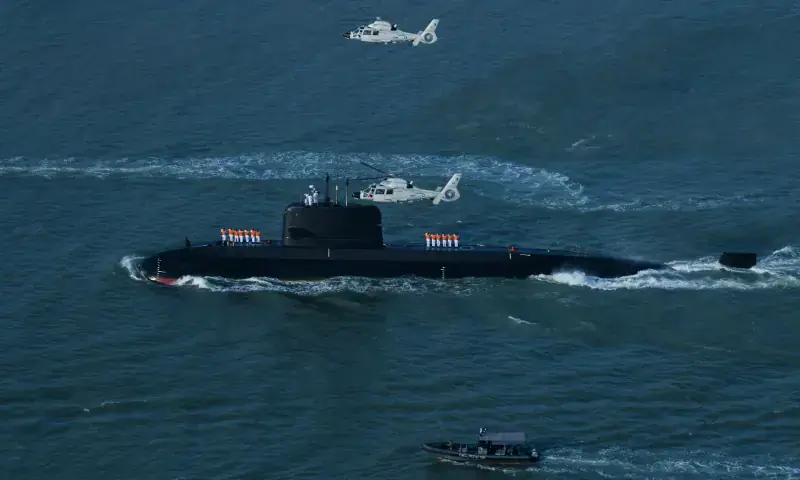

Pakistan’s new submarine, PNS/M Hangor, has passed a major operational test. During a live firing exercise in the North Arabian Sea, it launched an anti ship cruise missile and hit a designated long range target.
Chief of Naval Staff Admiral Naveed Ashraf witnessed the exercise. Pakistan’s military presented it as evidence that the submarine’s weapons, sensors and crew are ready for operational duties.
For a navy that has relied heavily on older conventional submarines, the test moves a new undersea capability from induction into practical service.
From Induction to Operational Edge
Hangor is the lead boat of a class developed through Pakistan and China defence cooperation. It uses air independent propulsion (AIP), which lets a diesel electric submarine stay underwater longer without surfacing or regularly using a snorkel.
This improves stealth and endurance, but it does not give the submarine the unlimited underwater endurance of a nuclear powered vessel.
The class is also described as having modern sensors, combat management systems and low signature features. Pakistan has not publicly released the missile’s model, range or detailed firing data.
These capabilities give Pakistan a stronger sea denial option. A submarine that is hard to detect can patrol key maritime approaches, monitor shipping and threaten surface warships from a concealed position. An opposing navy then has to commit more ships, aircraft, helicopters and sensors to anti submarine warfare.
This lets Pakistan raise the cost and complexity of naval operations by a larger regional fleet without matching it ship for ship.
Strategic and Economic Value
The benefit for Pakistan goes beyond military prestige. The country relies on sea routes for fuel, imports, exports and trade, so the security of the Arabian Sea matters directly to its economy.
A more capable submarine fleet could help protect approaches to Pakistani ports and strengthen the Navy’s ability to monitor or deter threats to sea lanes and maritime infrastructure.
The wider Hangor programme covers eight submarines, and once they are fully integrated, Pakistan could maintain more persistent underwater patrols.
The programme may also build Pakistan’s naval expertise through training, maintenance and cooperation with China. Still, the real value of the class will depend on crew skill, spare parts, maintenance standards, intelligence support and coordination with maritime patrol aircraft and surface ships.
One successful missile firing is an important milestone, but it does not prove that the whole submarine force is ready for sustained combat operations.
Timing and Regional Message
The announcement came at a sensitive moment, about two weeks after a collision between Pakistani and Indian naval vessels in the northern Arabian Sea. The two countries gave conflicting accounts. Islamabad accused an Indian vessel of dangerous manoeuvres near a Pakistani ship, while New Delhi said the Pakistani vessel approached its warship unsafely.
Both sides lodged diplomatic protests, and the incident drew fresh attention to the 1991 bilateral agreement, which reportedly requires naval ships and submarines of the two countries to stay at least three nautical miles apart in international waters.
Against this background, the missile firing sends two messages. Internally, it tests the training, maintenance, command procedures and weapons integration of Pakistan’s newest submarine.
Externally, it signals that Pakistan is adding a modern, stealthier undersea asset to its maritime posture. There is no public evidence that the exercise was ordered in response to the collision, so it should not be described as immediate retaliation.
Capability Must Be Matched With Restraint
The test shows that Pakistan’s Navy is improving its underwater warfare capabilities. Greater strength also raises the importance of communication and crisis management. Submarines and warships operating in crowded waters can create serious risks if commanders misjudge distance, manoeuvre aggressively or misread an exercise.
Stronger naval capability will serve Pakistan best when it comes with professional conduct, advance notice of exercises, reliable communication channels and respect for existing maritime confidence building measures.
What Comes Next
The next stage will bring more firings, sea trials, crew training and the integration of the remaining Hangor class boats. Pakistan will also need to show that it can sustain the submarines, coordinate them with other naval assets and operate them safely during regional tension.
If pairs this growing undersea capability with responsible crisis management, the Hangor programme can become a major technical achievement for the Pakistan Navy and a stabilising factor in the Arabian Sea, rather than a new source of escalation

Our Editorial Desk is the intellectual engine of Digital Debate, responsible for the rigorous research that anchors every conversation. Our team deep-dives into data, checks every source, and consults academic literature to move beyond headlines and identify the questions behind the questions.