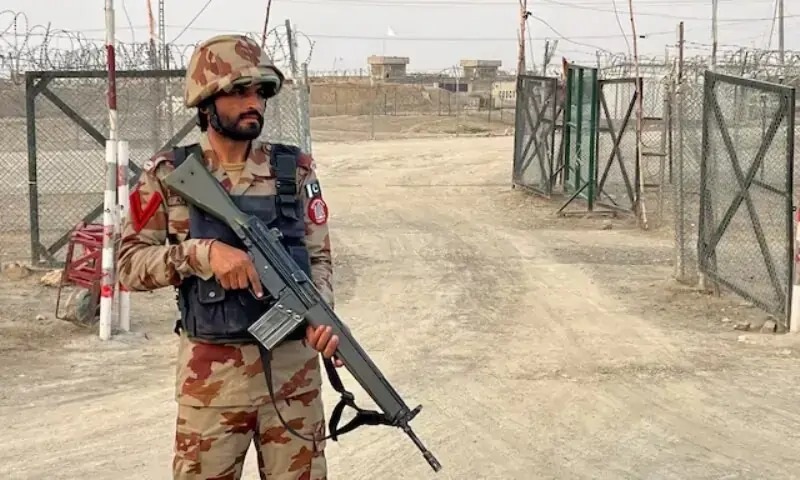

Friday’s assault on the Old Police Lines in Kohat was not an aberration, it was a message, and Pakistan’s security establishment has finally decided to answer it in kind. Gunmen struck during Friday prayers, turning a police compound into a battlefield for nearly a full day, and by the time the guns fell silent the country was counting more than thirty dead and over a hundred wounded. It was the kind of attack designed to humiliate as much as to kill: a strike at the heart of the state’s own security apparatus, on the holiest day of the week, inside a facility meant to project control rather than vulnerability. Ittehad-ul-Mujahideen Pakistan, a banner tied to the wider TTP orbit, has claimed the carnage, and few in Islamabad doubt that the planning traces back across the Pak Afghan Border.
What followed was neither hasty nor accidental. Within seventy-two hours, Pakistani jets were pounding suspected militant hideouts in Kunar and Paktika, and the military’s public messaging made clear this was retaliation with intent, not a symbolic gesture. The Ministry of Information framed it plainly: Pakistan has both the will and the capability to hit terrorist sanctuaries wherever they sit, and it no longer feels obliged to wait for Kabul’s permission or patience. Islamabad says nearly thirty militants were killed in the strikes; Afghan officials counter with a far smaller number and accuse Pakistan of flattening civilian homes instead. Both claims will keep circulating, because in this conflict, casualty figures have become another front in the propaganda war.
None of this happened in a vacuum. For three years now, Pakistan has watched the Afghan Taliban consolidate power in Kabul while doing precisely nothing to rein in the Pakistani Taliban operating from its soil, despite Islamabad’s repeated invocation of the Doha framework and its increasingly public frustration that a movement it once helped usher back to power has become a permissive host for its most lethal enemy. The numbers tell their own story: thousands of Pakistani lives lost to cross-border terrorism since the Taliban’s return, a toll that has only accelerated in recent months with Bajaur, Hangu, and now Kohat forming a grim sequence rather than isolated incidents. Islamabad’s patience, real or performed, has visibly run out.
This is also, unmistakably, a message to the region. China’s mediation efforts, Gulf diplomatic channels, and Western governments watching the Taliban’s conduct will all be recalibrating how much confidence to place in Kabul’s promises. Pakistan’s posture, will and capability to strike wherever necessary, is aimed as much at that wider audience as at the militants themselves. It tells the world that Islamabad is done outsourcing its security to Afghan assurances that have repeatedly proven worthless.
None of this means the fight is close to finished. Militant networks rebuild, sanctuaries relocate, and TTP commanders have survived worse than a single week of airstrikes. But the direction is set: sustained, intelligence-driven strikes on hideouts and training infrastructure, tightened coordination between ground clearance operations and air power, and diplomatic pressure calibrated to make Kabul’s sheltering of these groups increasingly costly rather than cost-free. Pakistan’s forces showed in Kohat itself, in that twenty-hour clearance operation, that they can still win the fight when it comes to their doorstep. The next test is whether they can take that same resolve across the border and keep it there, not for one news cycle, but until the sanctuaries stop being sanctuaries at all.

Our Editorial Desk is the intellectual engine of Digital Debate, responsible for the rigorous research that anchors every conversation. Our team deep-dives into data, checks every source, and consults academic literature to move beyond headlines and identify the questions behind the questions.