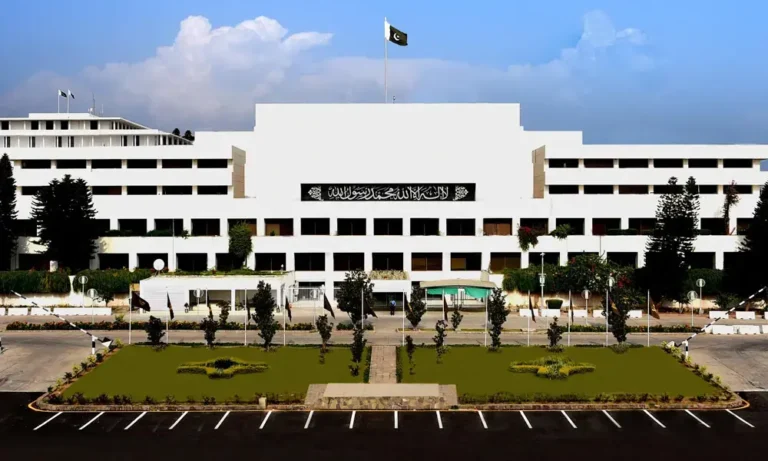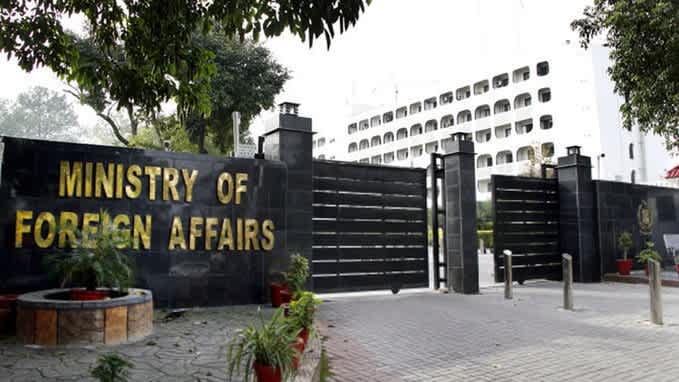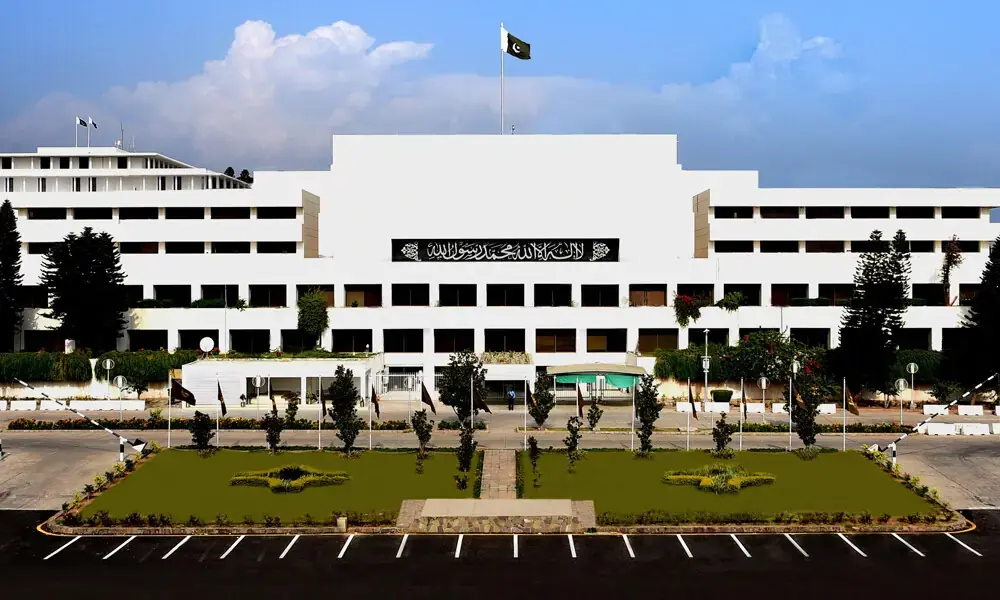

For nearly eight decades, Islamabad has been run by the federal government rather than by its own people. That may finally be changing. Planning Minister Ahsan Iqbal in June held a public meeting at Fatima Jinnah Park to discuss a new plan for the capital, and soon after, a draft map of this plan reached Prime Minister Shehbaz Sharif’s desk. Together, these show what the government has in mind: a 27-member elected Islamabad Assembly, its own chief minister or mayor, and full control over health, education, environment and other city services. In simple terms, it means Islamabad’s 2.4 million residents would finally get a real say in how their own city is run, instead of being treated as guests in the federal capital.
This idea makes sense. Islamabad has grown far beyond the small administrative town it once was, but the way it is governed has not changed with it. The city plays a huge role in Pakistan’s economy and hosts the entire machinery of the state, yet it has had less democratic representation than almost any other district in the country. The last local government elections here were held back in 2015. Giving Islamabad an elected assembly and its own accountable government is not asking for something unusual. Most Pakistani cities already have this. Islamabad is simply trying to catch up.
But there is a problem. This proposal is getting mixed up with a much bigger and more sensitive issue: the demand for new provinces across Pakistan. In the same week, Interior Minister Mohsin Naqvi said new administrative units “will have to be created,” and Defence Minister Khawaja Asif said devolution is “inevitable.” Mixing these statements with the Islamabad plan turns a simple, reasonable city reform into part of a much bigger fight over how the whole country should be divided. The PPP in Sindh has already reacted strongly, warning of a “conspiracy” against provincial rights and the 18th Amendment.
This is really a lesson about timing and order. Islamabad’s case is simple and easy to defend: it is a capital territory with no province of its own, no share in the NFC award, and no local government. Giving it representation does not require touching Punjab, Sindh, or Khyber Pakhtunkhwa, and it does not require reopening the 18th Amendment at all. But when this plan gets linked, even just in speeches, to talk of new provinces like Saraiki or South Punjab, it makes the existing provinces defensive, just as Sindh has become. That reaction then makes it harder for Islamabad’s own reform to move forward on its own merit.
Other capital cities around the world show that this kind of arrangement can actually work well. New Delhi is the clearest example. It is India’s capital, but it is also treated almost like a state on its own, officially called the National Capital Territory of Delhi. Since 1991, it has had its own elected assembly and chief minister, just like a regular Indian state, while sensitive matters like police, law and order, and land stay with the central government. This split has caused some friction over the years, especially when the Delhi government and the central government belong to different parties, but the basic model still gives Delhi’s residents a real voice in how their city is managed. Other examples support the same idea. Canberra, Australia’s capital, has run its own elected government since 1988 as the Australian Capital Territory, with powers close to those of a full state. Mexico City became a full-fledged federal entity in 2016, gaining a constitution and a status close to Mexico’s other states after decades of being run directly by the federal government. Buenos Aires has had autonomous city status since 1994, with its own elected mayor and legislature, separate from the province of Buenos Aires around it. On the other hand, Washington D.C. shows what happens when this step is not taken: it still has no full statehood, its residents have no voting representation in Congress, and this has been a long-running complaint about American democracy. These examples suggest that giving a capital its own elected government, alongside the federal government’s control over core national functions, is a normal and workable model, not a risky experiment. Islamabad’s proposed reform fits this same pattern, and if handled properly, it could give the capital the same kind of balanced, functional status that cities like New Delhi, Canberra and Mexico City already enjoy.
If the government truly wants to make Islamabad a model city, it should keep this plan separate from the wider provinces debate. It should announce a clear timeline for elections and let the Islamabad experiment succeed on its own before anyone uses it as an example for bigger changes elsewhere. Pakistan’s federation has lasted this long because changes like this have usually happened slowly, through agreement and proper constitutional steps, not through ministers making statements on social media. Islamabad deserves its assembly. The rest of the country deserves a debate handled with the same seriousness that the capital is finally being given.
Read more: https://digdebate.com/rethinking-pakistan-provinces-local-governance/

Our Editorial Desk is the intellectual engine of Digital Debate, responsible for the rigorous research that anchors every conversation. Our team deep-dives into data, checks every source, and consults academic literature to move beyond headlines and identify the questions behind the questions.