For Muslim families fleeing Jammu in November 1947, the road to Sialkot offered a chance of survival. Some never reached it. Others arrived without the relatives who had left home beside them.
Every 6 November, Jammu Martyrs’ Day remembers those killed and those forced to rebuild their lives across a new border. The day matters because Partition changed who could call Jammu home. For the families who survived, that change meant living with losses that official records could scarcely capture.
Roads of No Return
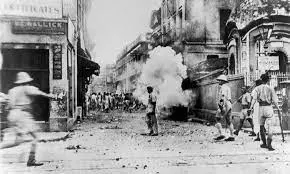
When British rule ended in August 1947, Maharaja Hari Singh ruled a Muslim-majority princely state whose future remained undecided. Resistance to his rule grew in Poonch, and communal violence spread through neighbouring Punjab. By autumn, attacks on Muslim communities had reached several parts of Jammu province, including Kathua, Udhampur and Reasi. Historical accounts implicate Dogra state forces and armed groups, including RSS volunteers. Their involvement was more dangerous for civilians who had reason to expect protection from the state.
Homes were burned and looted. Women faced abduction, and entire families were forced to leave. The danger extended beyond towns to rural communities, including Gujjar settlements. In early November, convoys carrying Muslim evacuees toward Pakistan came under attack. One account records an attack near Miran Sahib on 7 November. The violence unfolded over weeks, but the convoys explain why early November holds such painful significance. People who had already abandoned their homes were attacked on the roads they had taken to escape.
Villages Left Empty
In January 1948, British writer Horace Alexander estimated that 200,000 people had been killed. Later that year, The Times cited 237,000, while allowing that some included in its figure might have escaped. Pakistan’s 2025 commemorative statement estimated that more than half a million fled. The accounts measure different losses, and the exact death toll remains disputed. Their scale gives some sense of how profoundly the violence changed parts of Jammu.
For those who escaped, crossing the border meant leaving behind land, livelihoods and graves. For the places they left, it meant losing neighbours whose families had lived there for generations. That is why 6 November should be more than a ceremony. Recovering names, recording survivors’ testimony and tracing abandoned properties can show where the violence was concentrated. Such work can also help establish who carried it out and which authorities enabled it.
The Uncast Ballot
As the conflict widened into war between India and Pakistan, international diplomacy turned to the question of accession. In April 1948, UN Security Council Resolution 47 proposed steps towards a free and impartial plebiscite. Pakistan was to secure the withdrawal of tribesmen and Pakistani nationals who had entered to fight. India was then to reduce its forces under the conditions outlined in the resolution. The ballot would ask whether Jammu and Kashmir should accede to India or Pakistan. It never took place.
In 1957, the Security Council reaffirmed that Jammu and Kashmir’s constituent assembly could not determine the territory’s final status. The 1972 Simla Agreement renewed the emphasis on a peaceful settlement through diplomacy. Yet neither route produced an agreement on Kashmir’s future. The international process depended on cooperation between governments whose positions remained opposed. Meanwhile, the governments retained practical authority over the areas they administered. Over time, that gave them room to alter conditions on the ground while a settlement remained out of reach.
A State Recast
New Delhi used that room in August 2019. Presidential orders rendered Article 370 largely inoperative and extended the full application of India’s Constitution to Jammu and Kashmir. Parliament divided the former state into two union territories, Jammu and Kashmir and Ladakh. The decisions came under President’s Rule, with no sitting elected state legislature to debate them. India’s Supreme Court upheld the abrogation in 2023.
The measures brought the territory India already administered under tighter constitutional control. Kashmir’s international dispute remained unresolved. The UN Secretary-General recalled the relevant resolutions and the Simla Agreement, and urged restraint. New Delhi could rewrite the rules of governance while international diplomacy offered residents no comparable say. That was the practical advantage India drew from decades of deadlock.
The Jammu massacre stands as an early warning about what people can lose when governments fight over territory. In 1947, families lost lives, homes and communities. In 2019, a constitutional decision again exposed how little influence residents could have over changes imposed from above. Remembering 6 November begins with the people who never made it home. It also requires taking seriously the voices of those who still call Jammu and Kashmir home.
Read More: Kashmir Still Burns

Our News Desk represents a rapidly expanding frontier in contemporary journalism, focusing on the intersection of technological advancement, geopolitical narratives, and the shifting dynamics of public information.