On this death anniversary of President General Zia-ul-Haq Shaheed, Pakistan pauses to remember not just a soldier who wore the uniform for decades, but a leader who understood, better than most, that a nation without an ideological compass eventually drifts. August 17 is not a date of mourning alone, it is a date of reckoning with everything one man’s resolve managed to secure for a country that could easily have lost its way.
He came up through the ranks the hard way, commissioned in 1945, tested in the field, and finally entrusted with the Army’s highest command in 1976. When he stepped into national leadership the following year, he inherited a state still uncertain of its own foundations. He left it, eleven years later, with a constitution that finally matched its founding promise, a defence posture no adversary could safely test, and a place in the world Pakistan had never occupied before.
Nowhere is that clearer than in his commitment to Pakistan’s ideological identity. Through Article 2A, he gave the Objectives Resolution the constitutional weight it had always deserved — not as an ornamental preamble, but as the operating principle of the state, anchored in the conviction that sovereignty belongs to Allah alone. Zakat, Ushr, and the institutional support for Salat were not administrative add-ons; they were a deliberate return to the vision the Quaid himself had articulated when he asked what Pakistan’s purpose was and answered it with the kalima. Shaheed Zia-ul-Haq understood that question was never rhetorical, and he built accordingly.
His reading of the region proved equally far-sighted. When Soviet tanks crossed into Afghanistan in 1979, he saw past Kabul to the real target — the warm waters of the Gulf, just a few hundred miles beyond the advancing front. He turned Pakistan into the front-line state the free world needed, and the resistance that grew out of that decision did more than repel an occupation. It bled an empire until it broke, opened the door to independent Muslim states across Central Asia, and helped bring down the Iron Curtain itself. Few military leaders of the twentieth century can claim a hand in reshaping the global order quite so directly.
At home, he made the nuclear program a matter of national survival rather than policy preference. When the path forward faced resistance, internal and external — he cleared it. Cold tests conducted quietly through the early 1980s laid the groundwork for a deterrent the world would only formally witness in 1998, but the decisive choices were made under his watch, under real pressure, without concession. Pakistan today stands as the only nuclear power in the Muslim world, and that distinction exists because one leader refused to trade it away.
He gave the armed forces their enduring ethos, Iman, Taqwa, Jihad fi Sabilillah, and built the defence relationship with Saudi Arabia that still shapes the region’s security architecture decades later. That partnership, forged in the early 1980s, remains a live inheritance, visible in the strategic understandings Pakistan continues to build with the Kingdom today.
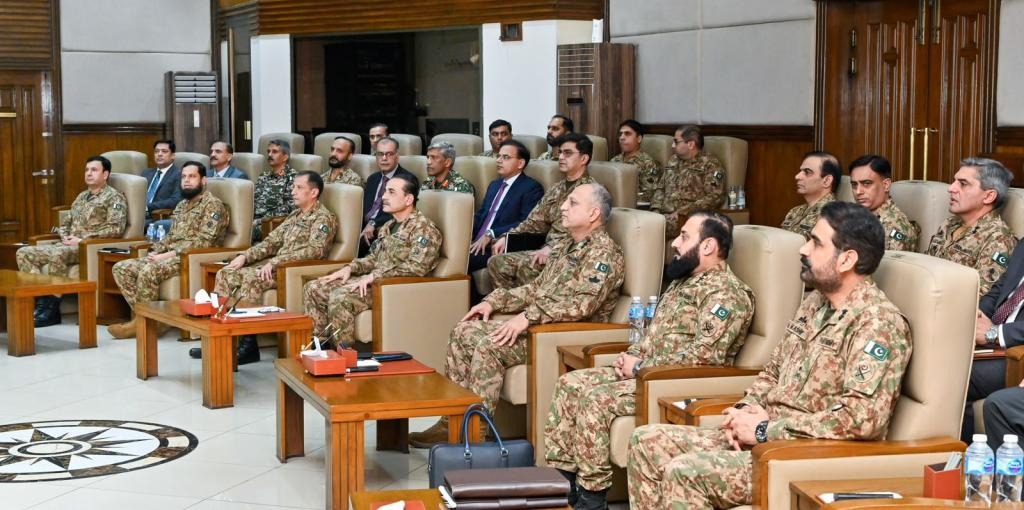
The resolve he embodied did not end with him. It runs through the same institutions he helped define, carried forward now by the country’s civil and military leadership as Pakistan navigates a region as unsettled as the one he once faced. On this anniversary, the tribute owed to Shaheed Zia-ul-Haq is not sentiment, it is the continued defence of what he built: a Pakistan that is ideologically anchored, strategically indispensable, and answerable, in his own understanding, to nothing above its Creator.

Our Editorial Desk is the intellectual engine of Digital Debate, responsible for the rigorous research that anchors every conversation. Our team deep-dives into data, checks every source, and consults academic literature to move beyond headlines and identify the questions behind the questions.