The Makkah Joint Defence Agreement states that any armed attack on any one of the three countries will be regarded as an attack against them all. The three leaders, Saudi Crown Prince Mohammed bin Salman, Turkish President Recep Tayyip Erdogan, and Pakistani Prime Minister Shehbaz Sharif, signed those words on Friday, August 7, 2026, to usher in the most significant joint security pact between Muslim-majority nations since the formation of the Organization of Islamic Cooperation in 1969. The agreement was signed in Makkah based on strong historic bonds, ties of fraternity and Islamic solidarity, joint strategic interests, and mutual defence cooperation between the three countries.
The location was not incidental. A collective defence pact sealed in Makkah, the holiest place in Islam, has a significance that no other capital city could claim. It situates the accord in the context of Muslim unity at a time when each nation in the region is gauging threats they cannot handle on their own.
The Middle East has been in flames for nearly three years since the October 7, 2023, Hamas attack on Israel, with nearly every country in the region experiencing cross-border attacks or missile or drone fire. Israel has waged war in Gaza, invaded southern Lebanon, and seized territory in Syria, as well as launching two air campaigns against Iran. Tehran has attacked US bases and civilian infrastructure in Saudi Arabia, Kuwait, Bahrain, Qatar, the UAE, Oman, Jordan, and Israel. Their pact follows nearly a year of negotiations, after Turkish Foreign Minister Hakan Fidan said in January that Ankara favored a broader regional security platform to promote cooperation and stability. The Makkah agreement did not emerge from a planning document. It emerged from a threat environment.
What the Agreement Actually Contains
The pact is broader and structurally different from what preceded it. The new agreement differs from the previous bilateral Saudi-Pakistan pact, which focused on the stationing of Pakistani troops in Saudi Arabia. The new trilateral pact is oriented towards weapons production, combining Saudi money, Turkish technology, and Pakistani combat capability.
The pact creates a mechanism for coordination of military exercises, technology transfer, defence industrial production, and intelligence sharing. This is not a deployment agreement. It is a production partnership with a collective security guarantee layered on top. A deployment agreement moves existing Pakistani troops to Saudi soil. A production partnership develops a common industrial base which can develop weapons, platforms and systems with the participation of all three countries, Saudi Arabia paying for the development, Turkey with engineering and manufacturing, and Pakistan supplying labor, testing facilities and basic production lines.
A Turkish official stated that the agreement was defensive, not directed against any actor, was open to other regional countries and was not a replacement or abrogation of existing bilateral or multilateral pacts. The provision of “open to other regional countries” indicates that Ankara and Riyadh see it as the basis for a wider security network among Muslim nations, and not as a closed trilateral deal.
The Three Capitals and What Each Gained
The pact is a solution to Saudi Arabia’s main challenge since 2019: how to counter a nuclear-armed Iran, an expansionist Israel and continued Houthi attacks on its southern border without relying solely on the United States. In 2023, Riyadh agreed to buy Turkish drones in what Ankara called its largest defence export contract, and Pakistan has deployed about 8,000 troops, fighter jets, drones, and an air-defence system to the kingdom. The Makkah agreement is a ratification of the existing working relationship and brings it to the level of collective security with a production mandate.
Analysts noted that Pakistan and Turkey bring strong defence industries to the table, while Saudi Arabia could contribute with technological spending. What MBS won in Makkah is a structure that allows the Saudi financial muscle, which has so far mostly been spent on foreign arms deals, to now establish a national and tripartite defense industry. Turkey wants Saudi Arabia to become a partner in the programme to develop the Kaan fighter jet, with the first test flight in early 2024 and potential for other countries to join. The first tangible sign of the production aspect of the deal would be the Saudi investment in the Kaan programme.
In Turkey, the agreement settles the dilemma that has been central to the country’s foreign policy for the past ten years: how to remain a NATO member and a strategic partner of the West while developing an independent defence policy and the leadership of the Islamic world. Turkish sources indicated that the deal is mainly about cooperation in the defence sector and does not represent a NATO-style collective defence pact, since Turkey is already a member of that bloc. That careful balancing makes it possible for Turkey to extend its own security architecture toward the East without any Article 5 complications in NATO.
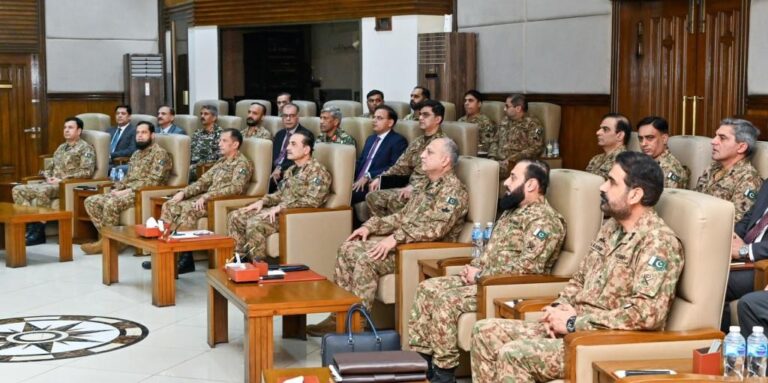
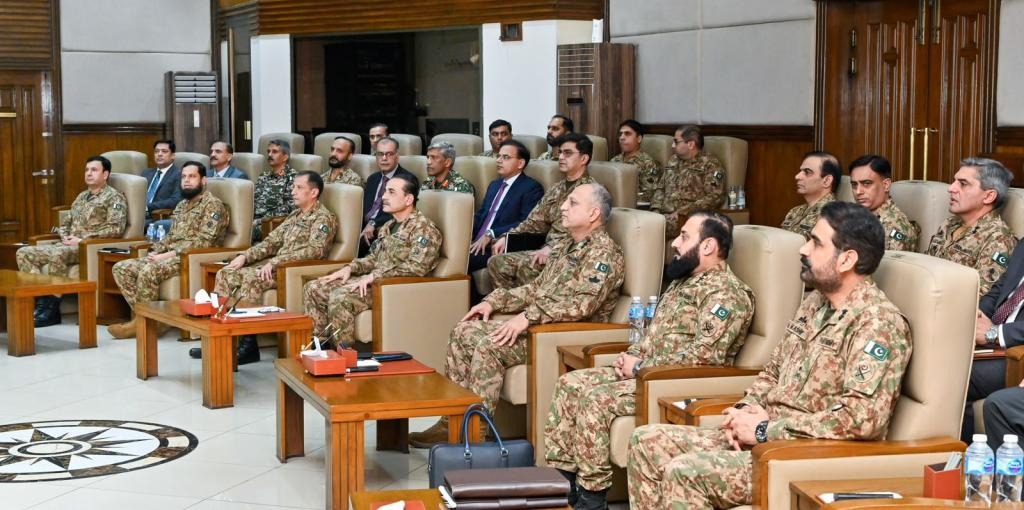
The Makkah agreement marks the final step in Pakistan’s strategic rebalancing process, which started with the signing of the Bilateral Strategic Mutual Defence Agreement with Saudi Arabia in September 2025 and progressed with the July 2026 defence cooperation accord with Kuwait. Pakistan has opened negotiations with Kuwait over an expanded pact in exchange for energy cooperation and investment. The presence of Field Marshal Asim Munir with PM Sharif at the summit of Makkah is a testament to the fact that it is a strategic consensus and not a diplomatic attempt to circumvent institutional obstacles.
The Regional and Global Dimensions
The political symbolism of the summit is significant; three of the Muslim world’s most influential states convened at a moment of heightened uncertainty, demonstrating a growing willingness among regional and middle powers to coordinate more closely. Talk of an “Islamic NATO” has been impacting strategic circles since the announcement, but the Turkish side has been quick to emphasize that the pact would be complementing, not challenging, existing NATO alliances.
India’s Ministry of External Affairs said after the September 2025 bilateral SMDA that it would study the implications of the strategic mutual defence pact between Saudi Arabia and Pakistan for India’s national security as well as for regional and global stability. The Makkah agreement expands that bilateral into a trilateral encompassing Turkey, which has consistently raised Kashmir at international forums, publicly supported Pakistan’s position on the IWT dispute, and provided military technology including MILGEM corvettes to Pakistan’s Navy. New Delhi’s response to today’s signing will be more carefully worded but no less concerned.
The Iranian factor is the most complicated one. Tehran was the primary threat context that accelerated the Makkah agreement, yet Pakistan has sought to mediate efforts to bring an end to the US-Iran war, while Turkey has played a diplomatic role in negotiations aimed at resolving the war in Gaza. The Makkah pact is not a formal anti-Iran alliance. Its language allows for diplomatic contact with Tehran and collective deterrence against Iranian aggression. Whether that balance holds if Houthi attacks on Saudi territory escalate is the central strategic question the agreement leaves unanswered.
Analysis noted that the move comes amid a rise in wars, conflicts and military tensions in the region, specifically the war between the United States and Iran, which has drawn in Gulf states and disrupted shipping through the Strait of Hormuz and the Red Sea, and that the discussions had been under consideration for a long time but that the latest developments in the region expedited them. Turkey and Pakistan, on the borders of the Middle East, have avoided significant direct attacks, but both are anxious to calm conflicts that threaten their own security and economic health.
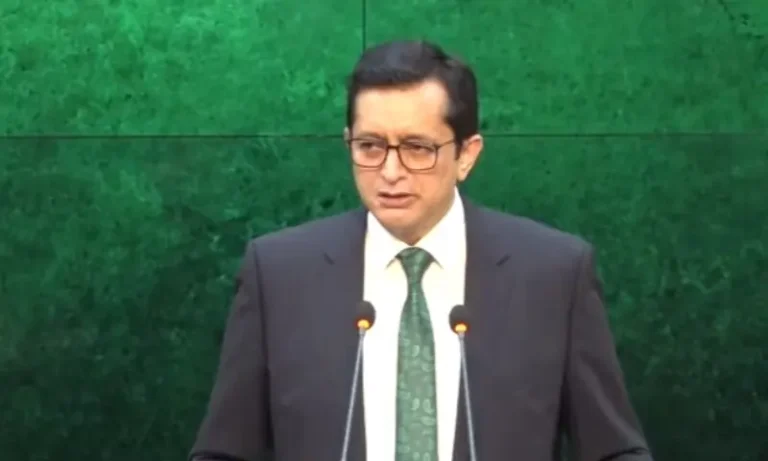
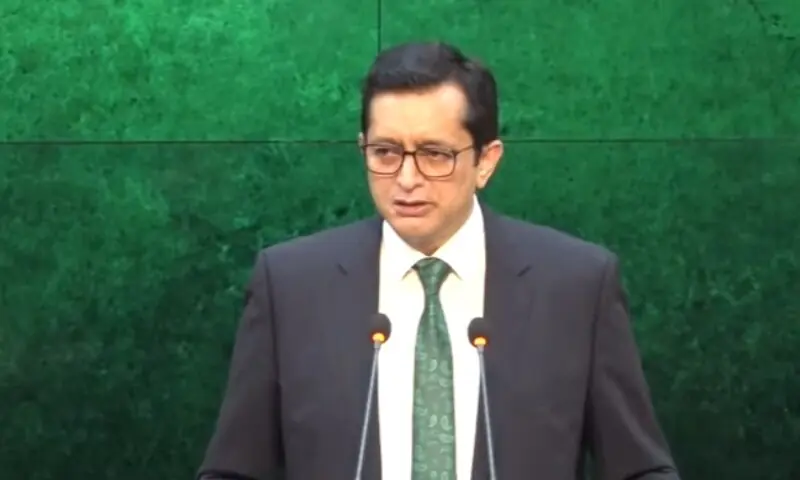
Pakistan’s Foreign Office spokesperson Tahir Andrabi said the visit was significant in the context of promoting regional peace, diplomatic cooperation and a common approach to stability, while also declaring that Pakistan was continuing its diplomatic initiatives to de-escalate tensions in the Middle East and aid in the peaceful resolution of conflicts. The framing is a reflection of Pakistan’s overall stance in the Gulf since the onset of the Hormuz crisis in February 2026.
In a September 2025 bilateral SMDA analysis, the Brookings Institution said the agreement was more than platitudes that usually accompany cooperative security pledges. The Makkah agreement is even more extensive. It’s a trilateral collective security pact, a shared arms manufacturing order, and an assertion of strategic alliance among the Muslim world, signed in the city where the religion itself attracts the interest of 1.8 billion believers.
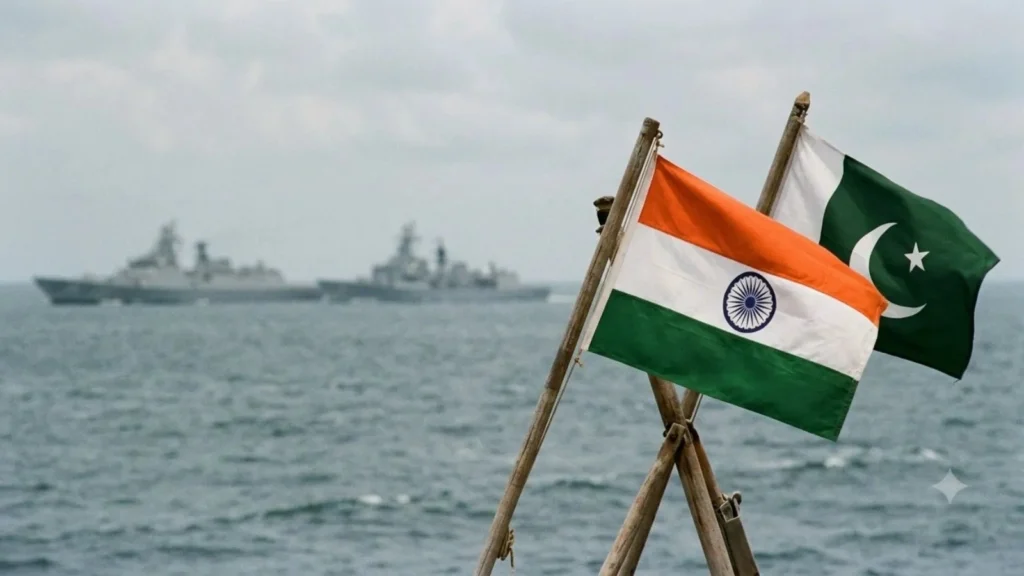
The three flags in Makkah represent a security architecture that did not exist 24 hours ago. The region it will operate in has not been more volatile since 2003. Those two facts together define what the agreement must now prove it is worth.

Our Editorial Desk is the intellectual engine of Digital Debate, responsible for the rigorous research that anchors every conversation. Our team deep-dives into data, checks every source, and consults academic literature to move beyond headlines and identify the questions behind the questions.