Iranian President Masoud Pezeshkian landed in Islamabad on Tuesday, June 23, aboard a special aircraft named Minab 168, a tribute to the 168 students killed in an American strike on a girls’ school in the Iranian city of Minab on the first day of the war. The name of the aircraft is a signal. Iran arrived in Pakistan carrying its grief visibly, on the fuselage of the plane, and its gratitude just as openly. This is Pezeshkian’s first overseas trip since the United States and Israel launched strikes on Iran on February 28. His first choice of destination after a war that killed thousands, closed the world’s most critical energy corridor, and nearly triggered a nuclear standoff was not Beijing, not Moscow, not Ankara. It was Islamabad.
The visit is Pezeshkian’s second to Pakistan as president. The first was in August 2025, a few days after the 12-day Iran-Israel war and his first visit abroad after the war. The pattern is now deliberate. When Iran emerges from a military conflict, it comes to Islamabad first. That tells Pakistan’s leadership, as well as the region, that Tehran considers its most trusted relationship. Appreciating Pakistan’s Prime Minister for his mediation between Iran and the United States is one of the official purposes of the trip, the Iranian president’s public relations director said. This isn’t a regular bilateral call. It is a state visit organized to express gratitude, consultation, and to ensure a diplomatic process which Pakistan has initiated over a span of 116 days could continue in the future.
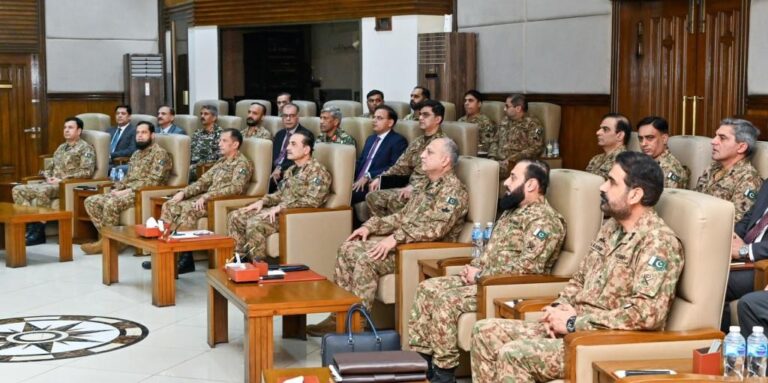
Pezeshkian was received at a military base near Islamabad by the President, Prime Minister, Deputy Prime Minister, and Foreign Minister. The full weight of Pakistan’s civilian and military leadership turned out. Billboards across Islamabad featured Pezeshkian alongside both Pakistani leaders. In the initial talks, Pakistan’s Prime Minister told Pezeshkian that Pakistan would never let Iran down and that it would carry out its role as mediator until everlasting peace is achieved. That commitment was made publicly, with the full understanding that the 60-day final deal window has only just opened and the hardest questions, Iran’s nuclear program, sanctions sequencing, and Lebanon, remain unresolved.
What the Visit Produces
The Foreign Ministries of both countries confirmed that they will discuss the comprehensive agenda of bilateral relations and find fresh opportunities to expand bilateral cooperation in trade, energy, border management, people-to-people contact, and regional connectivity. These categories have specific contents. The Geneva MOU’s sanctions waiver clears a path to the Iran-Pakistan gas pipeline, which has languished for 13 years for just such a legal climate. The $10 billion per year trade target, which Pezeshkian had committed to during his August 2025 visit, was previously considered as wishful thinking, but now has a sanctions framework to make it realistic. In terms of border security, the two nations have a shared border, which witnessed Iran’s missile launches in Pakistan’s Balochistan province in January 2024, while amicable cooperation is underway. The bilateral relationship in the post-war era must deal with that history and take advantage of the mediation’s trust.
The visit comes one day after the first round of high-level US-Iran talks in Burgenstock, Switzerland, produced a 60-day roadmap toward a final agreement. Pakistan and Qatar issued a joint statement confirming encouraging progress. But the same day, discrepancies emerged between Washington and Tehran on what had been agreed about IAEA inspections of bombed Iranian nuclear sites. US Vice President JD Vance stated that Switzerland talks yielded agreement for IAEA inspectors to visit bombed sites. Foreign Ministry spokesperson says there are no such visits planned in Iran. Pezeshkian arrived in Islamabad with that contradiction still alive. Such meetings with the Pakistani leadership are therefore not of a ceremonial nature. They are part of active diplomacy.
This bilateral visit will generate agreements and statements. The strategic dimension is larger. Iran choosing Pakistan as the first stop after its most devastating conflict in decades, bringing its full cabinet delegation, naming its aircraft after war victims, and using the visit to anchor the next phase of the peace process places Islamabad at the center of the region’s most consequential diplomatic architecture. Pakistan’s role is no longer just the facilitation of messages. Iran is signaling that Islamabad has become politically invested in the outcome of the process. That investment carries weight and responsibility in equal measure.

Our Editorial Desk is the intellectual engine of Digital Debate, responsible for the rigorous research that anchors every conversation. Our team deep-dives into data, checks every source, and consults academic literature to move beyond headlines and identify the questions behind the questions.