This was in April 2010. The National Assembly had passed the 18th Constitutional Amendment, which included the decision to rename the province of North-West Frontier Province as Khyber Pakhtunkhwa. Soon after the decision, protests began in Hazara. People came out onto the streets and demanded the creation of Hazara Province. During the protests, seven people were killed initially, and later the death toll reached nine.
At that time, I was working for Geo TV and was in Abbottabad for reporting. The main road into Abbottabad was blocked. I knew that I would not be able to enter the city that way, so I took an alternative route from the Murree side. After crossing Thandiani, there are two or three roads leading towards Abbottabad. I chose one of them and reached Mandian Chowk on the Karakoram Highway.
There were no vehicles on the road. Stones were scattered everywhere. There was no police in sight. Women and children were sitting along the roadside. I was filming them when I suddenly heard a noise. From the direction of the market, I saw a jeep approaching. A large crowd surrounded the jeep. Young people were chanting slogans; the atmosphere was charged with protest, and standing on the jeep was Sardar Haider Zaman, the leader of the Hazara Province movement. He was holding a megaphone and appealing to people to open the road.
He was saying that people were running short of food and other essential supplies, educational institutions and health centres were closed, and there was no milk for small children. He appealed for the roads to be opened so that people could buy what they needed. The protest, he said, would continue, but ordinary people should not be made to suffer.
The young protesters, however, were angry. Slogans filled the air, and people remained firm in their demand. I moved among them. I was preparing a special report for Hamid Mir’s Capital Talk on Geo News, so I wanted to do more than simply report the protest. I wanted to understand their demands and the reasons behind them. Why did they want Hazara Province? What was really driving this demand?
A little further from Mandian Chowk was Ayub Medical Complex. I thought I should also speak to the students there. The college was not attended only by students from Abbottabad. There were students from Kohistan, Battagram, Mansehra and other parts of Khyber Pakhtunkhwa, as well as Mardan, Swat, Swabi and Dir.
I went inside the college and found around twenty-five students sitting in a circle in a large field behind the college, drinking tea. It is a local tradition for people to sit in a circle in the evening and talk. I introduced myself and asked them what they thought about Hazara Province. By coincidence, some students from Mardan and Swabi were also sitting there. What the students told me opened up a completely different side of the issue.
They said their problems were not about identity; they were administrative problems. Even for a small government matter, they had to travel to Peshawar. At that time, the motorway had not yet been built. A person travelling from Kohistan to Peshawar would spend almost an entire day on the journey. He would reach Peshawar tired, stay in a hotel, and go to the relevant office the next day. Sometimes the officer would not be there. Sometimes the work could not be done. Sometimes a simple task would take two or three days.
They shared many stories about their elders who had repeatedly travelled to Peshawar for minor government matters. A small task could cost them a great deal of time and money. Their point was simple: if a smaller province were created, travel would not disappear completely, but it would become shorter. Many matters could be handled locally instead of in Peshawar, bringing administration closer to the people.
I asked students from Mardan, Swabi and other areas the same question. Their response was also broadly similar: the basic responsibility of government is to provide services to people. If an administrative change can bring solutions closer to people, it deserves consideration. That day changed the way I looked at the debate over provinces.
A province is not only a matter of identity. It is also an administrative unit. Its purpose is to bring state authority, resources, and public services closer to the people. If a citizen has to travel all the way to a provincial capital for a simple task, the problem is no longer just the journey. Access to the state itself becomes difficult.
Authority should move from the division to the district, from the district to the tehsil, from the tehsil to the union council, and from there to the ward. The closer decision-making is to the place where a problem occurs, the easier it becomes to solve that problem. It also creates new political leadership at the local level. A person can begin in a ward, move to a union council, then to a tehsil and district, and eventually go further. People see that person closely and judge their work. In this way, leadership can rise from the ground up.
I have spent the last twenty-five years in journalism. I have reported from conflict-affected areas of Balochistan, the former FATA, major cities of Sindh and smaller towns. I have travelled to remote areas, spoken to ordinary people and listened to their problems. Again and again, I have felt that the strength of the state is closely connected to how close it is to its citizens.
Distance from the state is not only geographical. It can also be administrative and psychological.
Think of two children: one who lives with their parents and another who lives in a hostel. The child living at home has direct access to their parents and can speak to them without going through several layers. A hostel student may have to go through several people and several steps before their concern reaches the right person. The difference is not only where they live; it is also the quality of their connection.
The same can happen between citizens and the state. When citizens can easily reach their representatives, administrators, and decision-makers, the state no longer feels like a distant power. They feel that their voice can be heard, their problem can be addressed, and someone responsible is available in their own area.
This is where Ibn Khaldun’s concept of Asabiyyah comes to mind. For Ibn Khaldun, Asabiyyah was not simply tribal loyalty. It was the sense of collective belonging, mutual support, and solidarity that binds people together. This collective strength enables a group to act together and build political power. When that bond weakens, collective strength also begins to decline.
Seen in the context of the modern state, Ibn Khaldun’s idea can help us understand the relationship between citizens and the state. When citizens feel that the state understands their problems, hears their voices and is present close to them, their sense of connection with the state can also become stronger.
There is also something relevant in the administrative approach of Caliph Umar ibn al-Khattab. As the Islamic state expanded, new centres were established to manage its growing population and territory. Kufa and Basra were established during that period and later became major administrative, military, and urban centres. A statement is also attributed to Umar about preventing cities from growing beyond a manageable size and establishing new settlements. The exact wording should be treated with caution, but the establishment of new settlements and administrative centres during his period is a historical fact.
The broader lesson is simple: a large state needs administrative centres that reduce the distance between government authority and the everyday needs of its people.
Some time ago, I had a meeting in Islamabad with Mian Amer Mahmood, the CEO of Dunya TV and Punjab Group of Colleges. He had invited a few journalists to his home. Chaudhry Abdul Rehman, CEO of Neo TV, was also present. We spent several hours discussing Pakistan’s administrative structure and the need to transfer authority to the lower levels.
Mian Amer Mahmood himself served as the Nazim of Lahore, so he has direct experience of problems at the street and neighbourhood level. He has also developed a detailed written model on the distribution of administrative authority and has worked on it for many years.
One part of his model proposes turning the existing divisions into administrative provincial units. His argument is that there would not necessarily be a need to build completely new administrative structures everywhere. Existing commissioner offices, staff, vehicles, and infrastructure could form the basis of the new administrative units.
The constitutional, political and financial details of this proposal are a separate debate. What I found important in Mian Amer’s model was its emphasis on moving power downward rather than keeping it concentrated at the top.
I also discussed the same subject recently with former Prime Minister Shahid Khaqan Abbasi. We were speaking for a digital debate, and I asked him whether increasing the number of provinces would lead to a major increase in government expenditure.
His answer was that expenses could actually come down. In his view, if problems are dealt with promptly at the local level, costs can be reduced. A problem that is solved early may never become a major crisis, while solving a major crisis can require far greater resources.
This also connects with what I have seen during my years as a journalist.
If a citizen of Gwadar has to travel to Quetta for an ordinary administrative matter, the journey itself can become a problem. Similarly, if someone from Kohistan has to spend an entire day travelling to Peshawar, stay there overnight and visit an office the next day, a simple task can turn into a problem lasting several days.
The debate over provinces often becomes a debate about identity, language, nationality and political interests. But when I spoke to those young people in Abbottabad in 2011, I saw another very practical side of the issue: access to the state.
Today, as the debate over new provinces has started again, I remember those students. Their question was simple: why should we spend so much time, money and energy travelling such long distances for a small task?
The demand for new provinces in Pakistan is not new. Political parties and different regions have raised such demands at different times. The National Assembly has also discussed and passed resolutions relating to new provinces on various occasions. The PML-N, PTI, JUI, MQM and PPP have all expressed positions on new provinces at different times. This is therefore not simply the issue of one region or one political party. It is part of a continuing debate about Pakistan’s administrative future.
How much will it cost? How will new administrative structures be created? Will constitutional amendments be required? How will resources be distributed? What will be the impact on the NFC? How will political representation change? How will the administration function after the creation of new provinces? These are all important questions. They should be discussed seriously, and every proposal should be tested against facts, figures and practical realities.
But there is another side that should not be ignored. If administrative authority genuinely comes closer to the people, the greatest benefit will go to Pakistan’s citizens. People will feel closer to the state and to their governments. Political activity at the local level can grow, new leadership can emerge, political parties can build stronger connections with their workers and voters, and ordinary citizens can have a greater role in politics.
Stronger politics can contribute to a stronger state. If administrative barriers are reduced, economic activity can also benefit. When business, public services, and government matters can be handled closer to people and more quickly, there can be economic benefits as well.
But above all, the social contract between the state and its citizens can become stronger. When citizens feel that the state is close to them, their relationship with it is no longer limited to laws and constitutional rights. It can also include trust, participation, and a sense of ownership.
After twenty-five years in journalism, this is what I have repeatedly felt: one of Pakistan’s major challenges is the distance between the state and its citizens. New provinces may be one way to reduce that distance, but only if they are accompanied by genuine devolution of power to the lower levels.
Otherwise, increasing the number of provinces may change the map without changing the life of the citizen.
I see a clear potential benefit for Pakistan, and especially for its citizens, in bringing government closer to the people. If political parties have repeatedly spoken about new provinces, if resolutions have been brought before Parliament, and if different regions continue to raise these demands, then the debate should now move beyond political slogans. It should focus on administrative reform, distribution of power and citizens’ access to the state.
There will be constitutional, financial, administrative, and political challenges. But if the real obstacle to giving people greater authority is simply political interest or an unwillingness to share power, then the issue becomes less about administration and more about political will.
A strong state is not one whose offices are large or whose administrative centre is far away. A strong state is one in which an ordinary citizen feels that the government is close, that their representative listens to them, and that they do not have to travel hundreds of kilometres to get a legitimate problem addressed.
Creating provinces on a map is one process. Creating trust in the state in the hearts of citizens is the real achievement.
Read more: https://digdebate.com/constitutional-mechanics-new-provinces-local-governance-pak/

Sabookh Syed
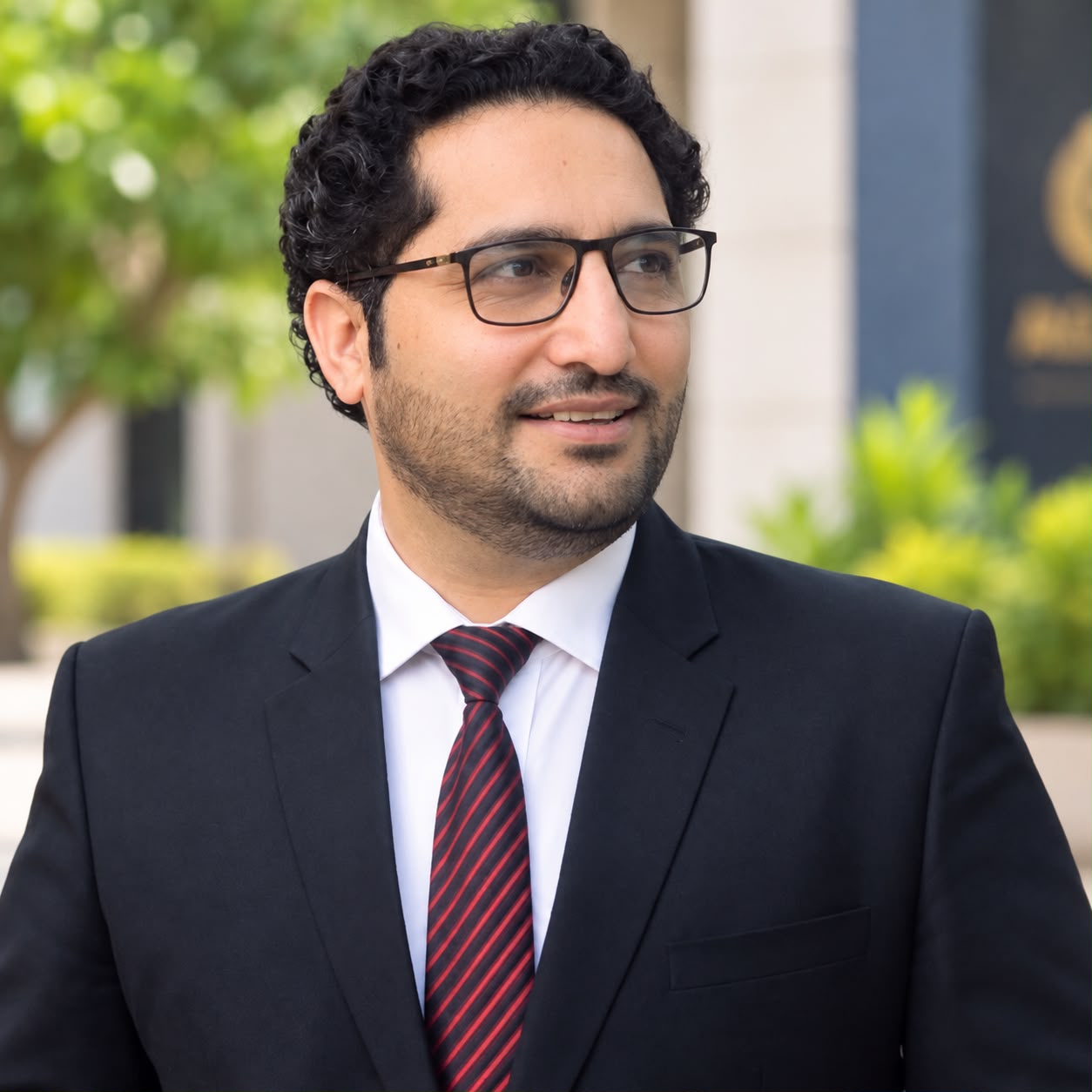
Sabookh Syed is a prominent Pakistani journalist, TV anchor, and researcher based in Islamabad, known for his extensive coverage of religious and sectarian issues, militancy, human rights, and marginalized communities.