
Introduction to the Crisis of Centralization and Elite Capture
The structural integrity and administrative efficacy of Pakistan’s federal model have been the subjects of intense and polarized debate since the passage of the Eighteenth Constitutional Amendment in 2010.
While the amendment successfully decentralized legislative and fiscal authority from the federal core in Islamabad to the provincial capitals of Lahore, Karachi, Peshawar, and Quetta, it inadvertently facilitated the consolidation of highly centralized provincial oligarchies.
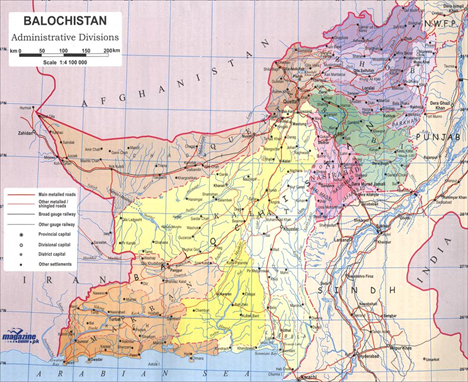
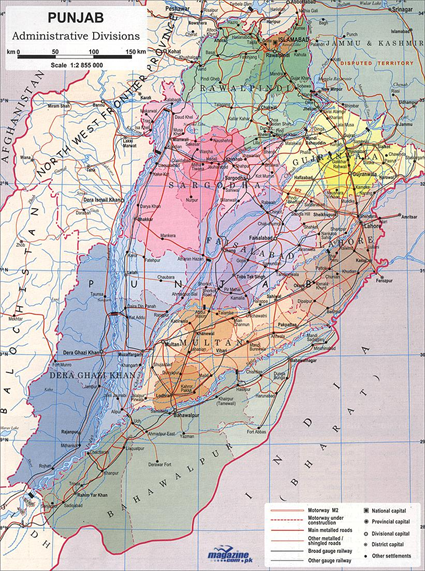
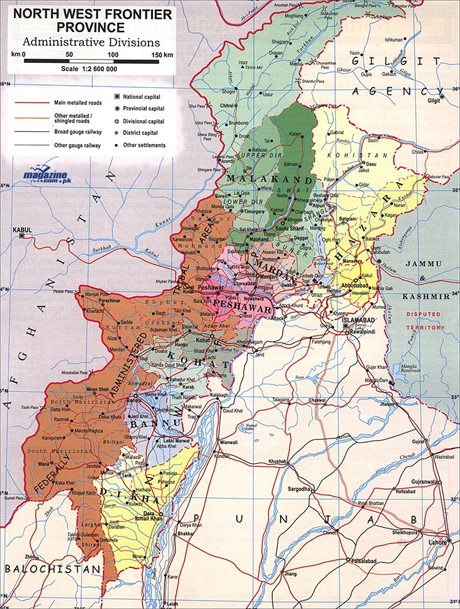
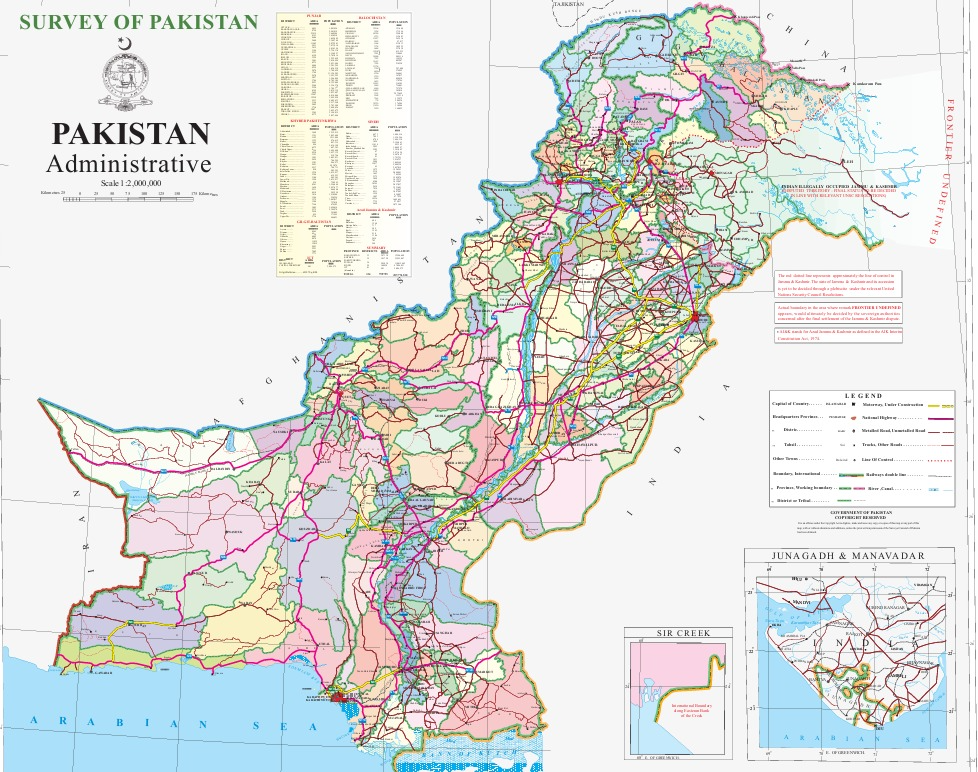
The reluctance of provincial governments to devolve political, administrative, and financial power downward has stifled grassroots democracy, catalyzed extreme regional disparities, and fueled persistent, geographically concentrated demands for the creation of new federating units, such as South Punjab (Saraikistan), Bahawalpur, and Hazara1.
The narrative surrounding governance reform in Pakistan is frequently framed as a binary choice: the state must either redraw the national map by carving out new provinces to address ethnic and developmental grievances, or it must accept the status quo of large, unwieldy, and centralized provincial administrations.
However, a rigorous examination of constitutional law, administrative architecture, and fiscal federalism reveals that creating new provinces is not only a politically explosive endeavor but also a financially prohibitive one that strains a fragile national exchequer.
A third, more pragmatic and sustainable paradigm exists: the empowerment of existing administrative units—specifically Divisions and Districts—coupled with a constitutionally protected, financially autonomous local government system.
This comprehensive report provides an exhaustive analysis of the constitutional process required for creating new provinces, the monumental administrative and judicial infrastructure such an endeavor entails, and the historical trajectory of local democracies in Pakistan under various regimes.
It evaluates the limitations of past administrative experiments and concludes by proposing a comprehensive constitutional and fiscal framework designed to guarantee local governance, mitigate civil service friction, and ensure equitable development across the federation.
The Constitutional and Legal Labyrinth of Provincial Genesis
The foundational text of the state, the 1973 Constitution of Pakistan, explicitly names the federating units in Article 1 but provides no freestanding, ordinary legislative mechanism for the admission or creation of new provinces1. Unlike the Constitution of India—where Articles 2 and 3 empower the federal parliament to alter state boundaries, diminish areas, or form new states through ordinary legislation without requiring a state veto—Pakistan’s constitutional architecture heavily entrenches the territorial integrity of its existing provinces to protect smaller units from federal overreach1.
The Mechanics and Gridlock of Article 239
The legal pathway to establishing a new province in Pakistan is governed entirely by the constitutional amendment procedures detailed in Part XI, specifically Articles 238 and 2396. The procedure operates through a rigid sequence of legislative supermajorities that require near-unanimous political consensus.
The most formidable barrier within this framework is Article 239(4). The clause dictates that a bill to amend the Constitution which would have the effect of altering the limits of a province cannot be presented to the President for assent unless it has first been passed by the Provincial Assembly of the affected province by a vote of not less than two-thirds of its total membership. Only after the provincial assembly has consented can the amendment bill proceed through both the National Assembly and the Senate of Pakistan, requiring a two-thirds majority of the total membership in each respective house1.
The drafting history and subsequent jurisprudence surrounding Article 239(4) indicate that the clause was originally intended to manage minor boundary realignments between existing provinces, rather than to serve as a mechanism for carving entirely new provinces from scratch1. The political reality of this constitutional lock is stark.
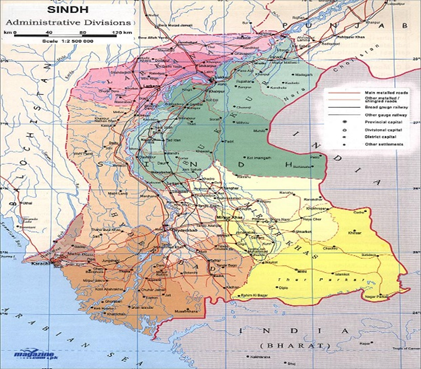
For instance, any attempt to divide Sindh or create a Karachi province is immediately neutralized by the Sindh Assembly, which has repeatedly passed resolutions—most recently citing Article 239(4) as an absolute lock on the door—rejecting any division of its historical boundaries or the placement of any district under separate federal arrangements.
Historical Movements: Bahawalpur and South Punjab
The demand for new provinces is deeply rooted in historical grievances and ethno-linguistic identities. The movement for the restoration of Bahawalpur is predicated on its historical status as an acceding princely state. Nawab Sir Sadiq Muhammad Khan Abbasi V signed the accession covenant in 1947, and Bahawalpur operated with provincial status and a surplus budget until it was merged into the “One Unit” scheme in 1951.
Following the dissolution of One Unit in 1970, Bahawalpur was not restored as a province but was instead relegated to a divisional status within Punjab, sparking decades of resentment.
Parallel to this is the Saraiki/South Punjab movement, driven by linguistic identity and acute socioeconomic marginalization. Proponents argue that the southern districts are severely underdeveloped compared to central and northern Punjab, suffering from systemic neglect in resource allocation, infrastructure, and federal employment.
In 2012, the National Assembly passed a resolution supporting the creation of a new province in Punjab and formed a parliamentary commission, but the initiative ultimately stalled due to the constitutional requirement of a two-thirds majority in the Punjab Assembly, revealing the initiative as largely a political maneuver rather than a viable constitutional reality. The overlapping but distinct demands of Bahawalpur restorationists and Saraikistan advocates further complicate the demarcation of any proposed new province.
The “28th Amendment” and the Limits of Executive Referendums
Recent political discourse has seen federal actors, including the Interior Minister, speculate on the introduction of a “28th Constitutional Amendment” to restructure the federation into smaller administrative units, potentially beginning with transforming Islamabad into a distinct provincial entity1. To circumvent provincial resistance, proponents have occasionally floated the idea of utilizing a national referendum under Article 48(6) to bypass the provincial assemblies5.
However, constitutional jurisprudence explicitly refutes this approach. While a referendum may ascertain public sentiment and provide moral or democratic legitimacy, it cannot constitutionally substitute or override the rigid legal requirements of Article 239(4)5. Furthermore, while Article 239(5) states that no constitutional amendment shall be called into question in any court on “any ground whatsoever,” the Supreme Court of Pakistan has historically expanded its doctrine of “basic features,” consistently identifying federalism and provincial autonomy as unamendable pillars of the state1. Any federal attempt to coerce the division of a province without strict adherence to Article 239(4) would inevitably trigger an unprecedented constitutional crisis and immediate judicial review by the newly formed Federal Constitutional Court (FCC), rendering the creation of new provinces practically impossible under current political polarization1.
The Institutional Burden: Replicating the State Apparatus
Assuming the insurmountable constitutional hurdles were somehow overcome through a grand political consensus, the operationalization of a new province is not a mere cartographic exercise. A province in Pakistan is a vast, deeply entrenched ecosystem of administrative, judicial, and fiscal infrastructure. Creating a new federating unit requires the wholesale replication of massive state machinery, an undertaking that carries severe financial and operational implications.
The Constitutional and Judicial Infrastructure
The genesis of a new province necessitates sweeping amendments to various structural provisions of the Constitution4. Under Article 106, a new Provincial Assembly must be established, requiring the painstaking delimitation of new territorial constituencies and the reallocation of provincial legislative seats4. Concurrently, Articles 51 and 59 must be amended to reallocate National Assembly seats and provide equal Senate representation for the new province, a move that fundamentally alters the demographic and political balance of power in the federal legislature4.
Equally daunting is the judicial infrastructure. Under Articles 175A and 198, a province cannot function without an apex judicial body to manage the enforcement of fundamental rights, oversee appellate jurisdictions, and administer the lower judiciary3. Establishing a new High Court involves the creation of a principal seat, the constitutional appointment of a Chief Justice and puisne judges, the construction of judicial complexes, and the establishment of a parallel judicial bureaucracy. This process not only requires immense capital expenditure but also threatens to disrupt the existing judicial hierarchy and pending caseloads of the parent province4.
The Bureaucratic, Revenue, and Law Enforcement Apparatus
On the administrative side, a new province demands the creation of an independent Board of Revenue (BoR) to manage land records, taxation, agricultural assessments, and property valuation12. It requires a distinct Public Service Commission to recruit, train, and manage a new cadre of provincial civil servants. Law enforcement necessitates the appointment of a separate Inspector General of Police (IGP), the establishment of a provincial police command structure, and the highly contentious division of existing police assets, armories, and long-term pension liabilities8.
Furthermore, the civil bureaucracy in Pakistan is already plagued by severe historical friction between the elite, federally recruited Pakistan Administrative Service (PAS) and the provincially recruited Provincial Management Service (PMS)15. PAS officers, despite being a federal cadre, historically dominate the most lucrative and high-impact provincial posts (such as Chief Secretaries, Commissioners, and Deputy Commissioners), leaving PMS officers marginalized with limited career progression and unequal access to fringe benefits15. The creation of a new province would violently exacerbate these turf wars, as both cadres would fiercely vie for dominance over a fresh slate of secretariats and executive postings, leading to administrative paralysis and extensive litigation15.
The South Punjab Secretariat: A Case Study in Administrative Half-Measures
The administrative complexities and ultimate futility of partial decentralization are perfectly illustrated by the establishment of the South Punjab Secretariat in 2020. Intended by the government as a transitional step toward a full South Punjab province, the Punjab Rules of Business were amended to devolve administrative power to 15 to 17 full-fledged departments located across Multan and Bahawalpur.
The government deployed Additional Chief Secretaries, Additional IGPs, and specialized secretaries on enhanced salary packages, theoretically granting them complete administrative authority over the region17. However, the experiment yielded limited success in improving actual service delivery or governance19. Because the setup lacked the constitutional backing of an independent provincial assembly, a separate divisible pool, and an independent Provincial Finance Commission (PFC) award, it remained financially and administratively tethered to the central bureaucracy in Lahore14. Financial approvals, mega-project sanctioning, and overarching policy directives still required clearance from the provincial capital. The South Punjab Secretariat demonstrated that administrative delegation without absolute fiscal and constitutional autonomy results in costly bureaucratic duplication and confusion, rather than genuine regional empowerment2.
Empowering Administrative Units: A Pragmatic and Superior Alternative
Given the constitutional gridlock under Article 239, the prohibitive financial burden of duplicating state machinery, and the failure of administrative half-measures, a comparatively superior model for Pakistan involves utilizing its existing Administrative Units—specifically Divisions and Districts—as the primary engines of fiscal and developmental management7.
Redrawing provincial boundaries risks inflaming dormant ethnic, linguistic, and sectarian fault lines. The renaming of the North-West Frontier Province to Khyber Pakhtunkhwa in 2010 incited severe backlash from the Hindko-speaking Hazara community, who felt marginalized by the Pashtun-centric nomenclature, immediately sparking violent protests and demands for a separate Hazara province9. Similarly, any attempt to carve a province out of Sindh threatens to ignite devastating ethnic conflict between the urban Muhajir population and rural Sindhis2.
Empowering geographic divisions and districts effectively neutralizes these explosive ethnic flashpoints. By devolving financial and administrative authority directly to the district level, the state can ensure equitable resource distribution based on objective, data-driven metrics—such as population density, multidimensional poverty indices, and infrastructure gaps—rather than historical or linguistic identity22.
District-level governance allows for hyper-localized policy interventions tailored to unique regional ecologies. For example, the ecological, industrial, and infrastructural needs of a coastal, port-driven district like Gwadar or Karachi vastly differ from the agricultural and irrigation requirements of interior districts like Nasirabad or Larkana21. Managing these distinct needs at the district level is far more efficient than routing all decisions through distant, overburdened provincial capitals8. Empowering these units with monetary and administrative control bypasses the need for new provincial assemblies while achieving the core objective of new province movements: bringing governance, resources, and accountability closer to the disenfranchised citizen8.
The Historical Trajectory of Local Democracies
To understand how to successfully implement and protect local governance in Pakistan, it is vital to analyze the historical trajectory of the institution. The evolution of local government in Pakistan reveals a profound paradox: the three most significant eras of local government empowerment were initiated by military dictatorships seeking grassroot leadership legitimation, while civilian democratic regimes have historically marginalized, suspended, or dismantled the third tier of government23.
Ayub Khan and the “Basic Democracies” System (1959–1969)
Following the imposition of martial law, General Ayub Khan introduced the “Basic Democracies” system in 1959. This framework sought to create a controlled democratic structure by dividing the country into 80,000 localized constituencies, electing representatives known as Basic Democrats. The system operated across four tiers: Union Councils at the base, followed by Tehsil Councils, District Councils, and Divisional Councils28.
The system achieved early success in integrating rural elites into the state apparatus and provided a localized mechanism for rural development, dispute resolution, and the execution of agricultural infrastructure projects28. The 80,000 Basic Democrats were eventually utilized as an exclusive electoral college to elect the President and members of the national and provincial legislatures.
Administratively, the structure was heavily dominated by the civil bureaucracy; elected Union Council chairmen were often individuals of lower socioeconomic status who were easily manipulated or intimidated by bureaucratic elites29. Furthermore, as Pakistan began to urbanize rapidly in the 1960s, a system designed primarily for agrarian control and rural patronage failed entirely to address the complex municipal needs of growing urban centers.
Zia-ul-Haq and the Local Government Ordinance (1979)
Under General Zia-ul-Haq, the Local Government Ordinance (LGO) of 1979 was promulgated, creating a bifurcated system that treated rural and urban areas differently. Rural areas operated under a three-tier system (Union, Tehsil, District), while urban areas utilized a four-tier system scaling from Town Committees up to Metropolitan Corporations for major cities like Karachi and Lahore27.
The LGO 1979 marked a significant democratic milestone by conducting elections on the basis of universal adult franchise for the first time in Pakistan’s local history27. It achieved high public participation and formally introduced reserved representation for marginalized groups, including women, peasants, workers, and religious minorities27. It also legally banned direct bureaucratic representation within the local councils, attempting to separate the executive branch from elected representatives27.
Despite these structural achievements, the system suffered from severe political and financial limitations. To prevent the mobilization of democratic opposition to his martial law, Zia mandated that all local elections be held strictly on a non-party basis27. This intentionally fragmented national political parties and localized politics into factions built entirely on biradari (caste/kinship), sectarian identity, and localized patronage29. Provincial bureaucracies retained draconian powers to suspend local councils, veto their financial resolutions, and manage major developmental funds, ensuring that the local governments existed purely at the mercy of the military-backed provincial administration27.
Pervez Musharraf and the Devolution of Power Plan (2001)
General Pervez Musharraf’s LGO 2001 represented the most radical and comprehensive restructuring of local governance in Pakistan’s history. It abolished the colonial-era administrative divisions as the primary unit of governance and effectively dismantled the omnipotent office of the District Magistrate/Deputy Commissioner. In their place, it established an integrated, three-tier elected District Government system (District, Tehsil/Town, and Union) headed by an elected Mayor, termed a Nazim27.
The achievements of this era were substantial. The voting age was lowered from 21 to 18, and a mandatory 33% quota for women was introduced across all tiers, fundamentally altering the demographic makeup of political leadership and bringing thousands of women into the political fold27. Crucially, the plan placed the district bureaucracy, including police and revenue officials, strictly subordinate to the elected Nazims27. It also pioneered participatory governance by introducing Citizen Community Boards (CCBs), allowing direct citizen oversight and funding for municipal functions like health, education, and sanitation27.
However, the system was severely handicapped by its lack of constitutional protection and its questionable political legitimacy. Implemented in the absence of elected provincial assemblies, the Devolution Plan bypassed provincial politicians (MPAs), creating a direct patronage link between the military center and local mayors. This generated intense hostility among the traditional political elite. Once civilian rule returned in 2008, provincial assemblies across the country moved swiftly to dismantle the system, viewing empowered mayors as direct competitors for development budgets and voter patronage. They successfully restored bureaucratic control through Deputy Commissioners and parked municipal services into un-elected, provincially controlled companies and authorities.
Table 1: Comparative Analysis of Military-Era Local Government Systems
| Regime | System Name | Structural Design | Key Achievements | Primary Failures / Areas for Improvement |
| Ayub Khan (1959) | Basic Democracies | 4 Tiers (Union, Tehsil, District, Division) | Integrated rural elites; facilitated localized agrarian infrastructure. | Used as an electoral college to bypass direct elections; heavily manipulated by bureaucracy; failed to adapt to urbanization. |
| Zia-ul-Haq (1979) | LGO 1979 | Bifurcated: Rural (3 Tiers) and Urban (4 Tiers) | Introduced universal adult franchise; reserved seats for women, peasants, and minorities. | Non-party elections entrenched biradarism; severe lack of financial autonomy; provincial executives retained power to suspend councils. |
| P. Musharraf (2001) | Devolution of Power Plan | Integrated 3 Tiers (District, Tehsil, Union) | Lowered voting age to 18; 33% women’s quota; abolished Executive Magistracy; introduced Citizen Community Boards (CCBs). | Lacked constitutional protection; bypassed provincial legislatures causing extreme political hostility; dismantled by subsequent civilian governments. |
*This comparison highlights that while structural innovations were frequent, true financial autonomy and constitutional protection were systematically denied across all eras.*27.
The Financial Strangulation of Local Governments: NFC vs. PFC Disparity
If administrative units coupled with local governments are to be the definitive answer to Pakistan’s federal friction, they must be granted absolute, constitutionally protected fiscal autonomy. Currently, Pakistan’s fiscal architecture is structurally imbalanced, heavily favoring the provinces at the expense of the districts21.
The 7th National Finance Commission (NFC) Award, protected explicitly under Article 160 of the Constitution, successfully decentralized resources from the federal government to the provinces. It moved away from a solely population-based formula to a multi-dimensional criteria that included poverty/backwardness, revenue generation, and inverse population density37. However, this much-celebrated devolution abruptly halted at the provincial capitals.
The equivalent mechanism for distributing provincial funds to the districts—the Provincial Finance Commission (PFC)—is practically defunct and highly manipulated21. Because the PFC lacks the stringent, mandatory constitutional timelines and protections of the NFC, provincial governments routinely delay, suspend, or simply ignore the awards21.
The Centralization of Provincial Funds
Without mandatory PFC awards, local governments are starved of formula-based, predictable fiscal transfers and are reduced to begging for ad-hoc grants from provincial chief ministers21. Data indicates a staggering centralization of funds post-18th Amendment. Between Fiscal Year 2012 and Fiscal Year 2026, local government transfers as a percentage of overall provincial receipts plummeted dramatically across all four provinces, demonstrating a systematic policy of starving the third tier.
Table 2: The Decline of Fiscal Devolution to Local Governments (FY12 vs FY26)
| Province | FY12 LG Transfer Share | FY26 LG Transfer Share | Centralization Trend |
| Sindh | 15.7% | 5.8% | Severe Centralization |
| Punjab | 28.0% | 19.1% | Moderate Centralization |
| Khyber Pakhtunkhwa | 30.0% | 22.0% | Moderate Centralization |
| Balochistan | 5.8% | 0.2% | Near-Total Centralization |
*Source data indicating the systemic decline of fiscal transfers to Local Governments as a percentage of provincial receipts.*21.
When PFCs are announced, their distribution formulas vary wildly and are often manipulated to favor the political strongholds of the ruling provincial party. While Punjab and Balochistan heavily prioritize population (75%), Sindh incorporates infrastructure and performance-based incentives, and Khyber Pakhtunkhwa places significant weight (20%) on backwardness21.
However, without constitutional enforcement, even progressive formulas remain unimplemented42. The absence of a functioning PFC allows Members of Provincial Assemblies (MPAs) and Members of National Assembly (MNAs) to maintain a monopoly on district development funds, continuing to act as localized municipal project managers rather than focusing on overarching provincial or federal legislation34.
Revenue Generation and the Urban Immovable Property Tax (UIPT)
Administrative units cannot rely solely on downward transfers from the province; they require robust “own-source revenue” to guarantee autonomy. Globally, the most vital and sustainable municipal tax is the property tax. In Pakistan, the Urban Immovable Property Tax (UIPT) is assessed based on the Annual Rental Value (ARV) of properties43.
Despite its potential, UIPT yields are abysmally low, constituting less than 10% of Tehsil Municipal Administration (TMA) revenues45. This failure stems from two severe structural flaws. First, the tax base is deliberately eroded by irrational exemptions (such as exempting residential properties up to 5-marlas) and massive disparities in the valuation of owner-occupied versus rented properties44. Second, the tax is administered and collected by the provincial Excise and Taxation departments rather than the local governments themselves44. Because the province acts as the collection agent, it routinely deducts collection charges, retains a provincial share, and intercepts the remaining proceeds to fund un-elected provincial development authorities (like the Lahore Development Authority or WASA)44. Consequently, local municipalities receive a negligible share of the tax generated within their own jurisdictions, destroying any incentive for them to update valuation tables, expand the tax net, or enforce collection44. Devolving the complete administration, collection, and retention of the UIPT strictly to the district tier is paramount for the financial survival and administrative independence of local units30.
Constitutional Fortification: Jurisprudence and the Blueprint for Reform
The current constitutional provision for local governments, Article 140A, is woefully inadequate. Comprising a mere 41 words, it dictates that each province “shall, by law, establish a local government system and devolve political, administrative and financial responsibility and authority to the elected representatives”34. Because it leaves the design, tenure, and fiscal mechanisms entirely to the discretion of the provincial assemblies, it operates more as a constitutional loophole than a safeguard21. Provincial governments exploit this vagueness to routinely dissolve local councils mid-tenure (as witnessed in Punjab in 2019) or systematically strip mayors of their powers, replacing them with pliant bureaucrats and statutory corporations34.
To adequately create and protect local governments from political overreach, the constitutional architecture must be comprehensively overhauled. In the absence of legislative action, the Supreme Court of Pakistan has repeatedly stepped in to rescue the local tier, generating vital jurisprudence that provides a definitive blueprint for future constitutional amendments.
Landmark Jurisprudence: Defining and Defending Article 140A
Two recent Supreme Court judgments form the bedrock of local government defense in Pakistan, clarifying the limits of provincial authority over municipal affairs:
1. The Imrana Tiwana Case (2015 SCMR 1739): This pivotal judgment explored the correlation between Article 137 (which defines the executive authority of the Province) and Article 140A.
The Court ruled that while the province retains the overarching legislative authority to design the local government system, it cannot overstep its mandate to render the local government “powerless”.
If a province fails to devolve meaningful political, administrative, and financial authority, it actively violates the Constitution. The ruling established that provincial and local governments are not strictly hierarchical master and servant, but must act in harmony as co-equal norms woven into the constitutional fabric50.
2. MQM (Pakistan) v. Federation of Pakistan (PLD 2022 SC 439): Building on previous rulings, the Supreme Court struck down Sections 74 and 75(1) of the Sindh Local Government Act 2013 for directly conflicting with Article 140A12. The Court definitively ruled that inherent municipal functions—such as master planning, building control, water supply, sewage, waste disposal, parks, and public transport—belong exclusively to elected local governments.
Crucially, the judgment barred the provincial government from superimposing parallel statutory authorities (such as the Malir or Lyari Development Authorities, or provincial waste management companies) over the jurisdiction of elected mayors, enforcing the inviolable, mandatory command of Article 140A to ensure grassroots empowerment.
A Blueprint for True Devolution: Amending the Constitution
To permanently protect administrative units and local governments from political overreach and ensure the uninterrupted devolution of funds, the Constitution must be amended to remove provincial discretion. Research bodies such as PILDAT and the Law and Justice Commission of Pakistan have frequently highlighted the need for structural alignment with international best practices to ensure justice and service delivery at the local level48. A comprehensive reform—whether packaged as the much-debated 28th Amendment or a standalone devolution bill—must embed the following principles directly into the constitutional text15:
1. Fixed Constitutional Tenures and Mandatory Elections: Local governments must be granted a fixed, inviolable tenure (e.g., four years), heavily protected against arbitrary dissolution by provincial chief ministers or assemblies. Just as Article 224 mandates elections within 90 days for national and provincial assemblies, a strict 90-day window must be constitutionally enforced [for local government elections following the expiry of a term](https://www.thefridaytimes.com/18-Jun-2026/article-140a-broken-promise-local-democracy-pakistan)34.
2. Mandatory and Independent Provincial Finance Commissions (PFC): The PFC must be elevated to the exact same constitutional status as the NFC under Article 160. The Constitution must mandate a strict three-year PFC award cycle, incorporating legally binding allocation formulas that weigh population, poverty, revenue effort, and infrastructure gaps21. Most importantly, a constitutionally enshrined minimum threshold—requiring that at least 25% to 30% of the provincial consolidated fund be automatically transferred to local districts—would permanently eliminate the financial starvation of local councils and bypass provincial executive delays21.
3. Empowering the Election Commission of Pakistan (ECP): While the 18th Amendment added Article 140A(2) to task the ECP with holding local elections, provincial governments manipulate the timing by refusing to provide vital data, delimitations, or updated local government laws.
The Constitution must explicitly empower the ECP to conduct independent delimitations and initiate local elections automatically upon the expiry of a council’s term, penalizing provincial governments that fail to provide necessary logistical or legislative support58.
4. Administrative Subordination to Elected Mayors: The overlapping and highly toxic jurisdictions between the federal PAS, the provincial PMS, and local government executives must be constitutionally separated to resolve civil service friction15.
District administrative officers, law enforcement chiefs, and local development authorities must be made statutorily answerable to the elected Mayor (Nazim) rather than operating as viceroys of the provincial secretariat. This fulfills the true, unadulterated definition of “administrative devolution”15.
5. Abolition of Parallel Patronage Structures: The Constitution must strictly prohibit the allocation of municipal and district development funds to Members of Provincial Assemblies (MPAs) and Members of National Assembly (MNAs). Their constitutional role must be strictly confined to legislative oversight and overarching policy formulation, leaving the execution, procurement, and management of district-level development exclusively to the elected local councils.
Conclusion
The political impulse to resolve Pakistan’s deep-seated administrative inefficiencies and regional inequalities by creating new provinces—whether in South Punjab, Bahawalpur, or Hazara—is a severe misdiagnosis of a structural pathology. Altering the boundaries of the federation under the stringent requirements of Article 239 is an almost insurmountable constitutional challenge that carries severe risks of ethnic and linguistic fragmentation. Furthermore, merely replicating the deeply flawed, highly centralized provincial apparatus in new geographic capitals will exponentially duplicate the bureaucratic, judicial, and financial burden on the state without fundamentally improving service delivery or the lives of the citizenry.
The historical record, stretching from Ayub Khan to Pervez Musharraf, demonstrates that while existing administrative units (districts and divisions) possess immense potential for localized development and efficient governance, they inevitably fail when starved of fiscal autonomy by hostile civilian provincial governments.
The most potent, pragmatic, and financially sustainable solution to Pakistan’s governance crisis lies not in drawing new lines on a map, but in executing a paradigm shift regarding Article 140A.
By constitutionally fortifying local governments—granting them fixed tenures, immunizing them from arbitrary provincial dissolution, assigning them direct and exclusive control over local revenues like the Urban Immovable Property Tax, and guaranteeing their unencumbered share of the provincial divisible pool through a mandatory, constitutionally protected Provincial Finance Commission—Pakistan can organically achieve the equitable development and administrative efficiency promised by the advocates of new provinces.
True federalism does not require the proliferation of provincial capitals; it requires pushing power, unconditionally and permanently, down to the people.
Works cited
1. 28th Constitutional Amendment: New Provinces and Restructuring ↩
2. Vol. 05 No. 01. Jan-March 2026 Advance Social Science Archive ↩
3. Federation of Pakistan and Creation of New Provinces: A Case of ↩
4. Making of New Province in Punjab – Constitutional and Legal ↩
5. Referendum to decide creation of new provinces ↩
6. Constitutional Framework For Formation Of New Provinces In Pakistan ↩
7. Let Sense And The Constitution Prevail – The Friday Times ↩
8. Formation of New Provinces in Pakistan: Challenges and Prospects ↩
9. Politics of New Provinces in Pakistan: A Historical Analysis ↩
10. (PDF) Politics of New Provinces in Pakistan: A Historical Analysis ↩
11. Pakistan now awaits 28th Constitutional Amendment as demand for ↩
12. Supreme Court stops Sindh from undertaking projects within LG ↩
13. Deriving requirements for integrated and standardised cadastre ↩
14. South Punjab secretariat becomes operational on Oct 15 – Dawn ↩
15. Resolving the Structural Conflict Between PAS and PMS ↩
16. Rules of business for south Punjab secretariat approved – Dawn ↩
17. Plan to form south Punjab as separate zone gets Imran’s nod – Dawn ↩
18. Nawaz Sharif’s return: Government writes letter to British govt ↩
19. Pakistan’s Governance Crisis: New Provinces or Stronger Local Govt? ↩
20. Redrawing Pakistan?—III A federal compact from below ↩
21. Beyond the NFC Award: Pakistan’s Unfinished Devolution to Local ↩
22. Speech of President on the 11th NFC Award of Reformistan ↩
23. A Case Study of Punjab Provincial Finance Commission ↩
24. New Provinces or New Fault Lines? – The Friday Times ↩
25. Thoughts on Urban Resilience and Utility Services ↩
26. Article 140A of the Constitution of Islamic Republic of Pakistan, 1973 ↩
[https://www.iiste.org/Journals/index.php/JEDS/article/download/47213/48744](https://www.iiste.org/Journals/index.php/JEDS/article/download/47213/48744)
27. Ayub Khan’s Tenure and Reforms (1958-1969) | PDF – Scribd ↩
28. Local Body Governance in Pakistan: A Historical and Theoretical ↩
29. (PDF) Local Government Taxation in Pakistan – ResearchGate ↩
30. Analysis of the Basic Democracies of Ayub Khan – Cssprepforum ↩
31. Ayub Khan’s Presidency: 1958-1969 Overview | PDF – Scribd ↩
32. Zia-ul-Haq’s Local Government Reforms – Scribd ↩
33. Article 140A And The Broken Promise Of Local Democracy In Pakistan ↩
34. The Case Against Dissolution of Local Governments ↩
35. Local Governments and Sustainable Urban Development; A Case ↩
36. The 7th National Finance Commission Award and Its Implications ↩
37. investigating the impact of fiscal decentralization under the 7th nfc ↩
38. Fiscal Decentralization in Pakistan: 7 NFC Award as Case Study ↩
39. FISCAL DECENTRALIZATION IN PAKISTAN, REVENUE TRENDS ↩
40. PROVINCIAL FINANCE COMMISSION AWARD, 2017-18 ↩
41. Addressing issues in devolution – Business – DAWN.COM ↩
42. Property Registration Tax Pakistan 2026 Stamp Duty · CVT ↩
43. Property Taxes in the Punjab, Pakistan Final Report ↩
44. Property taxes in the large cities of Punjab Province, Pakistan ↩
<a href="https://ideasdev.org/wp-content/uploads/2024/03/Property-Tax-in-Punjab-March-2024_v2.pdf”>A Proposal for Land- Based Urban Property Tax Reform in Punjab
45. Sustainable Pakistan: Transforming cities for resilience and growth ↩
46. PILDAT Endorses Expansive Local Govt Constitutional Amendment ↩
47. The Devolution of Power in Pakistan: A Historical, Critical and ↩
48. Imrana Tiwana Case: Power Distribution | PDF | Constitution – Scribd ↩
49. Imrana Tiwana Case Analysis | PDF | Constitution – Scribd ↩
50. Supreme Court Strikes Down Sindh Act | PDF | Pakistan – Scribd ↩
51. Constitution of Pakistan, Arts. 2(A) 2022 PLD 439 SUPREME ↩
52. LJCP proposes international commercial court – Pakistan Today ↩
53. CJP-led body asks govt to set up int’l commercial court – Dawn ↩
54. Winds of change – The Express Tribune ↩
55. Strategic Assessment of Punjab’s 2019 Local Government … – Ideas ↩
56. further to amend the Delimitation of Constituencies Act, 1974 ↩
57. Kodak Capture Pro Software – Peshawar High Court ↩
58. Bureaucracy and Political Development. (SPD-2), Volume 2 ↩
59. Kodak Capture Pro Software – Peshawar High Court ↩

Syed Abdullah Anwer is a leading legal expert and international media analyst appearing regularly on platforms such as Russia Today (RT) and TVRI World. As a Senior Associate at TAHOTA Law Firm and a CIArb-accredited neutral, he offers authoritative insights into the intersection of regional geopolitics, treaty obligations, and international diplomacy. He is widely recognized for his unique ability to navigate the legal complexities of the China-Pakistan Economic Corridor (CPEC) and maritime law.