The latest report from the UN Security Council’s Analytical Support and Sanctions Monitoring Team removes any remaining doubt about where the Tehreek-e-Taliban Pakistan draws its strength from. According to the Monitoring Team’s 38th Report, the de facto authorities in Afghanistan continued to support the TTP during the reporting period, and this support was heightened with cross-border attacks against Pakistan, which reached the stage of prompting military exchanges. The Taliban administration in Kabul continues to deny harboring any terrorist groups. The UN’s own monitoring body, which gets the information through consensus from Member States, says otherwise.
This is not an isolated finding. According to the Monitoring Team’s 37th report, released in February, it had already found that TTP was a major terror group operating inside Afghanistan, and had a free hand in the permissive environment under the Taliban. The previous report had cautioned that the group’s collaboration with Al-Qaeda-affiliated groups could make it an extra-regional threat. The new report reinforces the trend. The document reflects the TTP’s restructuring on the basis of an annual leadership council into four divisions: Balochistan, the central region, Kashmir and Gilgit, and a newly announced “Air Force” division with drone capability. A group operating under this kind of organizational sophistication does not survive on sympathy alone. It thrives on sanctuary, weapons, and freedom of movement, and all of these clearly have Afghan soil.
The Evidence Trail Across Six Reports
What makes the thirty-eighth report significant is not that it says something new. It is that it restates what member states have been reporting since 2021, and the trend has been repeated in each of the last six reporting cycles. The Monitoring Team noted in its thirty-seventh report that Taliban authorities afforded TTP greater freedom of movement and operational support inside Afghanistan, and that the group’s fighters had begun using advanced assault rifles, night-vision devices, thermal imaging systems, sniper systems and drone attack systems. The 38th report follows the pattern, with the addition that Al-Qaida’s leadership in Kabul this spring gave ideological support and training as part of its cross-border campaign entitled “Operation Khyber,” which killed security personnel in Bajaur district using a vehicle-borne IED.
The most damning addition in this report is the confirmation that Al-Qaida’s central media wing, As-Sahab, issued a statement on 28 April backing both the Taliban and, for the first time, TTP operations against Pakistan. One member state also told the Monitoring Team that fighters from the Baloch Liberation Army trained alongside TTP under Al-Qaida instructors inside Afghanistan. All of this taken together portrays a militant ecosystem that views the Afghan-Pakistan border as a logistics highway instead of a border. This has been Pakistan’s narrative since 2021. The UN report gives it evidentiary weight that Islamabad’s own statements could never carry on their own.
A Pattern, Not a Lapse
The violence emanating from TTP is often treated as a failing of the governance system, which the Taliban are not capable of fixing. The report undercuts that framing too. It notes that Afghan authorities relocated roughly 2,000 TTP fighters and their families away from the Pakistani border, a move that suggests capability exists when the leadership decides to use it. The report also references a warning delivered by Taliban leader Hibatullah Akhundzada through back channels, cautioning TTP against attacks that could cost it Kabul’s support. A group that responds to warnings from a foreign government’s leadership is not an independent actor operating beyond that government’s reach. It is a proxy being managed, not a problem being solved.
There are growing operational and facilitation links among TTP, Al-Qaida, Islamic State-Khorasan, and the Baloch Liberation Army, even as Kabul took limited initial steps to restrain the group. The UN’s findings have solidified Pakistan’s tough stance ever since the end of 2025, when it launched a pre-emptive strike against TTP leadership it says is operating inside Afghanistan. However, mediation talks brokered by Qatar and Türkiye have failed because the Afghan side has been adamant about not signing a written, enforceable pledge to the TTP from their areas, which Islamabad views as a prerequisite for a viable relationship.
The Cost Borne by Ordinary People
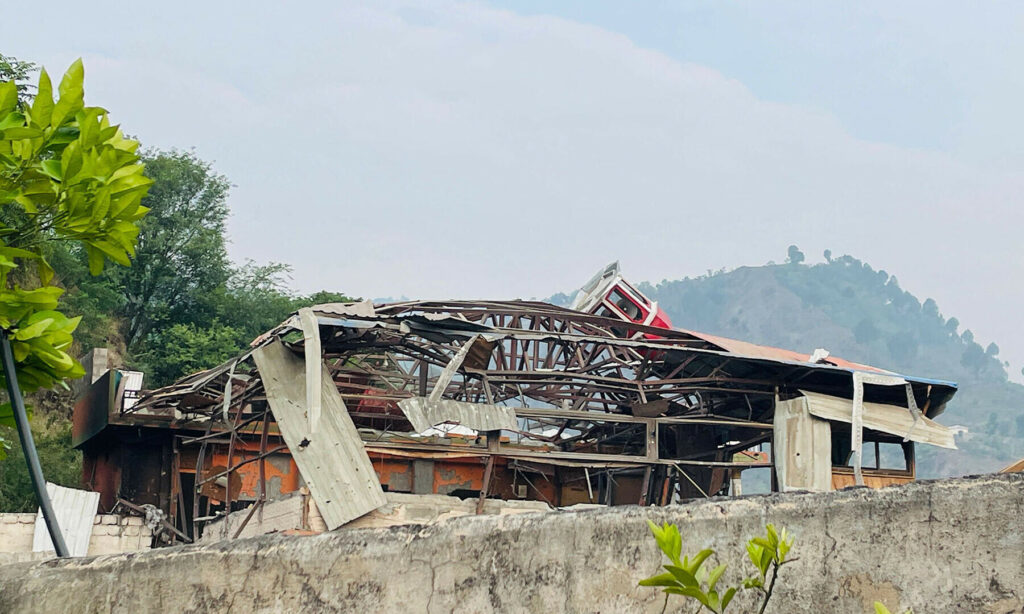
The implications of this standoff are not just on the battlefield. In October, when Pakistan and Afghanistan fired shots across the border, both sides closed five trade crossings, thereby blocking one vital road that goes across Central Asia. The bilateral trade declined from 2.46 billion dollars in 2024 to 1.77 billion dollars in 2025 as Pakistan’s exports to Afghanistan fell 56 percent in early 2026 and losses were in the vicinity of 177 million dollars per month since the crossings remained closed. Truck drivers on both sides of the Torkham crossing were stranded for months with perishable cargo rotting in place. Food prices climbed on both sides of the border, with tomato prices in Pakistan rising more than 400 percent during the closures.
None of this hardship originates in Islamabad. It originates in Kabul’s continued tolerance of a group whose stated aim is to topple the Pakistani state. When a government’s security posture requires sealing its own border to prevent militant infiltration, and that closure then punishes traders, farmers, and daily wage workers on both sides, the responsibility for that damage sits with the party sheltering the threat, not the party defending against it.
The international response to this pattern remains too cautious. Governments are still debating whether to engage the Taliban in a humanitarian and diplomatic dialogue, while a UN-appointed body keeps reporting report after report on the same administration’s support of a militant group that is killing Pakistani soldiers and civilians. Some Afghan officials have responded to the pressure not by curbing TTP, but by seeking alternative trade routes, including outreach to India over access through Chabahar port in Iran, a move that signals Kabul views regional diversification as a substitute for resolving the militancy dispute rather than a reason to resolve it. Responsibility is essential for engagement to be a given.
It informs Kabul that there is no real price for sheltering TTP, no matter what the monitors of the Security Council ultimately decide. The verdict from six consecutive Monitoring Team reports is consistent. The Taliban’s denials do not match the evidence member states have supplied to the United Nations. Any policy toward Kabul that treats this as an open question rather than a settled finding is choosing convenience over the record.

Our Editorial Desk is the intellectual engine of Digital Debate, responsible for the rigorous research that anchors every conversation. Our team deep-dives into data, checks every source, and consults academic literature to move beyond headlines and identify the questions behind the questions.