Today the world marks the International Day of Non-Violence, on the birthday of Mahatma Gandhi. In India there will be garlands at his statues and speeches about peace. Yet in the same week, a different scene played out in the city of Ujjain.
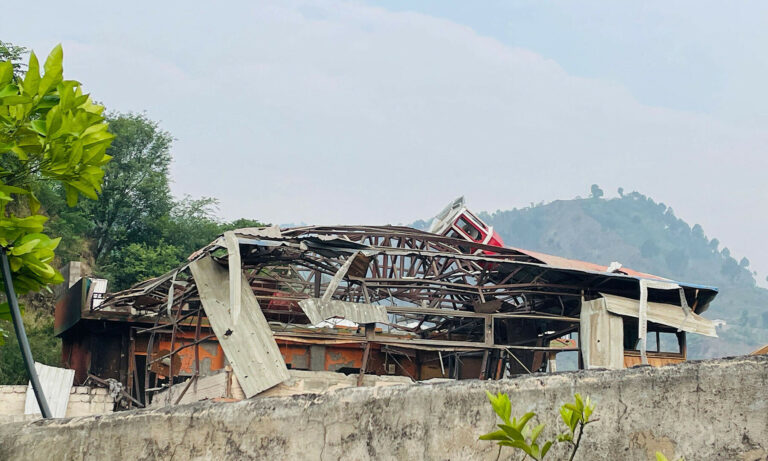
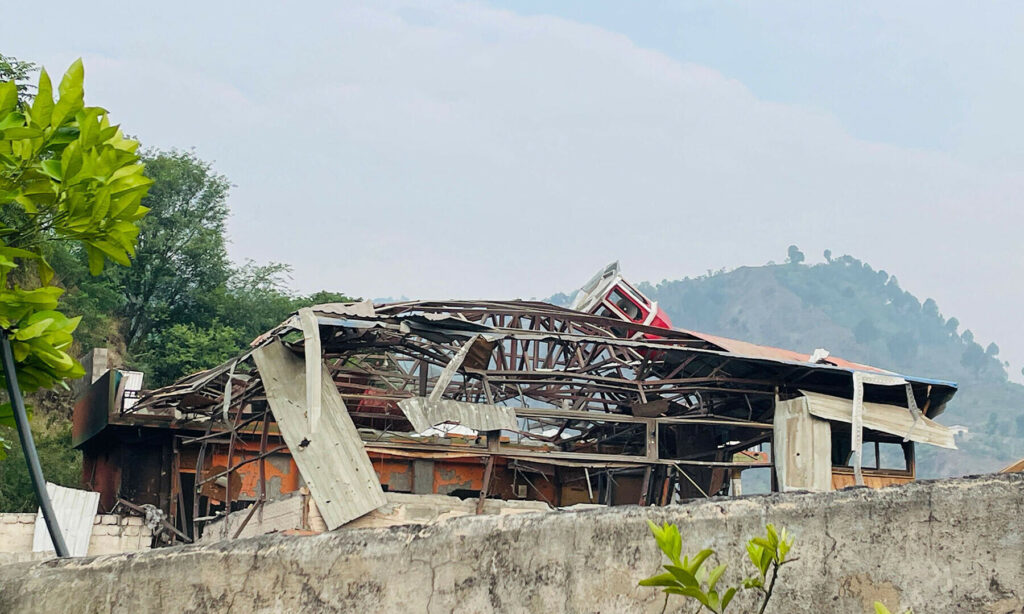
The boundary wall and minaret of the historic Shahi Mosque were demolished as part of a road-widening project ahead of the 2028 Simhastha Kumbh Mela. Hundreds of shops and homes nearby stayed shut, and thousands of police were deployed. Local Muslim leaders then agreed to remove the rest of the mosque themselves to avoid further conflict. Officials say this is development work backed by the courts. The Madhya Pradesh High Court recently upheld the decision. But for the people who prayed there, a house of worship has been taken down, and they were left to choose between watching it fall and pulling it down with their own hands.
This is a useful moment to ask what non-violence really means. Gandhi never defined it as the absence of gunfire. He saw violence in humiliation, in exclusion, and in the quiet crushing of a weaker group by a stronger one. By that measure, a community that is asked to dismantle its own mosque under the shadow of police barricades has been treated with violence, even if no one threw a stone.
Gandhi’s life shows how seriously he took this. He fasted against communal killing and stood with Muslims when it was unpopular to do so. He was not killed by a foreign enemy. In 1948, Nathuram Godse shot him, a man who believed Gandhi was too generous to Muslims. The ideology behind that act has since grown into the most powerful political force in India. Critics say this explains why the country honours Gandhi as a symbol while quietly setting aside his teaching.
Ujjain is not an isolated case. Human rights groups and Muslim organisations have pointed to a series of demolitions of mosques, shrines and Muslim homes across several Indian states in recent years, often under the label of encroachment or road widening. Amnesty International, for example, documented many Muslim-owned structures demolished in a few months of 2022. Each case may come with its own legal file. But when the pattern keeps falling on one community, trust breaks down, and Gandhi himself taught that justice must be seen to be done.
The contradiction does not stop at the border. Gandhi said in 1938 that Palestine belongs to the Arabs, and independent India long kept that moral line. Today India is one of Israel’s closest partners, especially in arms and technology. While Gaza has been devastated and tens of thousands of civilians killed, New Delhi has avoided any real pressure on its partner. Many rights groups and UN experts describe the war as genocide, though international courts are still examining that question. For critics, the link is plain. At home a minority is managed as a problem, and abroad an alliance matters more than the victims. In both places, power is placed above principle.
The lesson is simple. A country does not honour Gandhi by printing his face on its currency. It honours him by protecting the smallest minority, by letting no community feel that its holy places can be taken down on a convenient schedule, and by speaking up when others suffer, even if they are allies. Non-violence asks for courage of the hardest kind: the courage to do right when power makes it unnecessary.
Read more: https://digdebate.com/ujjain-shahi-masjid-road-widening-equal-citizenship/

Our Editorial Desk is the intellectual engine of Digital Debate, responsible for the rigorous research that anchors every conversation. Our team deep-dives into data, checks every source, and consults academic literature to move beyond headlines and identify the questions behind the questions.