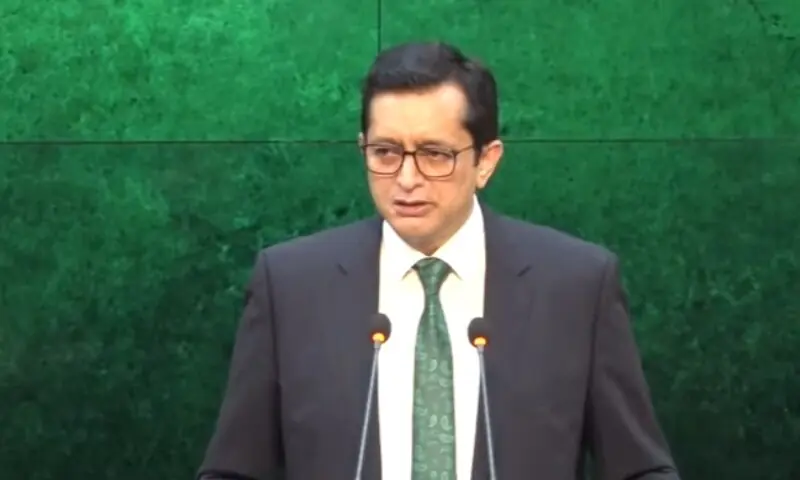
At a time when regional conflicts are rapidly reshaping global politics, the recently held Campus Talk at Quaid-i-Azam University explored a pressing question: how has Pakistan transformed the momentum of Marka-e-Haq into broader strategic and diplomatic gains? Moderated by Mahnoor Qureshi, the session featured Dr. Maryum Fatima, Dr. Khurram Iqbal, and Dr. Muhammad Shoaib, who examined the evolving trajectory of Pakistan’s regional role, from deterrence and military preparedness to diplomatic relevance and global mediation.
From Deterrence to Strategic Recognition
Opening the discussion, Dr. Muhammad Shoaib reflected on the international reaction to Pakistan’s response during the India-Pakistan conflict of 2025. According to him, the scale and precision of Pakistan’s response surprised not only global observers but even many Pakistanis themselves. He shared that in policy circles in Washington DC, expectations from Pakistan had remained comparatively low after 2019, with many analysts dismissing Pakistan’s earlier success as situational rather than strategic.
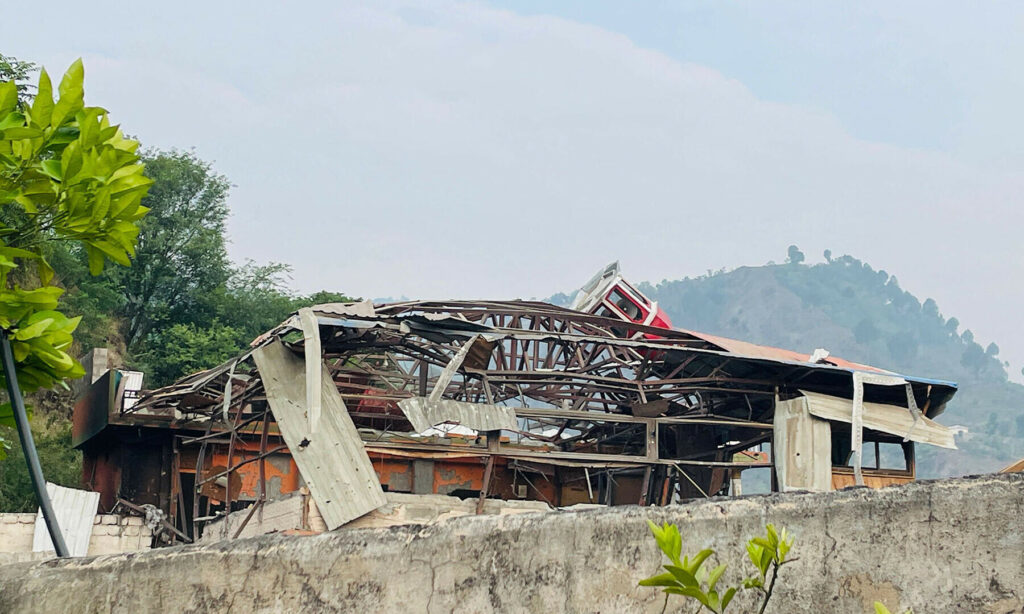
However, the events of 2025 altered that perception significantly. Pakistan’s ability to effectively counter India’s military escalation, including the downing of multiple Indian fighter jets, established the idea that the country’s military doctrine was not accidental but the result of years of planning, technological integration, and operational preparedness. He argued that the conflict fundamentally changed how Pakistan is viewed internationally, turning it from a reactive state into a strategically capable actor whose military platforms and responses are now taken seriously by the world.
Competing Narratives and the Meaning of Victory
Dr. Khurram Iqbal emphasized that wars are fought not only on battlefields but also through narratives. He noted that India has attempted to construct its own version of Marka-e-Haq by portraying the conflict as a strategic success and minimizing its losses. Yet, according to him, the broader international record and diplomatic endorsements reflected a very different reality.
He stressed that Pakistan’s success in the conflict cannot be reduced to a single institution or military branch. Instead, it emerged from a collective national response involving the armed forces, intelligence networks, political leadership, and public unity. He described the conflict as one of the rare moments in Pakistan’s history where political and military leadership demonstrated complete coordination and clarity of purpose.
Dr. Khurram also highlighted the role of public morale during the conflict, recalling scenes where ordinary civilians stood alongside national defence efforts with unwavering confidence. In his view, the conflict transformed Pakistan’s international standing. “Before May 2025, Pakistan existed in international relations but carried limited strategic weight,” he argued. “After the conflict, the world began taking Pakistan seriously.”
He further pointed toward intelligence and technological superiority as decisive elements of the victory. Pakistan’s concealment of its actual missile capabilities and operational range created strategic surprise, preventing India from accurately anticipating Pakistan’s response. This, combined with effective military coordination, converted the conflict into what he termed a “comprehensive national victory.”
Technology, Hard Power, and Diplomatic Leverage
Adding another dimension to the discussion, Dr. Maryum Fatima described the conflict as more than a conventional military confrontation. In her analysis, the events of 2025 represented a “politics of technology,” where integrated Asian defence systems challenged heavily marketed Western military platforms.
She argued that India entered the conflict with strategic overconfidence, believing that advanced acquisitions such as Rafale fighter jets alone could ensure dominance. Pakistan, however, had spent years restructuring and integrating its defence technologies after learning important lessons from the events of 2019. According to her, Pakistan’s growing defence cooperation with China and its shift away from dependence on Western military systems played a significant role in altering the regional balance.
Dr. Maryum emphasized that diplomacy without enforcement capability carries limited weight in international politics. Pakistan’s ability not only to deter escalation but also to impose costs on its adversary generated new diplomatic space for the country. She summarized this transformation through a simple formula: “Hard power plus pragmatic diplomacy creates geopolitical relevance.”
The speakers linked this strategic credibility to Pakistan’s expanding diplomatic engagements after the conflict. Discussions referenced growing defence partnerships, increasing trust from regional actors, and Pakistan’s emerging role in mediation efforts, particularly amid tensions involving Iran and the United States.
Pakistan’s Emerging Regional Role
The discussion also focused on Pakistan’s changing image in global politics. Dr. Muhammad Shoaib argued that Pakistan is increasingly being perceived as a stabilizing middle power capable of facilitating dialogue during regional crises. Referring to recent diplomatic engagements, he suggested that Pakistan’s role in reducing tensions between major regional actors enhanced its credibility far beyond South Asia.
He added that this shift has also strengthened domestic confidence. According to him, the psychological impact of Marka-e-Haq has reshaped national self-perception, creating a stronger sense of stability and belief in Pakistan’s long-term resilience.
The panel also addressed Pakistan’s security concerns regarding Afghanistan. Dr. Khurram Iqbal argued that Pakistan initially pursued diplomatic engagement with the Afghan Taliban in hopes of securing regional stability. However, he maintained that the continued presence and support of militant networks hostile to Pakistan complicated those expectations.
Despite supporting limited military responses to cross-border threats, he stressed that long-term stability with Afghanistan must ultimately come through diplomatic and political solutions rather than perpetual confrontation.
A Window of Opportunity
Concluding the session, Dr. Maryum Fatima described the current moment as a strategic opportunity for Pakistan. She argued that the country must now convert military credibility into long-term economic and geopolitical gains through sustainable industrial growth, regional trade, and stronger diplomatic positioning.
The discussion ended with questions from students regarding the long-term consequences of Marka-e-Haq and Pakistan’s future regional strategy. Collectively, the panel presented Marka-e-Haq not merely as a military episode, but as a turning point that reshaped Pakistan’s strategic identity, diplomatic leverage, and role in an increasingly multipolar world.

Our Editorial Desk is the intellectual engine of Digital Debate, responsible for the rigorous research that anchors every conversation. Our team deep-dives into data, checks every source, and consults academic literature to move beyond headlines and identify the questions behind the questions.