Bangladesh’s new prime minister flew to Beijing and got what New Delhi could not deliver in fifteen years. The Teesta question is now China’s to answer.
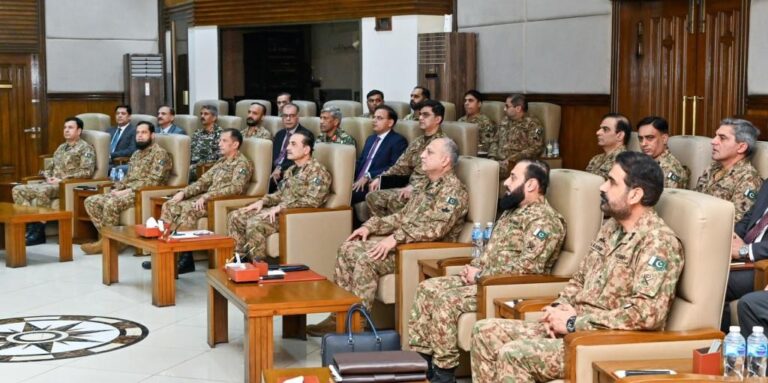
During his four-day visit to China that lasted from June 22 to 26, Prime Minister Tarique Rahman signed 15 memorandums of understanding, two formal agreements and a 16-point joint communique. He met Chinese President Xi Jinping, Premier Li Qiang and National People’s Congress Chairman Zhao Leji one by one and was welcomed at the Great Hall of the People with a red-carpet ceremony and spoke at an investment forum co-organized by Bangladeshi and Chinese trade organizations. The manner in which the first-ever visiting head of government from Dhaka was received was truly remarkable for any level of diplomacy.
Water was the main focus of the visit. China agreed to provide support for the Teesta River Comprehensive Management and Restoration Project, and to cooperate in flood prevention, river dredging, hydrological forecasting and irrigation systems. The significance of that commitment is best understood against what it replaces. The water-sharing arrangement between Bangladesh and India for the Teesta has been stalled since 2011, when West Bengal’s chief minister blocked a ministerial agreement. Nothing came out of 15 years of talks between Dhaka and New Delhi. China’s commitment came after one visit.
It is important to note that there are differences between the Indian and the Chinese approach to Teesta in the structure. The proposed Chinese-backed restoration scheme is completely on Bangladeshi soil and will repurpose dredging, embankments, reservoirs, and irrigation modernization to mitigate the river’s seasonal extremes. It does not involve transboundary water allocation and thus avoids the exact conflict that halted the India deal for a span of 15 years. The Indian version would have meant that New Delhi would have had to accept sharing the river water with Dhaka, which was a politically sensitive issue in West Bengal. China’s strategy does not need such a concession as it is entirely on Bangladesh’s side of the border. That is not simply a different financing source. It is a different approach to a problem federal politics in India failed to solve.
What Was Promised and What Was Not
The visit’s actual financial commitments were more measured than the political symbolism suggested. No financing agreement for the Teesta project was signed. The joint statement reiterated China’s readiness to provide support “within its capacity” and speed up feasibility studies through expert cooperation between the two countries. The initiative was described by China’s Foreign Ministry spokesperson as a “livelihood project” it is ready to help with “to the greatest extent we can,” implying a lack of specific numerical commitments. Bangladesh’s Foreign Affairs Adviser has acknowledged that China had promised to provide around $300 million in grant aid, and a new ‘Two Plus Two’ level dialogue mechanism was introduced between the Foreign Affairs and Defense Ministries of the two countries.
China also took its geopolitical optics very seriously. Beijing explicitly rejected India’s concerns over Chinese engineering activity in the Siliguri Corridor, the narrow strip of land that links the Indian north-east with the country, saying the relationship between China and Bangladesh is not meant to target any third country. Dhaka adopted the same careful framing. Bangladesh’s Foreign Secretary suggested that the country was reviewing the Teesta process and could hold discussions with China about the feasibility of the project, rather than its financing, a distinction that is viewed as deliberate to reduce unnecessary geopolitical tensions and ease concerns of regional partners. Both sides are executing a careful balancing act rather than an open pivot. The Malaysia stop that followed Beijing was read in the same vein, and it’s a signal that Dhaka is not interested in being caught up in India-China tensions.
China also backed Bangladesh’s aspirations to join BRICS and the Shanghai Cooperation Organization, and committed to deepening cooperation on connectivity, ports, including the modernization of Mongla Port, education, and climate action. These commitments turn Bangladesh’s regional profile beyond the bilateral relationship with India that has been the traditional basis for its foreign policy.
Why Capacity, Not Intent, Will Decide the Outcome
The most candid assessment of the visit came from a domestic Bangladeshi voice rather than a foreign analyst. A commentator close to the policy process noted that Bangladesh’s constraint is its own capacity to absorb investment, citing slow and heavily bureaucratic processes and a limited collective ability to turn agreements into delivered projects. The main finding was that Bangladesh needs to build up its institutions and implementation systems; otherwise, any agreement with China, India or the United States will not produce its intended results. That observation matters more than any number signed in Beijing. Fifteen MoUs and a 16-point communique represent intent. The ability of Dhaka to implement them is the real question.
The Beijing visit left no doubt about the diplomatic message it conveyed to the region. India’s Teesta failure was not a one-off bureaucratic delay. It was fifteen years of demonstrated inability to convert promises into delivered outcomes for a neighbor whose cooperation New Delhi has consistently described as strategically vital. China need not outspend India in Dhaka. It needed only to show up, put a plan in place that would work within Bangladesh’s own boundaries and produce a result in one state visit that India couldn’t do in three. That’s a self-explanatory comparison in the ongoing battle for regional influence in South Asia.

Our Editorial Desk is the intellectual engine of Digital Debate, responsible for the rigorous research that anchors every conversation. Our team deep-dives into data, checks every source, and consults academic literature to move beyond headlines and identify the questions behind the questions.