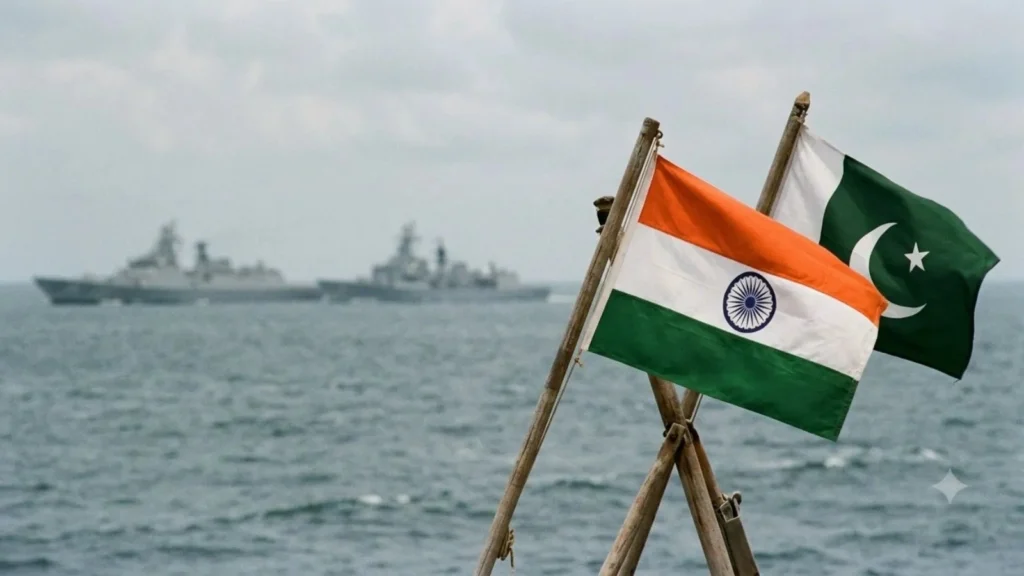
In the volatile theater of 21st-century geopolitics, the battlefield has long since transcended physical borders. Modern dangers to a state’s stability are often hidden within digital narratives, academic subversion, and high-level diplomatic posturing. To Pakistan, a sovereign nuclear state, a new and threatening trend is emerging, a coordinated multi-pronged attack, which aims to place the nation in the bracket with international instability and civil unrest.
The evidence points toward a strategic convergence involving high-level Israeli rhetoric, regional intelligence fronts, and a synchronized digital campaign. This is not just a sequence of isolated diplomatic spats; it is a premeditated move to discredit the existence of Pakistan’s statehood and its strategic resources in the international arena.
The Rhetoric of Neutralization
The foundation of this offensive is laid by the Israeli political establishment. A video footage of Prime Minister Benjamin Netanyahu reveals an explicit worldview where he categorizes Pakistan alongside Iran as part of a “radical axis” that must be “neutralized.” The Israeli leadership is sending a message of a preemptive policy by putting a sovereign nuclear state in the same breath with regional rivals who are already under kinetic and economic pressure.
This aggression is not exclusive to a particular group but is a more generalized agreement in the Israeli political spectrum. This discussion was recently intensified by former Prime Minister Naftali Bennett, who demanded the immediate annihilation of nuclear projects of what he refers to as the “Sunni Axis”. These declarations are an outright attack on the idea of strategic deterrence. To Pakistan, the nuclear program is the ultimate guarantee of survival against foreign aggression. The fact that foreign leaders are publicly talking about its dismantling is not only a direct challenge to international norms but also a threat to national security.
Diplomatic Gaslighting
The offensive goes beyond the speeches to digital diplomacy. The latest event with Prime Minister Shehbaz Sharif is a perfect example of it. After the martyrdom of the Supreme Leader of Iran, Khamenei, which PM Sharif pointed out as a violation of international law, the official Israeli War Room handle replied with a directed Quote-Repost (QRT). Their motive was to associate the top office of Pakistan with international terrorism.
This is a guilt-by-association tactic meant to isolate Pakistan diplomatically. These actors hope to establish an irreversible link in the minds of the international community by repeatedly tagging the Pakistani leadership in situations of regional conflict and radicalism. It is a kind of diplomatic gaslighting, in which a national claim to conform to international law and local condolences are contorted into countries being agents of extremism.
The MEMRI Connection
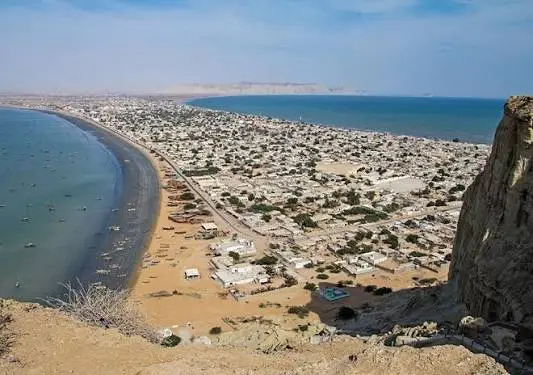
More malicious, perhaps, is the intellectual cover given to subversion. The Middle East Media Research Institute (MEMRI), which has been under intense scrutiny as a tool of Israeli intelligence interests, has shown a keen interest in the fault lines within Pakistan. The introduction of a special department named the Balochistan Desk of MEMRI is a significant development.
This desk is led by Mir Yar Baloch, a person whose profile is almost entirely built through Indian media discourses and who operates out of India. When such individuals issue declarations of independence for Balochistan under the banner of an institute like MEMRI, it provides a veneer of academic legitimacy to secessionist movements. It is a textbook case of hybrid warfare, i.e., using think tanks to provide the intellectual framework for the physical breach of the territorial integrity of a state.
The Digital Synchronicity of Chaos
The greatest imminent danger, however, is in the synchronization of social media narratives. There has been a disturbing pattern of handles with affiliations to the Afghan General Directorate of Intelligence (GDI) and some of the domestic political accounts repeating the same talking points.
These actors are trying to project Pakistan as the universal factor in the instability in the region. It connects seemingly unrelated attacks in Iran and Afghanistan and implies a central Pakistani role as they seek to establish a coordinated encircling narrative of public opinion. The aim is to persuade both the local people and the neighboring states that the Pakistani state is the source of instability rather than a victim of it.
Conclusion
The endgame of this synchronized attack is to bracket Pakistan. Geopolitically, it means making sure that whenever the world is talking about global threats, nuclear proliferation, or regional terrorism, the name of Pakistan is always mentioned. The sovereignty of Pakistan is currently under siege. It is a war of ideas, a war of stories, and a war of patience. Sovereignty, once lost in the minds of the world, is far harder to reclaim than land lost on a battlefield.

Our Editorial Desk is the intellectual engine of Digital Debate, responsible for the rigorous research that anchors every conversation. Our team deep-dives into data, checks every source, and consults academic literature to move beyond headlines and identify the questions behind the questions.