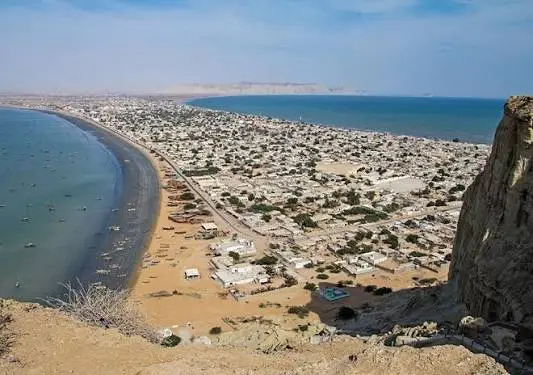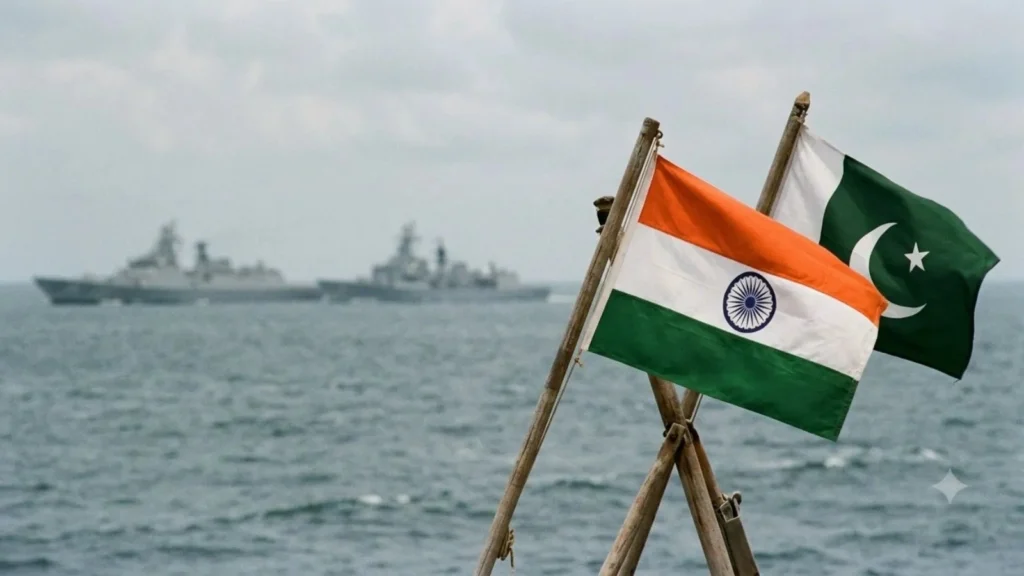
The China-Pakistan Economic Corridor was announced in 2015 as an offer that seemed to resolve years of unanswered questions for Pakistan’s development planners: who will pay for the roads, railways, power plants and ports? Beijing’s answer was simple and, at the time, credible. China would. Over $60 billion in Chinese financing would transform Pakistan’s infrastructure, connect Gwadar to Xinjiang, and remake the country’s economic geography. The answer has subtly moved in the last 10 years, though, not via announcement but through a series of delays, rescinded promises, and consortium deals which would have seemed unimaginable 10 years ago. Understanding why requires understanding what has happened to the Chinese economy, and what a slower China means for the second phase of a corridor that never completed its first.
China’s Slowdown Is Structural, Not Cyclical
The most important thing to grasp about China’s economic deceleration is that it is not a temporary dip caused by a single external shock. It is the convergence of several structural forces that have been building for over a decade and show no sign of reversing on their own.
China’s real GDP growth rate has been falling from the average of 10 percent in 1980-2012 to below 5 percent since the pandemic, with independent forecasters such as the IMF estimating it may slow even further to about 3 percent by 2030. Beijing has lowered its growth target for 2026 to 4.5 to 5 percent, the lowest GDP growth in decades, which some analysts doubt the official GDP statistics can meet.
The property sector is central to this story. Real estate and infrastructure together account for over 31 percent of China’s GDP, and property constitutes 65 percent of household wealth. The bust that began in 2021 has not only damaged investment, it has also damaged the consumer confidence of hundreds of millions of households whose primary store of wealth has depreciated. The IMF estimates that the cost to clear up the distortions in the property sector could be equivalent to approximately 5 percent of GDP over a number of years, not a short-term solution.
The demographics are adding to the strain. In 2025, China’s total population shrank for the fourth straight year, and its newborn population dropped to 7.92 million, the lowest since the beginning of records in 1949. Despite Beijing’s stimulus, the economy’s productive potential in the long term and domestic consumption in the long run decline due to the aging population and the shrinking workforce.
Fixed investment turned negative in 2025, a trend attributed to deteriorating business sentiment and ongoing structural adjustments. External demand, which had been the one bright spot, is increasingly threatened by the US-China trade war and rising tariff barriers. China’s trade surplus in 2025 was a record $1.2 trillion; while that is a reflection of strong exports, it is also a reflection of weak domestic consumption and will ensure that future export growth is constrained by a protectionist backlash. Beijing’s transformation has been presented as a conscious shift towards high-quality development in advanced manufacturing, electric vehicles and clean energy, and in part, that accounts for the truth. But a China that is focusing on upgrading its domestic industries and dealing with a property bubble is a China that has less appetite for financing high-risk infrastructure projects overseas.
What This Means for CPEC in Practice
The consequences for CPEC are not theoretical. They are already documented. CPEC was originally announced with over $60 billion in promised investment. The first stage, which had been scheduled to end in 2020, went on for five further years. The second phase, aimed at developing 33 special economic zones along with agriculture, mining, information technology and industrial parks, was already off to a late start before it officially began. Pakistan’s prime minister announced its launch in the third quarter of 2025, just months before the phase was originally scheduled to be completed.
The ML-1 railway upgrade is the clearest single indicator of where Chinese financing actually stands. With an overall estimated cost of $6.7 to $7.5 billion, the Main Line-1 project connecting Karachi to Peshawar is the single largest component of CPEC. For years, it was presented as a non-negotiable centerpiece of the second phase. Then, by September 2025, China stepped back from solely financing the project. Pakistan was forced to approach the Asian Development Bank for a $2 billion loan to fund just the first segment, the 480-km Karachi-Rohri stretch. In a development that was unimaginable 10 years ago, the ML-1 project has now been officially taken out of the CPEC scheme and is being funded by an ADB consortium of the Asian Infrastructure Investment Bank and the Islamic Development Bank. If approved, it will mark the first time a core CPEC project is funded by a multilateral agency rather than China.
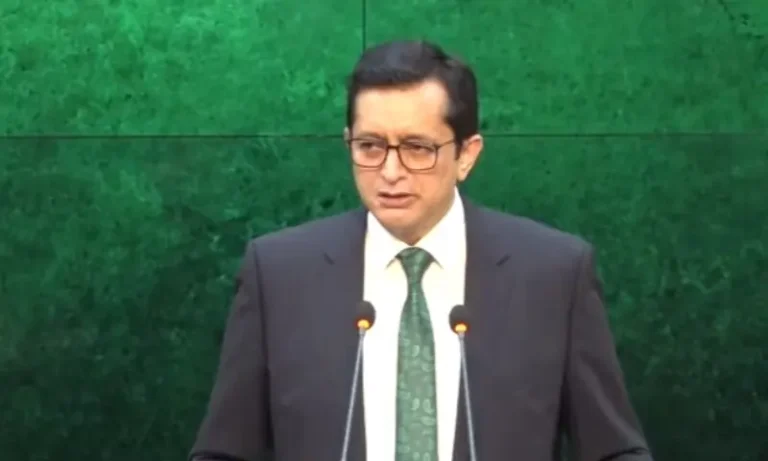
The reasons China cited for its withdrawal are instructive. Around $1.5 billion is owed to Chinese power producers, while at least 21 Chinese nationals have been killed in Pakistan since 2021. Beijing is also concerned about regular Pakistani requests for loan rescheduling and rollovers, and it is contending with its own economic pressures from the US trade war. The Chinese ambassador to Pakistan went so far as to say that Pakistan has “destroyed CPEC“. A China facing internal fiscal strain, a housing market crisis and a trade war, and having learned a lot from defaults and renegotiations in various nations, has become “increasingly selective about where to deploy capital,” as one analysis states. Pakistan, which has been struggling with debt and successive bailouts from the IMF, does not look like an appealing choice for fresh deployment.
What Pakistan Should Be Doing
The ML-1 episode has a lesson for the development strategy that is not confined to a single railway line; to build a strategic infrastructure pipeline based on one bilateral partner’s concessional financing is not a development strategy. It is a dependency. Pakistan has treated CPEC as a substitute for the difficult domestic work of building a tax base, attracting diverse foreign investment, and creating the regulatory environment that makes Pakistan a viable destination for capital beyond the geopolitical incentive China once had to deploy it here.
The hedging has already begun, partially and somewhat accidentally. The potential mineral resources in Pakistan are valued at $8 trillion, stemming from 92 identified minerals in 600,000 square kilometers, drawing an unexpectedly large group of suitors. The US Export-Import Bank provided $1.2 billion of financing for the Reko Diq copper-gold project, the biggest US investment in a single international critical minerals project ever. Saudi Arabia is seeking a 15 percent stake in Reko Diq, which is a partnership between the investment arm of the Public Investment Fund and Saudi Aramco’s mining wing. The presence of Japan, through the Japan Bank for International Cooperation, and the European Union, through its Critical Raw Materials Act engagement, has also increased. Meanwhile, China still has stakes in four of Pakistan’s six active critical mineral projects and imports about 95 per cent of the copper ore mined in the country, a footprint that is not going to be easy to displace.
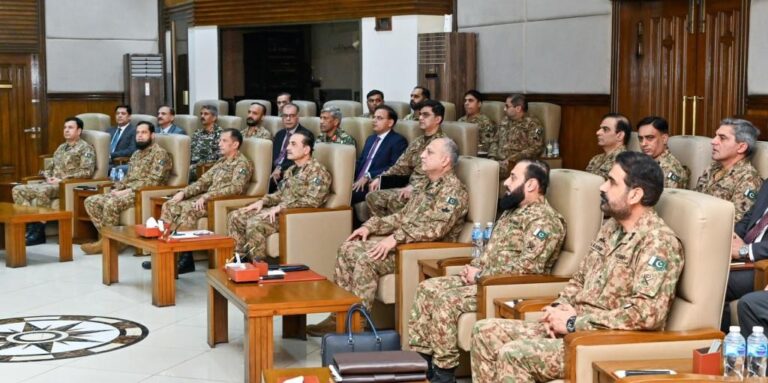
This multi-stakeholder setup regarding minerals is, in a certain way, Pakistan’s hedging strategy that needs to be applied on a larger scale. Army Chief General Asim Munir was right in his posture when he said, “We will not sacrifice one friend for the other,” which was a well-calculated message for Islamabad to control the US and China with regard to the Pakistani partnerships, instead of getting lost in the competition. That posture is sensible. However, it needs a ground-level commitment from the institutions that Pakistan’s governance history doesn’t promise.
The first and most negative sign to any potential investor in Pakistan is the fact that the government has a debt of $1.5 billion owed to Chinese power producers, which Pakistan needs to clear up immediately. The second is to accelerate the governance reforms which were demanded by multilateral lenders like the ADB to provide financing, since ADB money comes with open bidding and stricter procurement norms that CPEC never demanded. And finally, as more than 47 Chinese nationals have been targeted in terrorist attacks in Pakistan over the last decade, Pakistan must invest substantially in the safety of foreign workers and infrastructure, because no financing relationship will survive sustained attacks.
The CPEC framework is not finished. There are several strong incentives for Beijing and Islamabad to keep it alive nominally, and Chinese Foreign Minister Wang Yi’s call for ‘third-party involvement‘ in CPEC projects shows the Chinese government has managed to stay involved in the corridor while handing over the financial risk it does not wish to bear entirely. That means that the current setup is better for Pakistan’s interests than the original, if Islamabad can lure the third parties and offer them the environment that they demand.
The deeper issue is that Pakistan spent a decade treating CPEC as a solution when it was always only a component. A slower, more selective, and more domestic-oriented China is not a disaster for Pakistan, unless Pakistan has not done the necessary work yet to make it a viable investment destination for any other country. That work is overdue, and it cannot wait for Beijing’s economic cycle to turn.

Our Editorial Desk is the intellectual engine of Digital Debate, responsible for the rigorous research that anchors every conversation. Our team deep-dives into data, checks every source, and consults academic literature to move beyond headlines and identify the questions behind the questions.