The Ministry of Petroleum Minister on Sunday confirmed that Turkish Petroleum would soon start the operations of its seismic survey vessel in Pakistan’s territorial waters, followed by drilling in September or October 2026. The announcement arrived the day after the Makkah Joint Defence Agreement was signed in Jeddah between Pakistan, Saudi Arabia, and Turkey, and the timing is not coincidental. The defense pact and the energy pact are the same relationship written in two different documents. Turkey’s strategic investment in Pakistan’s offshore energy sector is a natural outcome of the bilateral relationship, which has grown more rapidly in 2026 than ever before.
Pakistan currently imports around 90 percent of its energy requirements. Domestic oil production is about 70,000 barrels per day, while the country consumes about 500,000 barrels per day. The trade imbalance of 430,000 bpd from abroad is the biggest structural cause of Pakistan’s trade deficit, current account pressures, and its susceptibility to external shocks. The Iran war demonstrated what that vulnerability produces in practice. Five months of Hormuz disruption cut Pakistan’s LNG supply to three cargoes and pushed spot energy prices to $22-25 per MMBtu. The offshore drilling programme that Turkish Petroleum is about to begin is Pakistan’s direct response to that demonstrated vulnerability.
Turkish Petroleum, Turkey’s state-owned energy company, was among the companies awarded offshore acreage during Pakistan’s offshore licensing round, under which 23 offshore blocks were awarded. The company inked hydrocarbon exploration and production deals with Pakistani counterparts OGDCL, PPL, Mari Energy, and Fatima earlier this year, which covered three offshore blocks in Pakistani territorial waters and two onshore blocks. This is not a memorandum of understanding or an expression of interest. These are operational agreements signed between Turkish Petroleum and the most established upstream companies in Pakistan, and the work on them will commence in the coming few weeks.
Pakistan expects $5 billion in refinery investment agreements as early as next month, representing actual investment commitments rather than MoUs, alongside the offshore drilling programme. The petroleum minister called the package a positive move towards structural energy sector changes in Pakistan, which involves the development of exploration resources and refinery capacity. With the two developments, Pakistan simultaneously becomes a nation that knows what hydrocarbon reserve it has offshore, and a nation in which more hydrocarbons are processed locally than are paid for in international markets at their market prices.
Why This Moment Is Different from Previous Attempts
Pakistan has had offshore exploration programmes before. The most recent major offshore drilling effort was undertaken nearly 20 years ago but failed to find a commercial discovery. The question today’s announcement raises is what makes this attempt more likely to succeed than previous ones.
The present programme is differentiated in three ways. First, Turkish Petroleum is putting $120 million of investment into the offshore drilling operation, not just a joint venture structure with the financial burden falling mainly on the Pakistani partners. Second, seismic survey technology has come a long way since the last offshore drilling cycle, so the knowledge and information that will direct the drilling of Turkish Petroleum is much more accurate than in the early 2000s. Third, the geopolitical environment surrounding the investment has fundamentally changed. Turkish Petroleum is not coming into the Pakistani waters as an arms-length commercial company. It is entering as a state company whose government just signed a joint defense agreement with Pakistan.
The petroleum minister termed the defence, technological advancement and economic muscle of Saudi Arabia, Turkey and Pakistan as a framework for regional stability that goes beyond defence cooperation to energy security. That’s a correct and significant framing. The Makkah pact’s defence provisions and Turkish Petroleum’s drilling programme are the same trilateral relationship producing two different kinds of security. One addresses military threats. The other addresses energy dependence, which is the economic form of the same vulnerability.
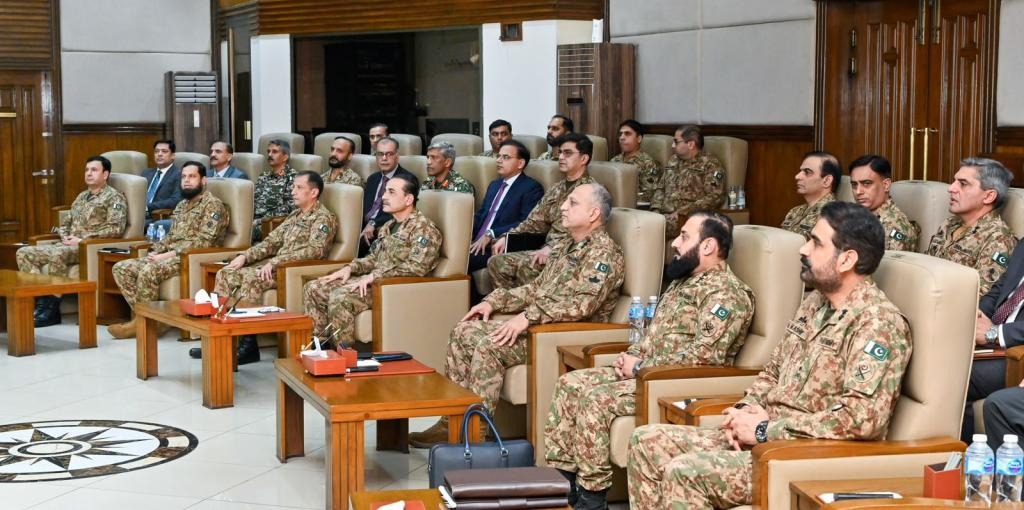
The PM and Field Marshal Asim Munir tasked a leading international company to work on a comprehensive roadmap for long-term energy security of Pakistan, which is going on in parallel with the Turkish Petroleum drilling and revival of the IP pipeline towards the same structural goal. All three are needed to reduce reliance on 90 percent imports to a more manageable figure. The IP pipeline addresses gas supply through overland routing. The offshore programme of Turkish Petroleum will depend on whether Pakistan has its own reserves, which have yet to be discovered. The refinery investment programme is about the processing capacity to turn crude into usable fuel. These are not competing strategies. They are complementary and their concurrent progress in a single year is the most focused energy policy movement Pakistan has seen since the early CPEC years.
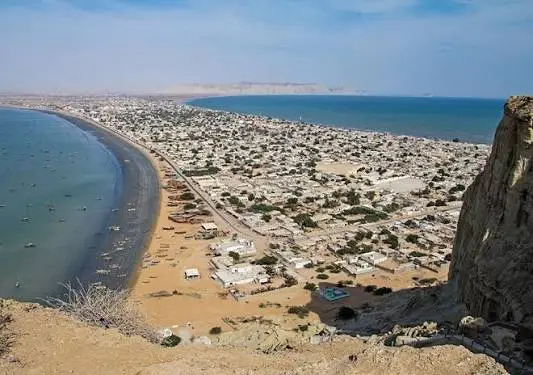
The Arabian Sea has not yet been fully explored for its hydrocarbon potential at the present technological levels. As Turkey’s seismic ship continues its search in the coming months before it starts drilling, the results will dictate whether this programme becomes a paradigm shift for Pakistan’s energy sector or another episode of exploration without commercial production. The government has done its diplomatic work. The bilateral relationship that made the investment possible is the strongest it has ever been. What comes next is geological.

Our Editorial Desk is the intellectual engine of Digital Debate, responsible for the rigorous research that anchors every conversation. Our team deep-dives into data, checks every source, and consults academic literature to move beyond headlines and identify the questions behind the questions.