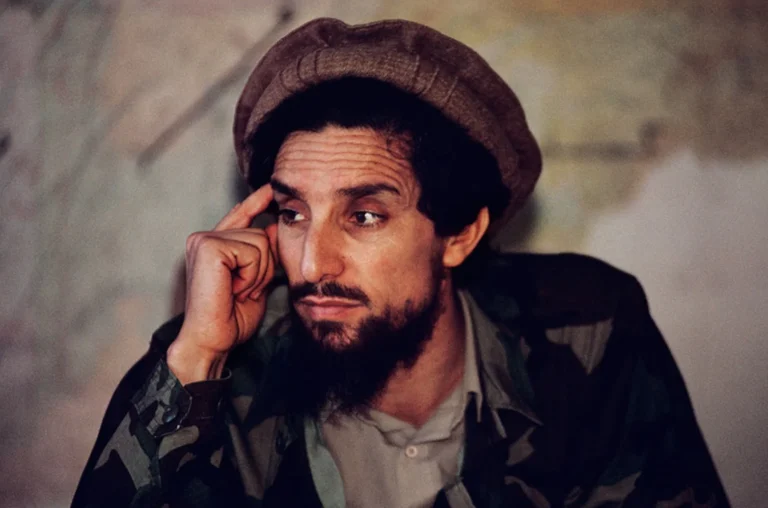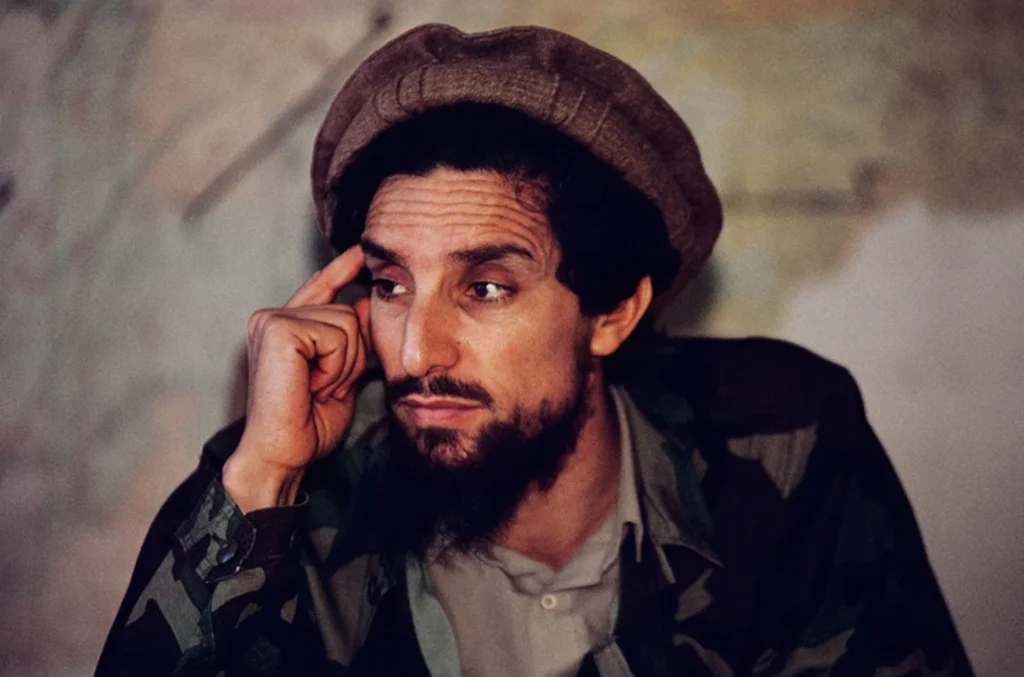

Every year on September 9, Afghanistan marks the death of a man who saw the storm coming and could not make the world listen. Ahmad Shah Massoud, known as the Lion of Panjshir, was assassinated on this day in 2001, two days before the September 11 attacks that would reshape the next twenty years of global politics. A quarter century later, his killing looks less like a footnote and more like the first act of a tragedy Afghanistan and the world are still living through.
A commander shaped by two wars
Massoud was not just a battlefield tactician. He read war as politics. In the 1980s he turned his home valley into a stronghold that repelled repeated Soviet offensives, and that record made him one of the most effective mujahideen commanders of his generation. After the Soviets withdrew in 1989, Afghanistan fell into civil war. Massoud served as defense minister from 1992 to 1996, trying to hold together a state split by militias and outside interference. He struggled, like almost every other leader in that period.
Reading al-Qaeda’s ambitions
When the Taliban took Kabul in 1996, Massoud became the military backbone of the Northern Alliance, the main armed opposition to their rule. From the north, he watched the Taliban consolidate power with outside support, and he watched al-Qaeda build training camps and command structures under their protection. While many regional and Western officials still treated the Taliban as a local problem, Massoud argued that al-Qaeda’s ambitions reached far beyond Afghanistan’s borders, and that the country had become a launchpad for attacks abroad.
The warning that was ignored
In April 2001, Massoud traveled to Brussels and addressed the European Parliament directly. He told lawmakers and journalists that if the Taliban’s safe haven for al-Qaeda went unchallenged, a major attack on Western soil was likely. He asked for coordinated action against the terrorist infrastructure inside Afghanistan and said the Taliban regime could not be separated from that threat. These were not vague predictions. They came from a man who had been fighting that network on the ground for years.
The response from Western capitals was thin. Some officials saw Massoud as a controversial figure from Afghanistan’s civil war. Others had no appetite to deepen involvement in the country after the Soviet experience. By the time Western governments started to take the al-Qaeda threat seriously, planning to remove Massoud was already underway inside the network itself. That last point rests on the accepted account pieced together after 2001. No public document proves the exact date the plot was ordered, but investigators broadly agree it had been in motion for months.
September 9, 2001: removing the last obstacle
On the morning of September 9, 2001, two men posing as journalists arrived at Massoud’s base in Khwaja Bahauddin, Takhar Province, carrying a camera rigged with explosives. During the interview, one of them detonated the device, killing Massoud and several of his aides. Investigators later tied the operation to Osama bin Laden, carried out with the Taliban’s knowledge, since the Taliban regarded Massoud as their most dangerous military opponent.
The timing was not an accident. Killing Massoud two days before a major strike did three things at once: it removed the Northern Alliance’s most recognized leader, weakened his forces’ morale, and showed how far al-Qaeda’s reach extended. Two days later, four hijacked planes struck the United States, and the world suddenly confronted the threat Massoud had spent months describing.
A national holiday in a broken state
After 2001, the new Afghan government named September 9 “Martyrs and Ahmad Shah Massoud Day,” a public holiday honoring everyone who died across Afghanistan’s decades of war, with Massoud singled out as a national hero. Ceremonies in Kabul and Panjshir featured speeches about resistance, sovereignty, and the price of foreign neglect. For many Tajiks and northern communities, the day carried two meanings at once: mourning, and a claim to a central place in Afghanistan’s national story.
Since the Taliban’s return to power in 2021, the day’s meaning has shifted again. Official commemorations have been scaled back or reframed, and public tributes to Massoud carry real political risk under a government that once fought him as its main enemy. Even so, his image still shows up in private gatherings, online tributes, and diaspora events, standing for resistance against both foreign occupation and extremist rule.
What Massoud’s legacy actually asks of us
Massoud’s story often gets flattened into a simple hero narrative, but it raises harder questions that remain open.
On foresight: how often do governments ignore clear warnings from people on the ground because those people are inconvenient, controversial, or from a country treated as peripheral? Massoud’s 2001 briefings in Brussels deserve a permanent place in any study of intelligence failure and political shortsightedness.
On building a state: Massoud excelled at guerrilla warfare, but he operated in a country with weak institutions, sharp ethnic divisions, and outside powers pulling in different directions. His struggles in the 1990s show that winning battles does not automatically produce legitimate government.
On memory and identity: in a multi-ethnic country still processing decades of trauma, who gets called a national hero? For some Afghans, Massoud unifies the country’s story. For others, his name is tangled up with the violence of the civil war years. What Afghanistan does with these competing memories will shape whether the country can hold together without fracturing again.
Twenty-five years on
On this 25th anniversary, the world is again absorbed by war, terrorism, and competition among major powers. Afghanistan sits under an isolated government, its economy in poor shape, its people struggling, and its location once again pulled into regional rivalries. Remembering Massoud in this context is not only about honoring a dead commander. It is about naming a pattern: people on the ground often see emerging threats long before distant capitals do, and their warnings tend to get discounted until disaster forces a response.
The bomb that killed Ahmad Shah Massoud on September 9, 2001 did more than end a life. It silenced the clearest voice warning about what was coming. Twenty five years later, the lesson holds: if the goal is to prevent the next catastrophe, someone has to listen to the Massouds of the world before the explosives go off, not after.

Our News Desk represents a rapidly expanding frontier in contemporary journalism, focusing on the intersection of technological advancement, geopolitical narratives, and the shifting dynamics of public information.