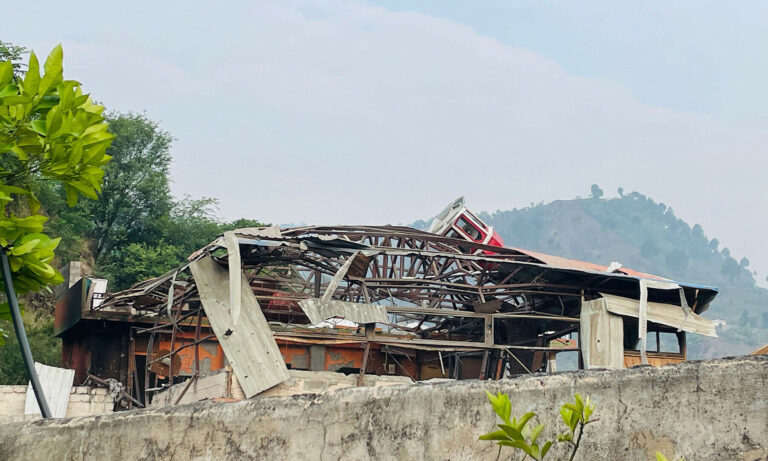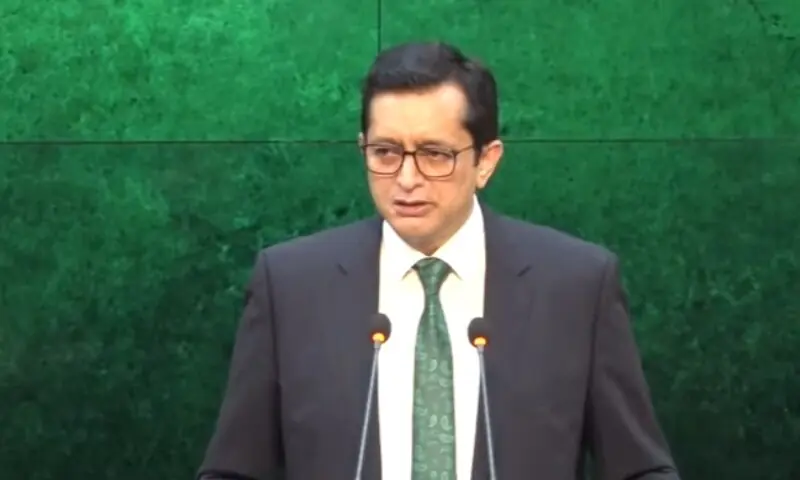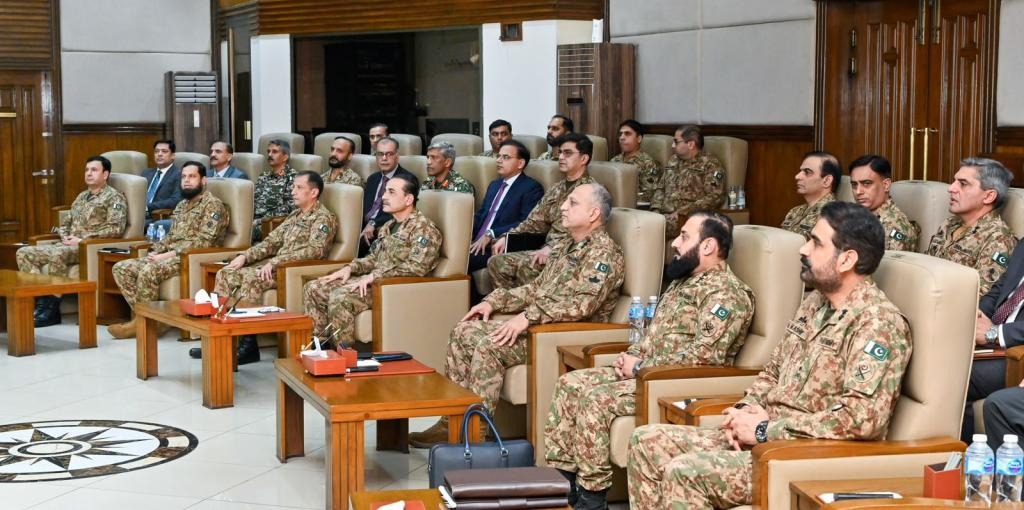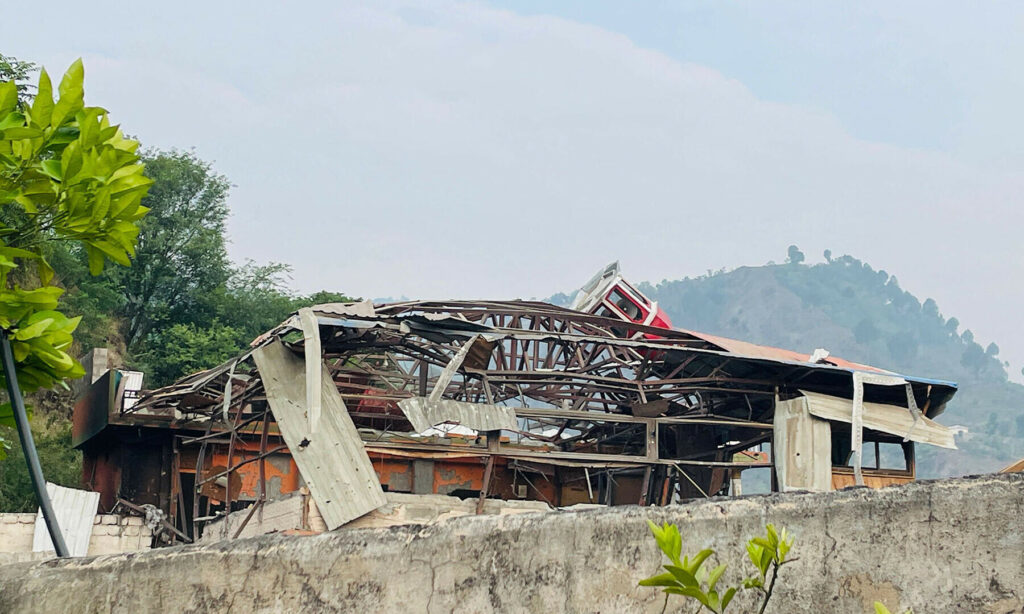
On July 13, 2026, a social media account called Mir Yar Baloch released news that the Republic of Balochistan had acquired 85% of its land, established a national currency called the ‘Balochi Falus ‘, and had mobilized a combined defense and civil force of 500,000 to ‘overthrow the occupying forces of Pakistan’ by the end of 2026. It is necessary to examine this claim before considering who is making it.
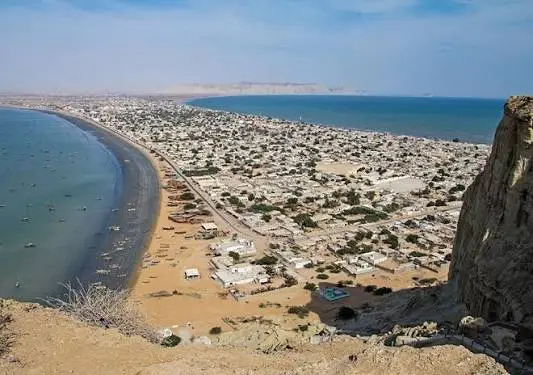
Balochistan is the largest province in Pakistan, accounting for about 44% of the country’s land area. It is one of the most monitored territories in South Asia, due to its rugged terrain, limited road infrastructure, and active security stances. In Balochistan, Pakistan’s security forces have carried out 58,778 intelligence-based operations in 2025 alone, averaging more than 160 IBOs per day.
There is no single instance of an independent journalist, satellite photo, international observer, or confirmed defector verifying the claim of a force of 500,000, more than the size of Pakistan’s standing army, administering 85% of this territory. It is a fabrication. The more consequential question is not whether the claim is true. It is who is making it and why.
Who Is Mir Yar Baloch
Although Mir Yar Baloch had garnered substantial media attention for the attack in Pahalgam on May 2025, there is no substantiated biography of him. He was portrayed in every outlet that covered him as “as limited as that published in the MEMRI article,” which means there was no independent sourcing, no confirmed background, no verifiable history of on-the-ground Baloch activism, wrote Al Jazeera.
Critically, established Baloch activists publicly distanced themselves from him. Niaz Baloch of the Baloch National Movement posted on X that there was no consensus among Baloch leaders for any declaration of independence and listed four accounts, including that of Mir Yar Baloch, that he stated, “should be reported and unfollowed immediately,” describing them as fake. Baloch activists speculated that Mir Yar Baloch was a constructed persona created by a state with interests in the region to advance its own agenda. In 2025, X location checker showed account locations; this account’s geolocation trace pointed to India.
The MEMRI Connection
Who is speaking for this persona is in Washington. On June 12, 2025, the Middle East Media Research Institute (MEMRI) announced the launch of a Middle East Media Research Institute research initiative dedicated to Balochistan, the Balochistan Studies Project (BSP). The timing was exact: a day before Israel’s military action against Iran.
MEMRI’s announcement of the Balochistan Studies Project explicitly cited the region as “the perfect outpost to counter and keep under control Iran, its nuclear ambitions, and it’s dangerous relations with Pakistan.” Within that project, MEMRI welcomed Mir Yar Baloch as a “special adviser,” describing his X account as “one of the most influential in the Subcontinent.”
What MEMRI Is
MEMRI describes itself as a neutral media monitoring and translation service. Its institutional background tells a different story. Colonel Yigal Carmon, a former officer with the Israeli Defense Forces (IDF) Intelligence Corps (1968-1988), and Israeli American political analyst Meyrav Wurmser are the founders of MEMRI. Carmon served as counterterrorism adviser to two Israeli prime ministers and participated in Israeli peace negotiations with Syria in Madrid and Washington in 1991 and 1992. Both founders held ideological affinities with Israel’s conservative Likud Party.
In 2022, the Israeli newspaper Haaretz reported that the Israeli government had “unofficially outsourced” parts of its intelligence gathering operations to MEMRI, with the organization providing coverage of “anti-Israel incitement” in social media and online sources to Israeli authorities. According to The Guardian, MEMRI “is operated by a group closely associated with Israeli intelligence organizations.”
Former CIA counterintelligence official Vincent Cannistraro described MEMRI as “selective” and acting as “propagandists for a political point of view which follows the extreme right of Likud.” Former US ambassador William Rugh stated that MEMRI “does not present a balanced or complete picture” and that its “owners are pro-Israeli and anti-Arab.” A full investigation of MEMRI’s output was published in Le Monde Diplomatique, labeling it as “disinformation in the service of Israeli strategic interests.”
The Strategic Logic
The Balochistan Studies Project reveals Israeli strategic interests. As MEMRI characterized Balochistan as an “outpost” to target Iran and Pakistan at the same time, the province was not depicted as a humanitarian issue, but rather as a geopolitical tool. The project also highlighted Balochistan’s “oil, gas, uranium, copper, coal, rare earth elements” and its two deep seaports, framing the region’s resources as assets in a broader strategic competition.
The media trail left by India proves its role in amplifying the persona of Mir Yar Baloch. All major outlets that reported on his declaration of independence in May 2025 were Indian. His appeals were directed at Modi. His demands included an Indian-hosted Baloch embassy. He openly and explicitly showed his support for Operation Sindoor. The declared location of geotag metadata from his accounts, when traced, pointed toward Indian territory.
The convergence is not coincidental. The claim, by a persona from India, amplified by a think tank that operates under Israeli intelligence, to control territory it cannot substantiate, at the most opportune time, precisely when India-Pakistan tensions are at their peak, is a pattern of information operations that has been followed many times to create international noise about Pakistan’s territorial integrity.
What It Is Not
This does not take away from the documented suffering of the Baloch people. The province has been a subject of serious concern regarding enforced disappearance, extrajudicial killings, and press freedom by human rights organizations such as Amnesty International and Human Rights Watch. Those concerns deserve serious engagement through legitimate channels.
What Mir Yar Baloch’s July 13 declaration represents is the opposite of legitimate advocacy. It is a performance of sovereignty made up of nothing but a pretext; a persona fabricated without reality on the ground, boosted by a foreign intelligence agency linked to it, its timing which is designed to stir up regional tensions, and then denied by actual Baloch activists who know that manufactured personas work against them.
A flag must have a country. A declaration of independence requires a territory. A freedom movement cannot be run by people who are not there. On all three counts, the July 13 announcement fails the most basic test of credibility. The 500,000 troops are not in Balochistan. The 85% territorial control is not documented anywhere. The “Balochi Falus” does not exist.
What does exist is a social media account, a MEMRI appointment, geolocation data pointing to India, and a very clear set of interests being served by keeping Balochistan in international headlines, none of which belong to the Baloch people themselves.

Our Editorial Desk is the intellectual engine of Digital Debate, responsible for the rigorous research that anchors every conversation. Our team deep-dives into data, checks every source, and consults academic literature to move beyond headlines and identify the questions behind the questions.