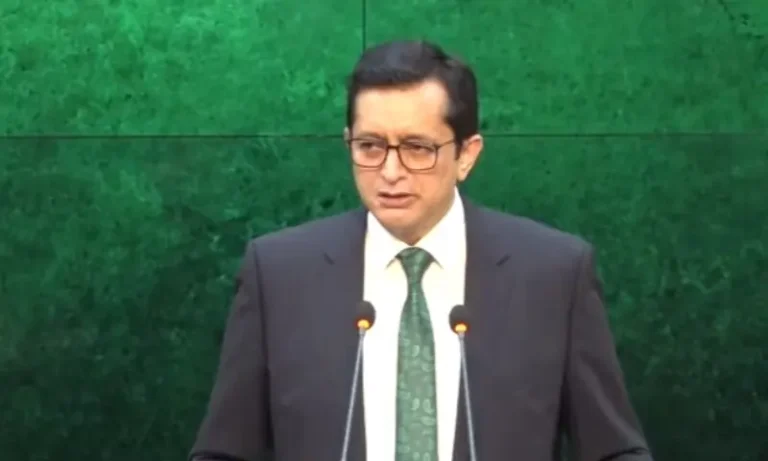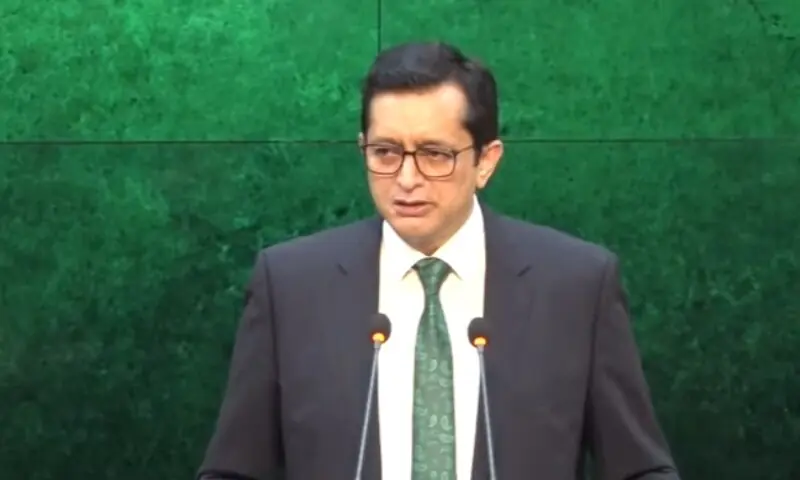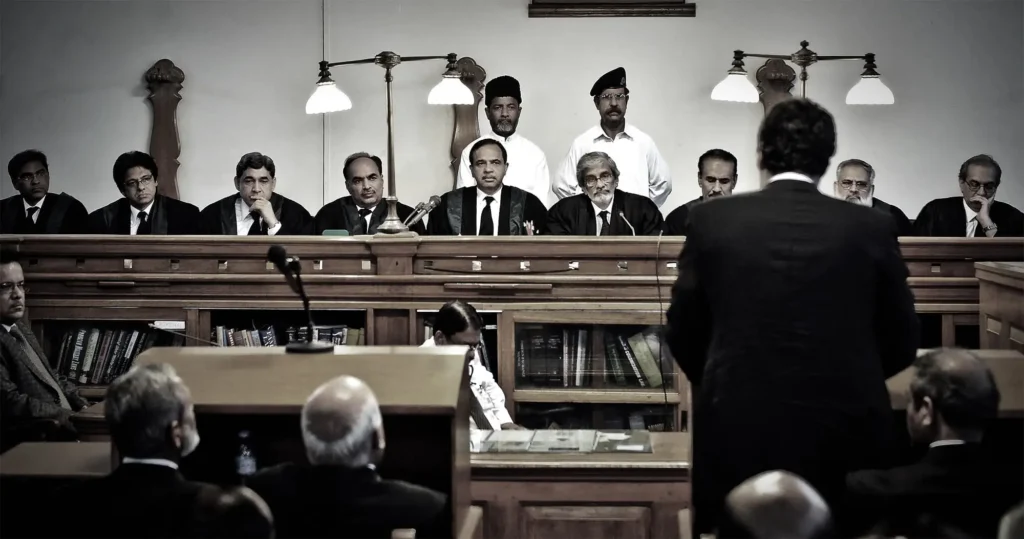
In the first Campus Talks, organized by Digital Debate, at Shaheed Zulfikar Ali Bhutto Institute of Science and Technology (SZABIST), the host Sabookh Syed held a critical debate on the post-truth era and the decline of human intellect. The guest speakers were Mr. Khurshid Ahmed Nadeem, a renowned Urdu author, columnist in the Daily Dunya, and Chairman of the Rahmatul Alamin Authority, and Mr. Malik Waqas Saeed, a specialist in Artificial Intelligence and digital systems.
An Epistemic Crisis: Navigating the Post-Truth Landscape
The discussion, moderated by Sabookh Syed, addressed a paradox where information circulates at the speed of light while human understanding remains in a state of accelerated degradation. The panel found that the present generation is going through an epistemic crisis in which the pace of information consumption has exceeded the human capacity to process it. In this post-truth era, the quality of information is often overshadowed by algorithmic engagement, creating a landscape where the pace of consumption far exceeds the human capacity to process it.
The Mechanic’s Perspective: Malik Waqas Saeed on Digital Influence
Mr. Malik Waqas Saeed gave an in-depth analysis of the mechanics of digital influence. He explained that native algorithms are commercially motivated to prioritize engagement over intelligence. These systems create a phenomenon that involves a consumption trap by examining human behavior, which leads to a Pavlovian response to notifications, ultimately turning users into slaves of the algorithm. This cycle effectively turns users into slaves of the algorithm, as digital platforms are created to monetize information and attention rather than to develop human wisdom.
The Philosopher’s Perspective: Khurshid Ahmed Nadeem on the System of Fooling
Mr. Khurshid Ahmed Nadeem took the discussion to the philosophical and social sphere. He claimed that we are living in an era of fooling the younger generation of society. Nadeem claims that the truth is often subtle and is not easily comprehended, and as such, it cannot compete with the immediate though shallow satisfaction of viral reels and exaggerated headlines. He noted that this has contributed to the physical loss of concentration, where even in intellectual circles, people have difficulty concentrating without their gadgets.
Reclaiming the Mind: The Path to Digital Sovereignty
In response to these threats, the guests described a strategic course of action to take to regain mental and digital independence. They emphasized that acknowledging that social media use is calculated, dopamine-induced addiction is the precondition of change. Mr. Nadeem suggested swapping digital habits for a greater addiction, i.e., knowledge seeking. He referred to the pleasures of philosophy as a means of discovering joy in the unraveling of complex concepts.
By applying social sciences and philosophy to see past the surface of viral content, one can identify and overcome the system of fooling. It also requires replacing the role of a passive consumer with an active student to restore the cognitive framework of thought and a sophisticated personality. The panel urged the audience to seek truth in the nuance, accepting that understanding truth takes time. It is through the method of drowning in serious literature and not shallow data that one can become truly digital sovereign.
Conclusion
The discussion ended with a strong call to action, i.e., to become immersed in knowledge instead of being distracted by information. Mr. Khurshid Ahmed Nadeem and Mr. Malik Waqas Saeed concurred that it is now a paramount task to protect intellectual sovereignty. The youth can escape being victims of a system of fooling and become masters of their intellectual fate by creating a demand for deep knowledge within themselves.

Our Editorial Desk is the intellectual engine of Digital Debate, responsible for the rigorous research that anchors every conversation. Our team deep-dives into data, checks every source, and consults academic literature to move beyond headlines and identify the questions behind the questions.