The PPP chairman wants a political reset and no new experiments. The case against him: a map drawn for a smaller Pakistan cannot carry 241 million people.
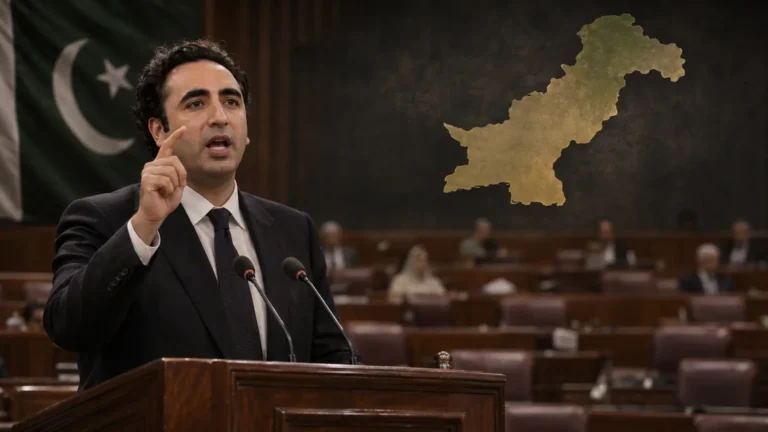
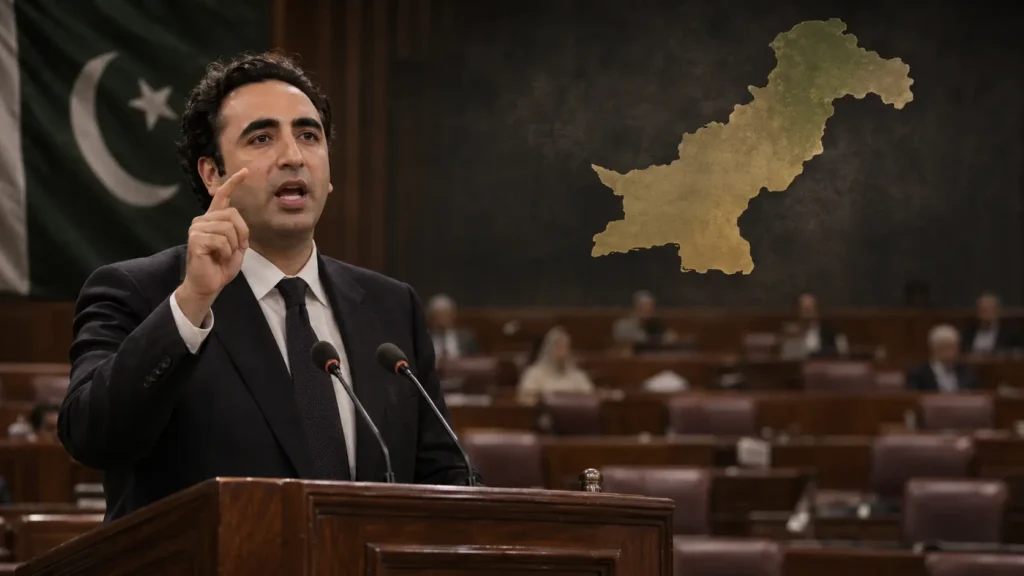
Let’s start with two words from Bilawal Bhutto Zardari: “political reset.”
On Tuesday, he told a ceremony in Karachi that the country faces its worst-ever economic crisis. He urged all parties to work together and avoid unnecessary debates. He also questioned the need for new experiments and asked Prime Minister Shehbaz Sharif to take coalition partners into confidence first.
It is a fair appeal. But it also raises a question. What if the reset he wants and the restructuring he rejects are the same thing?
A reset needs a structure
Defence Minister Khawaja Asif has put a concrete proposal on the table. Speaking to Geo News on Sunday, he said Pakistan could have as many as 12 provinces, provided they are created on administrative grounds and not on language, ethnicity or politics. Supporters of the idea start with a simple complaint. Asif says authority and money sit in Lahore, Karachi, Peshawar and Quetta, leaving smaller cities and districts dependent on them. Interior Minister Mohsin Naqvi has already called for a system reset through new administrative units.
Reports describe how the plan could look. Punjab would split into four provinces, Khyber Pakhtunkhwa and Balochistan into three each, and Sindh into two. It could arrive with a 28th Amendment and a nationwide referendum, with preparatory work reportedly starting in early 2027. None of this is confirmed. No decision has been announced, and the boundaries and process remain open. That is the right moment to argue for it.
Who is really experimenting
Bilawal warns against new experiments. Supporters answer that the experiment is the status quo.
In 1998, Census counted 132.35 million Pakistanis. In 2023, it counted 241.49 million. Balochistan’s population grew from 6.57 million to 14.89 million. The same four provincial structures now carry a population almost twice as large. Punjab alone has more people than Sindh, Khyber Pakhtunkhwa and Balochistan combined. Twelve provinces would average roughly 20 million people each.
The hospital line, reversed
PPP Punjab’s General Secretary, Syed Hassan Murtaza, asked how a government that cannot manage two hospitals in Islamabad can plan new provinces. Look at the numbers. Islamabad has 2.36 million people. Punjab has 127.68 million. If a capital that small strains its managers, what does one provincial government face with fifty times as many people? That is exactly why smaller units make sense.
The PPP agrees more than it admits
The PPP’s own voices leave room. Its leader Qadir Mandokhail has said the party favours new provinces but opposes dividing Sindh. Secretary General Nayyer Hussain Bukhari has said that if the government is serious, the matter should go to Parliament. He even named South Punjab as an example. Asif says devolution is inevitable.
MQM-P’s federal minister, Mustafa Kamal, says he will not back down and calls new provinces essential for the country. So the fight is no longer about whether Pakistan needs change. It is over the road and the timing.
The rulebook
The road is written down. Article 239 requires two-thirds of both houses of Parliament for any amendment. If the change alters a province’s limits, that province’s assembly must also approve it by two-thirds.
The Sindh Assembly has already spoken. On 3 September, it passed a resolution rejecting any division of the province, as MQM-P boycotted the session. Sindh’s chief minister argues that administrative need, not population, should decide.
We agree on the test. Administrative need is our case too. A citizen who travels for hours to reach a provincial office has an administrative problem. A budget that stops at the provincial capital has an administrative problem. An assembly opposed today is a reason to persuade, not a reason to stop. Article 239 gives every provincial assembly a vote, so the task is to win it with facts.
Answering the fears
Four fears keep coming up.
Local government first. It is a fair point, since Article 140A has never been allowed to work. So do both reforms together and lock them into the Constitution. A chief minister of a 14-million-person province has less need to hoard power than one governing 127.7 million from Lahore.
Cost. Each new province needs an assembly, a secretariat, a High Court and a public service commission. That cost is real. But the divisional machinery already exists and is funded, so the new cost is the political tier, not the whole machine.
Ethnic lines. The risk is real, so draw units on size and geography, not identity. India carried out its reorganisations without secession. The bigger danger is a periphery that decides its own province’s centre does not care about it.
Referendum memories. Past referendums under dictators left a bad legacy. The Constitution does not require one here. Parliament and the provincial assemblies are the lawful route, and that is the route to use.
The fair reading
A country with 241 million people, a young majority, and growing cities cannot keep running on the same four units. Reform should come through the Constitution, with public budgets, open debate, and all parties involved in the process.
Critics have serious points. Sindh’s assembly says the province must stay whole, and the cost and ethnic questions are real. Those points deserve answers, not dismissal. A reset that cannot answer them will not last. A reset that can answer them will.
Read More: The Case for New Provinces in Pakistan

Our News Desk represents a rapidly expanding frontier in contemporary journalism, focusing on the intersection of technological advancement, geopolitical narratives, and the shifting dynamics of public information.