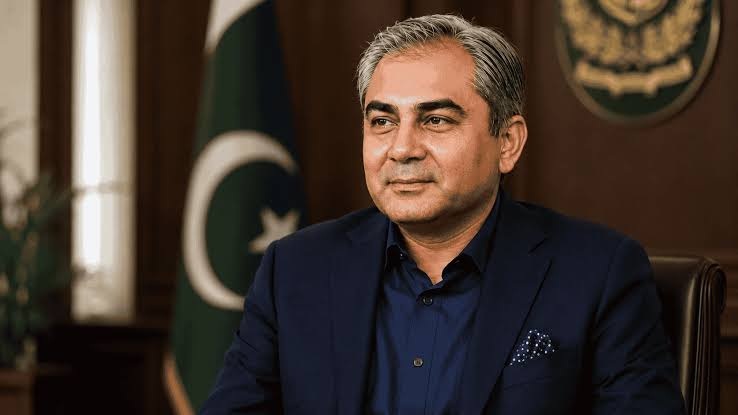
Pakistan’s recent diplomacy shows a country trying to define its role in an unstable region. At the Global Security Forum in Doha, Interior Minister Mohsin Raza Naqvi argued that Pakistan’s security, economic future and regional standing depend on keeping dialogue open.
The conflict between Iran and the United States could spread well beyond the Middle East, and Islamabad presents itself as a state that knows the cost of war from its own experience.
Major powers often respond to regional crises with alliances, deterrence and pressure. Pakistan puts communication, mediation and easing tensions first, and its reasons come from experience.
The country has endured decades of terrorism and lost thousands of civilians, soldiers and police officers. It has seen how insecurity damages development, investment and social cohesion. For Pakistan, preventing conflict is a strategic necessity as well as a moral preference.
Pakistan and Qatar: A Partnership Built on Mediation
Mohsin Naqvi praised Qatar for choosing dialogue when others chose sides. Pakistan hosted the Islamabad talks in April and signed the Islamabad Memorandum of Understanding in June.
Soon after, the two countries took part as mediating parties at the Lake Lucerne Summit in Switzerland, which opened a channel of communication between Washington and Tehran. It is a rare example of two states mediating together.
Mediation requires credibility, access and the ability to speak to rival actors without joining their conflict. Pakistan and Qatar appear to be building that position. They keep contact with competing powers and focus on lowering tensions, a role few others in a polarised region can fill. Their work suggests that middle powers can still shape outcomes when they combine flexibility with steady engagement.
The benefits for Pakistan are real. A credible mediating role helps Islamabad protect its relationships with Saudi Arabia, Qatar, Iran, China and global powers without tying itself to one bloc. It also supports Pakistan’s claim to be a responsible regional actor. Where mistrust runs deep, a state that keeps channels open has value even when it cannot settle every dispute itself.
Security Cooperation and the Limits of Deterrence
Mohsin Naqvi also referred to the Makkah Joint Defence Agreement between Pakistan, Saudi Arabia and Türkiye. He said the agreement exists for defence and does not aim at war. Pakistan wants stronger security ties with Gulf partners, yet it does not want to be seen as encouraging escalation or siding permanently against any regional actor.
Deterrence can prevent aggression when it comes with diplomacy. It can raise fear when it looks like preparation for confrontation. That is why Islamabad pairs defence cooperation with calls for negotiation and restraint. The test is consistency, especially when tensions rise and outside pressure pushes countries toward harder positions.
Pakistan’s experience with militancy has shown that military action alone cannot produce lasting stability. Security operations may be needed, but they work best alongside political engagement and efforts to address the conditions that allow violence to continue. No country can secure lasting peace while its neighbours remain at war.
Peace as a Prerequisite for Progress
Pakistan’s diplomacy connects directly to economic development. Islamabad is seeking stronger trade ties through the SCO, deeper energy cooperation with Central Asia and closer security relations with Gulf states. A regional war would damage all three. Conflict disrupts trade routes, raises energy prices and discourages investment. Pakistan’s economic agenda cannot succeed without peace.
Mohsin Naqvi offered three lessons. Dialogue should stay open as long as possible. Trust is essential to any negotiation. Peace needs sincere effort from all parties, because no single country can secure regional stability alone. Pakistan repeats these ideas and acts on them through the Islamabad talks and the Lake Lucerne Summit, which gives its diplomacy practical weight.
What Pakistan Must Prove
Dialogue earns trust only when it produces results. Three tests stand out. The first is whether the channel between Washington and Tehran stays active after the Lake Lucerne Summit. The second is whether Pakistan keeps its ties with Saudi Arabia, Qatar, Iran and China steady under pressure.
The third is whether security improves at home, since a state facing militancy on its own territory has less credibility as a mediator. Pakistan’s record on all three will decide whether quiet diplomacy becomes lasting influence.
Pakistan’s regional influence will depend on keeping rivals talking and showing that the talking produces results. If Islamabad sustains this diplomacy with consistency and credibility, it can help prevent the next regional crisis and strengthen its place in a more peaceful neighbourhood.
Read More : Mohsin Naqvi: Pakistan Never Gave Up on US Iran Peace Efforts

Our News Desk represents a rapidly expanding frontier in contemporary journalism, focusing on the intersection of technological advancement, geopolitical narratives, and the shifting dynamics of public information.