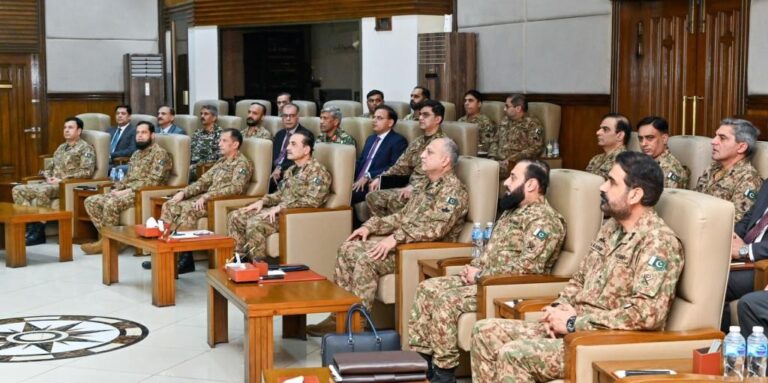
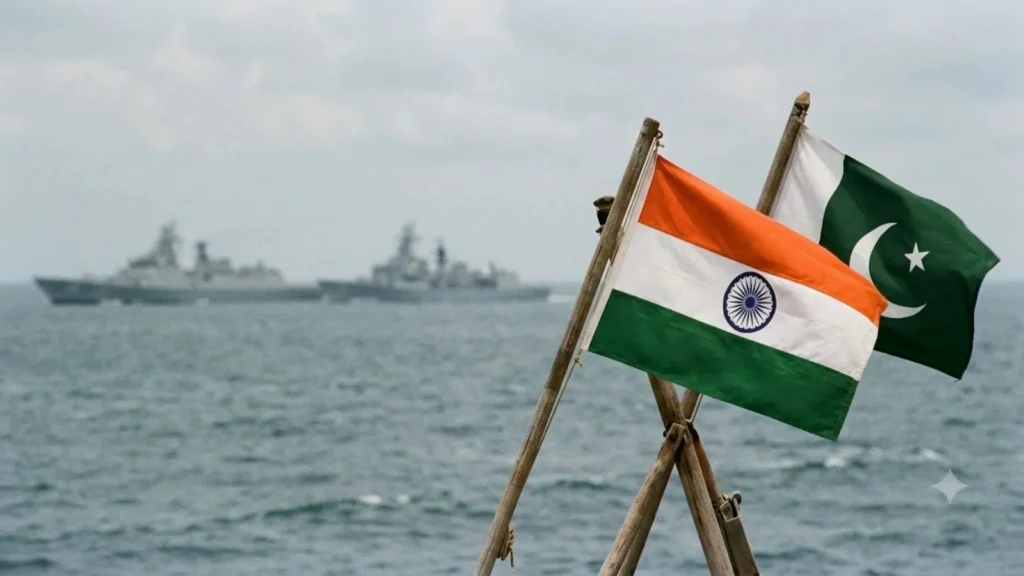
Defence pacts are judged by what happens when they are tested. On 5 October, the Makkah Joint Defence Agreement faced that test. An emergency meeting of the Strategic Political and Defence Committee in Riyadh decided to provide the agreed military forces and capabilities and to ensure their rapid deployment in Saudi Arabia. Pakistan, Saudi Arabia and Turkiye have thus moved the alliance from declared commitment to practical implementation.
This changes the nature of the pact.
When the agreement was signed, its main significance was political. It established that the security of one member would be treated as part of the collective security of all three. The Riyadh meeting now begins to give that commitment an operational shape. The joint statement refers specifically to greater readiness, military integration and collective capacity to respond to threats.
That transition matters because the regional security environment is no longer theoretical. Saudi Arabia has faced continuing attacks on its cities and civilian and economic facilities, while the conflict around Yemen and the Red Sea has created wider concerns for Gulf security and international shipping. The Riyadh meeting was convened specifically to address the threats facing the Kingdom.
The timing therefore gives the Makkah Pact an immediate test. Can the three countries turn their political commitment into an effective system of coordination without allowing the alliance to become another source of regional escalation?
The joint statement is significant in this regard because it does not describe an open-ended military commitment. It refers to agreed forces and capabilities, approved arrangements and the national legislation of each country. That language suggests that implementation will still operate within the legal and political frameworks of the three states.
This may ultimately prove to be one of the pact’s strengths. A defence alliance becomes credible not simply when it promises to respond, but when its members know who responds, with what capabilities, under whose command and under what circumstances.
The appointment of a secretary-general is therefore more than an administrative decision. It is part of building an institutional structure around the agreement. Pakistan’s Nauman Mahmood will have an important role in helping translate political commitments into coordination between the three countries. Whether the alliance develops effective mechanisms for intelligence-sharing, military planning, logistics and joint preparedness will determine how meaningful the pact becomes.
There is also a larger regional question.
For decades, Gulf security has depended heavily on external military powers and separate bilateral arrangements. The Makkah Pact represents an attempt by three regional powers to build a framework around their own security interests. Saudi Arabia brings its strategic position and resources, Pakistan brings extensive military experience and longstanding ties with the Kingdom, while Türkiye adds significant military capabilities and a growing defence industry.
But an alliance does not become a regional security architecture simply because its members sign an agreement. It has to develop institutions, common procedures and a clear understanding of its purpose.
That is why the latest meeting is important. The Makkah Pact has moved from deterrence as a declaration to deterrence as a capability.
Its success will ultimately depend on whether the three countries can build a system that is credible enough to prevent attacks, coordinated enough to respond when necessary, and restrained enough to avoid widening the conflicts already affecting the region.
The Makkah Pact has entered its most consequential phase: deterrence must now be translated into capability. Its success will depend not simply on how quickly forces can be deployed, but on whether Saudi Arabia, Pakistan and Türkiye can build a credible collective-defence mechanism that protects their members without widening the conflicts threatening the region.
Read more: https://digdebate.com/the-makkah-pact-and-the-rise-of-middle-power-security/

Our Editorial Desk is the intellectual engine of Digital Debate, responsible for the rigorous research that anchors every conversation. Our team deep-dives into data, checks every source, and consults academic literature to move beyond headlines and identify the questions behind the questions.