Oceans now drive economic growth, employment and trade. The World Bank defines the Blue Economy as the sustainable use of ocean resources for growth, better livelihoods and jobs, while keeping marine ecosystems healthy.
The concept covers fisheries and aquaculture, ports and shipping, shipbuilding, maritime tourism, marine renewable energy, offshore resources and coastal industries. China, the United States, Norway, Singapore, the United Arab Emirates and the Maldives have each built their own model around shipping, fisheries, tourism, logistics or offshore energy.
Pakistan has a coastline of roughly 1,001 kilometres on the Arabian Sea and sits close to the Strait of Hormuz, one of the world’s busiest energy corridors. That position gives its ports real commercial and strategic value, yet most of it remains unused.
According to the Planning Commission’s Blue Economy framework under URAAN Pakistan, the maritime sector contributes only about 1 percent of GDP. The framework targets nearly $4 billion in additional economic impact by 2030 through reforms in fisheries, aquaculture, shipping, ports, shipbuilding and coastal tourism.
The Annual Plan for 2026 to 2027 also names the Blue Economy a strategic sector for exports, connectivity, energy security, jobs and climate resilience.
Fisheries: Earn More from Every Catch
Seafood offers the quickest return. The Ministry of Maritime Affairs reported seafood exports of $568 million in 2025 to 2026, and exports reached about $125 million in the first quarter of the current fiscal year.
Volume alone will not raise incomes. Pakistan needs modern processing plants, cold storage, hygienic landing sites, refrigerated transport and international quality certification. Frozen fillets, packaged shrimp, ready to cook seafood and canned fish earn far more per kilogram than raw or lightly processed catch.
Aquaculture should sit at the centre of the plan. Wild stocks face overfishing, pollution and climate change, so Pakistan cannot rely on them indefinitely.
Regulated fish and shrimp farming can supply domestic and export markets and ease pressure on natural fishing grounds. It needs certified hatcheries, disease control, quality feed, technical training and environmental safeguards.
Ports: Capacity Is Growing
About 95 percent of Pakistan’s trade by volume moves through Karachi Port, Port Muhammad Bin Qasim and Gwadar. These ports handle cargo, energy supplies, investment and regional links, and they employ thousands of people.
Recent results show progress. In May 2026, Port Qasim received its largest ever LNG cargo, carried by a Q-Flex vessel from Qatar with more than 210,000 cubic metres on board. Karachi Port Trust handled over 54.685 million tonnes of cargo in 2025 to 2026, its highest in 138 years.
Both results depend on efficient operations, modern equipment and shorter vessel turnaround times.
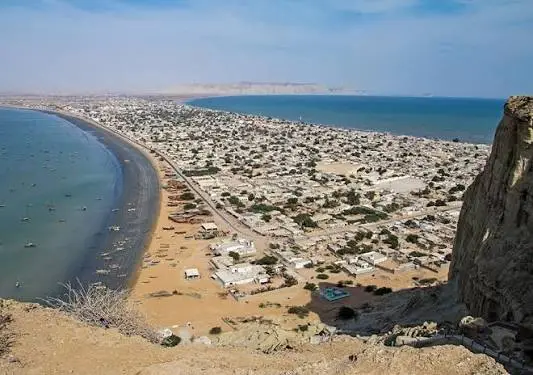
Gwadar is adding new services. In July 2026 it completed its first international commercial bunkering operation, supplying low sulphur fuel oil to an LNG carrier, and a second followed later that month. With marine fuel now available at Karachi, Port Qasim and Gwadar, Pakistan can build a regional maritime services network.
Gwadar’s place in the China Pakistan Economic Corridor gives it access to markets in Asia, the Middle East and Africa. Its long term success depends on steady commercial traffic, good road and rail links, transparent management, competitive tariffs and local industries in Balochistan.
What Pakistan Still Needs
A strong Blue Economy goes beyond busy ports and higher export figures. Pakistan also needs shipbuilding, ship repair, maritime insurance, logistics, marine research and professional training. A stronger national fleet would cut the foreign exchange spent on overseas shipping and create skilled jobs.
Coastal tourism has promise, but it needs clean beaches, reliable transport, safety services and trained local communities. Mangroves, wetlands and breeding grounds must be protected, because they shield the coast from storms, support fisheries and build climate resilience.
Isolated projects will not deliver any of this. Pakistan needs reliable data, consistent regulation, coordination between federal and provincial governments, private investment and direct support for coastal communities. Fishermen and maritime workers should see the gains through safety equipment, finance, healthcare, training and modern landing facilities.
The Blue Economy should be run as a long term national strategy that links trade, fisheries, energy, tourism, industry, technology and environmental protection.
Success should be judged by results: how much more Pakistan earns from the sea, how many decent jobs it creates and how well it protects marine resources for the next generation. Development and conservation have to move together to get there.

Our Editorial Desk is the intellectual engine of Digital Debate, responsible for the rigorous research that anchors every conversation. Our team deep-dives into data, checks every source, and consults academic literature to move beyond headlines and identify the questions behind the questions.