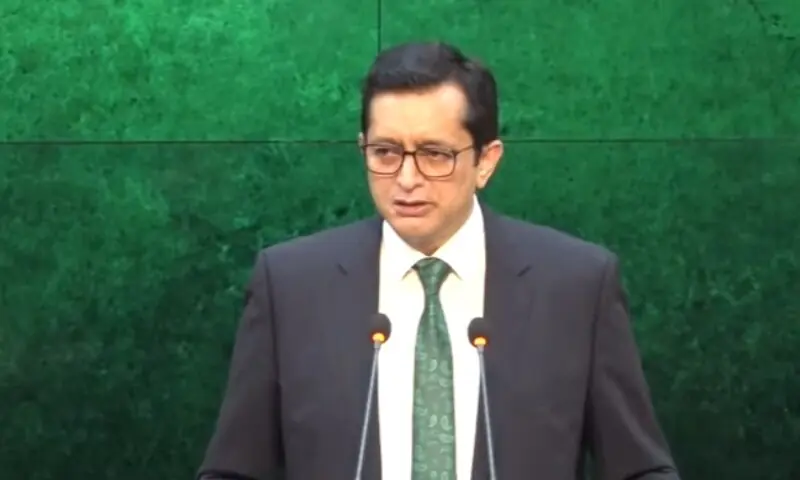
ISLAMABAD, September 7 — Pakistan’s Ministry of Foreign Affairs on Monday firmly rejected India’s stance on the status of Jammu and Kashmir, describing New Delhi’s assertions as “baseless” and inconsistent with internationally recognized facts.
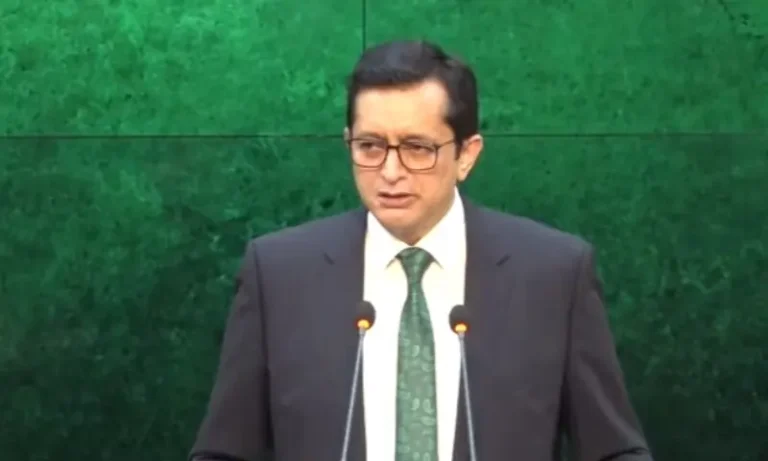
Foreign Office Spokesperson Ambassador Sajjad Haider Khan was responding to media queries regarding a statement issued a day earlier by India’s Ministry of External Affairs on the cartographic representation of the disputed region. New Delhi had claimed that a recent UN resolution did not endorse any particular map of the territory, asserting that Indian territory including Jammu, Kashmir, and Ladakh must be depicted in accordance with India’s own official maps.
Ambassador Khan stated that India’s “unilateral actions and continued illegal occupation” do not, and cannot, alter the internationally recognized disputed status of Jammu and Kashmir.
He described the dispute as one of the oldest unresolved matters on the agenda of the United Nations Security Council, noting that relevant UN resolutions require the region’s final disposition to be determined in accordance with Security Council resolutions and the freely expressed will of the Kashmiri people through an impartial plebiscite conducted under UN auspices.
The spokesperson further emphasized that official United Nations maps which continue to depict Jammu and Kashmir as disputed territory remain the only valid cartographic representation of its legal status. He maintained that India’s “so-called official maps” and unilateral claims of sovereignty carry no legal weight with respect to the territory’s status.
The Ministry of Foreign Affairs called on the international community to press India to immediately cease human rights violations in Indian-occupied Jammu and Kashmir and to fulfill its obligations toward the realization of the Kashmiri people’s right to self-determination, in accordance with relevant UN Security Council resolutions.
India’s Ministry of External Affairs had not issued a response to Pakistan’s statement at the time of this report.

Our Editorial Desk is the intellectual engine of Digital Debate, responsible for the rigorous research that anchors every conversation. Our team deep-dives into data, checks every source, and consults academic literature to move beyond headlines and identify the questions behind the questions.