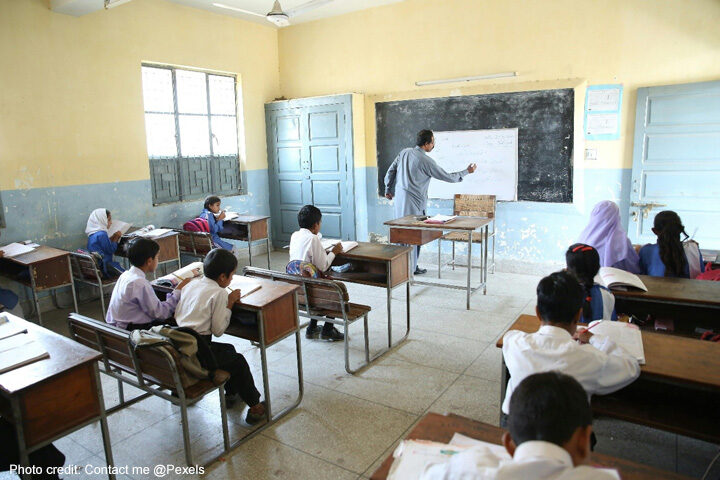
Between January and June 2026, nearly 11 children were reported as victims of abuse almost every single day in Pakistan, according to Sahil’s latest report titled ‘Cruel Numbers’. The report is compiled from 81 English, Urdu, and regional newspapers. It does not include unpublished cases. It does not record cases that were not reported to the police. It also doesn’t include what goes on in households, madrasas, and workplaces where there is no newspaper reporter and no complaint is lodged. Child rights advocates have long maintained that a large number of abuse cases never reach the police or media because of social stigma and lack of confidence in the justice system. The 1,914 figure is not the scale of Pakistan’s child abuse problem; it is the visible fraction of it.
A breakdown of these reported cases shows what kind of violence children are exposed to. Of the 1,914 cases, 1,015 involved child sexual abuse, 558 were abductions, 101 involved missing children, 98 involved pornography following sexual abuse, and 35 were child marriages. Girls accounted for 58 percent of the reported victims. Children aged 11 to 15 were the most vulnerable age group. Forty-nine infants were found abandoned by roadsides during the January-June period. That last figure carries its own specific horror. Abandoned infants are not a data category in an abstract policy debate. They are children left by roadsides. Each one represents a failure of family support systems, social protection networks, and the legal and financial conditions that determine whether a child’s birth is received as a crisis or as a life.
The perpetrator data is the most disturbing finding in the report because it closes the most common escape routes from accountability. Acquaintances accounted for 43 percent of the alleged perpetrators. Forty-five percent of incidents occurred inside victims’ homes. Child abuse in Pakistan is not an act of strangers in public places. It is carried out by people the child knows, in places the child is supposed to be safe, by individuals who understand exactly how reliable the silence around them is. Sahil says most cases of child sexual abuse are by relatives, associates, or religious teachers who know that silence is their strongest ally. The architecture of that silence is not accidental. It is sustained by stigma, by the assumption that disclosure brings shame rather than protection, and by a legal and institutional system that has not built the structures needed to make reporting feel safe or worthwhile.
The Legislative Gap That Sustains the Crisis
Pakistan has no federal child protection law. The Zainab Alert, Response and Recovery Act of 2020 was a direct response to the Zainab murder case and created a missing children alert system. The most comprehensive provincial legislation is the Protection of Children Act in Punjab. Sindh, KP, and Balochistan have varying degrees of provincial child protection legislation. None of this is a consolidated federal system with minimum standards, reporting systems, child protection units in every district, and systems of accountability for institutions such as schools, madrasas, or residential facilities.
Pakistan’s child abuse laws and support systems are built around female victims, leaving boy victims neglected. According to data, 47 percent of abuse victims are male, and the age group of 11 to 15 has the highest incidence rate. Male survivors are discouraged from reporting abuse by cultural norms in relation to masculinity. A child protection system that doesn’t specifically cover 47 percent of its victims is not a child protection system. It is a partial one, shaped more by social assumptions about who victims are than by the data on who is actually being harmed.
The expansion of BISP to cover 10 million families with Rs 14,500 per quarter, funded by the 2026 budget, is a significant accomplishment in social protection. But it does not shield children from harm within those families. Economic protection and physical protection are not the same policy domain, and they require different institutional responses. What Pakistan has built on the economic side, it has not built on the safety side. The reporting mechanisms, the trained child protection officers at district level, the mandatory reporting requirements for teachers and healthcare workers, and the survivor support systems that make disclosure survivable are all either absent or operating at a fraction of the scale the Sahil data requires.
The number marks a slight decline from the 1,956 cases recorded during the same period last year. Considering the increased media monitoring, the growing public awareness, and a decline of 42 cases in six months, this is not the progress at scale that is needed. Eleven children a day is eleven children a day. Pakistan’s diplomatic success of 2026 is indeed true and deserves recognition. But it does not excuse a domestic child protection failure that is documented twice a year by the same NGO and followed by the same absence of legislative action. The children in Sahil’s report are Pakistani children; they are owed more than a report.

Our Editorial Desk is the intellectual engine of Digital Debate, responsible for the rigorous research that anchors every conversation. Our team deep-dives into data, checks every source, and consults academic literature to move beyond headlines and identify the questions behind the questions.