After two years of persistent dialogue with the de facto authorities of Afghanistan, the United Nations Assistance Mission in Afghanistan (UNAMA) released its Security Sector Accountability report in August 2026, examining Afghanistan’s decrees, observing official announcements, and recording specific cases of human rights violations committed against victims. The report’s conclusion is measured in its language and damning in its substance: the Taliban have built an accountability architecture that talks constantly about transparency and produces almost none.
The report records that the de facto authorities have since August 2021 issued a number of decrees prohibiting torture and ill-treatment, appointed several oversight bodies and made public promises of accountability in their annual performance assessments. Decree No. 175 of January 2022 prohibits torture of persons in custody and authorizes punishment of officials who violate it. Decree No. 29 of March 2022 reiterates that torture during detention is forbidden. Decree No. 12 of November 2022 created the Security and Filtration Commission, mandating it to receive complaints and refer offenders to military courts. The de facto Deputy Prime Minister launched Afghanistan’s National Development Strategy in August 2025, which commits to “institutionalizing a culture of lawfulness and accountability” across security and defence forces. None of these pledges have been met with tangible results.
The Security and Filtration Commission has operated since December 2021. The most specific public announcement it made was in February 2022, when it announced that 4,350 people at all levels were expelled from service. There was no breakdown, no reason for firing, no institutions, no offences. Its Annual Report of 22 January 2025 recorded the removal of “corrupt and undesirable officials from the ranks, and the prosecution of violators. No figures were provided. On 28 April 2025, it announced the clearance process had reached its “final stages,” after more than four years of work. UNAMA still cannot confirm how many complaints the Commission registered, investigated, or referred to military courts.
The High Directorate of Supervision and Prosecution of Decrees and Edicts, which was created in March 2023 to supervise all de facto institutions, including security institutions, must report to the Taliban leader’s office quarterly in accordance with its founding decree. Since its establishment, it has made no public statement on the outcome of its monitoring efforts. In one province, UNAMA documented that the directorate’s monitoring personnel were subjected to pressure from other de facto authorities not to report certain findings to Kabul. The institution designed to ensure accountability is itself being shielded from scrutiny.
The Gap Between the Decree and the Deed
The UNAMA report identifies the same structural failure across every oversight institution. The de facto Ministry of Interior announced in June 2025 that the public could submit complaints directly to its Audit Inspectors in all 34 provinces. A positive step. However, UNAMA has not been able to confirm that complaints received by it are registered, investigated, or followed by any disciplinary action, because no de facto security institution has provided it with overall information on the number and type of complaints received, investigated, and/or met with any disciplinary action.
The de facto Ministry of Propagation of Virtue and Prevention of Vice’s Commission on the Hearing of Complaints has been the most communicative of any oversight body, announcing in August 2024 that it had registered 9,808 complaints, of which 5,486 had been resolved. Those statements don’t clarify how many of these announcements were made by de facto security personnel versus private citizens, specify which of the violations were present, or outline the resolution. UNAMA was separately informed that the majority of complaints in fact involved security forces. That was determined by its self-examination, and nothing has been made public.
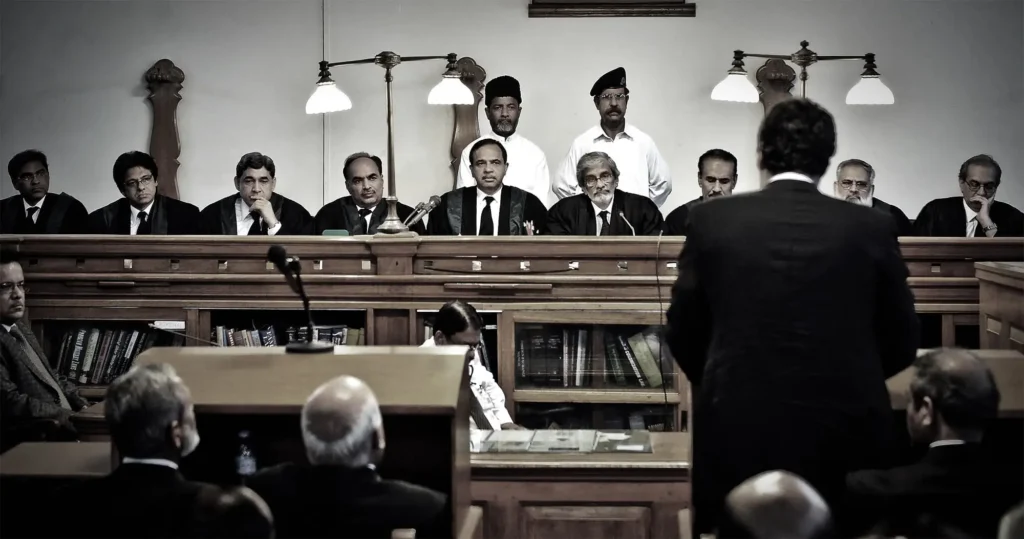
The de facto Supreme Court issues almost daily announcements on sentences for crimes committed by the general population, including prison terms, lashings, and corporal punishments, which it reiterates publicly as critical for their deterrent effect. It has issued minimal comparable information about the outcomes of its military courts, which handle cases involving de facto security personnel. A Supreme Court circular of November 2023 expressly prohibits the disclosure of “figures and types of lawsuits from which defamation or corruption can be deduced,” allegations of judicial incompetence, or information that could “defame the courts.” The institution of justice has been put beyond the reach of criticism as to how it proceeds.
This cannot be a coincidence. Corporal punishment for ordinary citizens is announced prominently because the Taliban regard its visibility as a deterrent. The absence of equivalent visibility for security personnel’s crimes carries the same signal in reverse: that the standards applying to civilians do not apply with equal force to those in uniform.
What the Cases Show
UNAMA has documented instances where arrests and investigations of de facto security personnel did occur. In Faryab Province in June 2024, the de facto Ministry of Interior announced that six personnel involved in torturing a man had been arrested and placed under investigation. The announcement stated that “torture cannot be justified.” UNAMA does not know the outcome of that investigation. A district police chief and five officers were arrested by a de facto provincial governor in 2024 over the forced marriage issue. The spokesperson said the perpetrators had been turned over to military court. UNAMA does not know the sentence. This is the recurring pattern. An incident is proclaimed. An investigation is started. Accountability is asserted. The results are never revealed.
UNAMA is also aware of instances where de facto Military Courts have refused to accept written petitions from complainants against security personnel, advising them to stop bringing claims against mujahideen. In some cases, security personnel who were arrested and even sentenced were subsequently released after mediation, with no public explanation. To date, no military court has announced a sentence specifically for the crime of torture or ill-treatment. The crimes mentioned in the sentences the military courts have publicly announced include robbery, forgery, sodomy, theft, and intentional killing. Torture is not mentioned.
Afghanistan is still party to seven key international human rights conventions, such as the Convention on the Rights of the Child, Convention Against Torture, and the International Covenant on Civil and Political Rights. The Convention Against Torture’s prohibition is absolute and non-derogable. It may not be suspended by the states for any reason, including in times of emergency. In 1987, Afghanistan acceded to the Convention, which is binding on all the successors of the Afghan state under international law. The Taliban’s repeated declaration that Sharia law supersedes all prior legislation does not extinguish those obligations. UNAMA specifically mentions that any act of lashing by de facto courts carried out on a routine basis is, under international law, a form of torture and falls under the absolute prohibition.
The Climate This Creates
Afghans who experience misconduct by security personnel face a system in which multiple complaint mechanisms formally exist but practically provide little assurance. UNAMA documents that many individuals do not report allegations of misconduct due to fear of intimidation or reprisals, or lack of trust in available mechanisms. Women face severe restrictions on movement, employment, and civic participation already under the de facto authorities’ policies, and these limitations are exacerbated for women. Only Baghlan’s provincial office of the Ministry for the Propagation of Virtue and Prevention of Vice has employed female staff. A woman who wishes to file a complaint must communicate through a male staff member who comes to the gate. The investigation, if one follows, is conducted without gender-sensitive protocols.
The de facto Supreme Court’s Deputy Chief Justice for Military Affairs stated in September 2024 that military courts are essential because, without punishments, “jobs and weapons can turn to means of cruelty.” That framing contains an implicit acknowledgment. The official is recognizing that security personnel without accountability become a threat to the people they are supposed to protect. What the statement does not address is why that accountability remains so difficult to document, verify, or observe from outside the institution.
The Taliban leader has repeatedly stated that “security does not come from being tough and killing more; rather, security is aligned with Sharia and justice. Injustice and being opposed to Sharia leads to insecurity.” These are not empty words in terms of intent. They represent a genuine framework within which the Taliban leadership believes security and conduct should operate. It’s not the statement that’s the problem; but the lack of any public process through which Afghans or the international community could know whether the intent is actually yielding a measurable outcome is the problem.
Five years of decrees, commissions, commissions to oversee commissions, and annual performance reviews have produced a security sector accountability framework that announces itself frequently and evidence itself almost never. The Taliban have created the architecture; they have not opened it to inspection. That gap is not a bureaucratic oversight. It is a choice, and it is the choice that defines what accountability actually means in Afghanistan today.

Our Editorial Desk is the intellectual engine of Digital Debate, responsible for the rigorous research that anchors every conversation. Our team deep-dives into data, checks every source, and consults academic literature to move beyond headlines and identify the questions behind the questions.