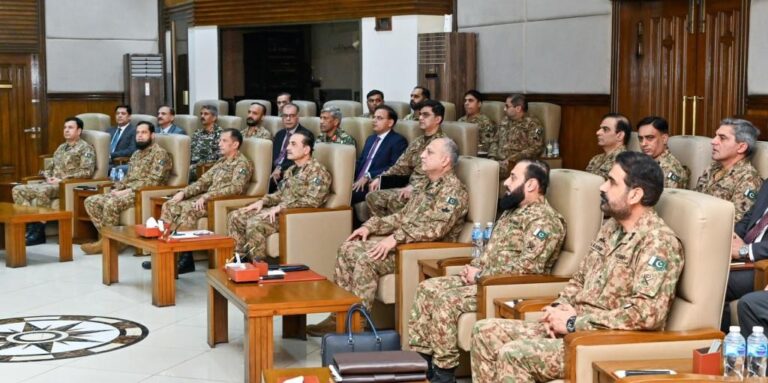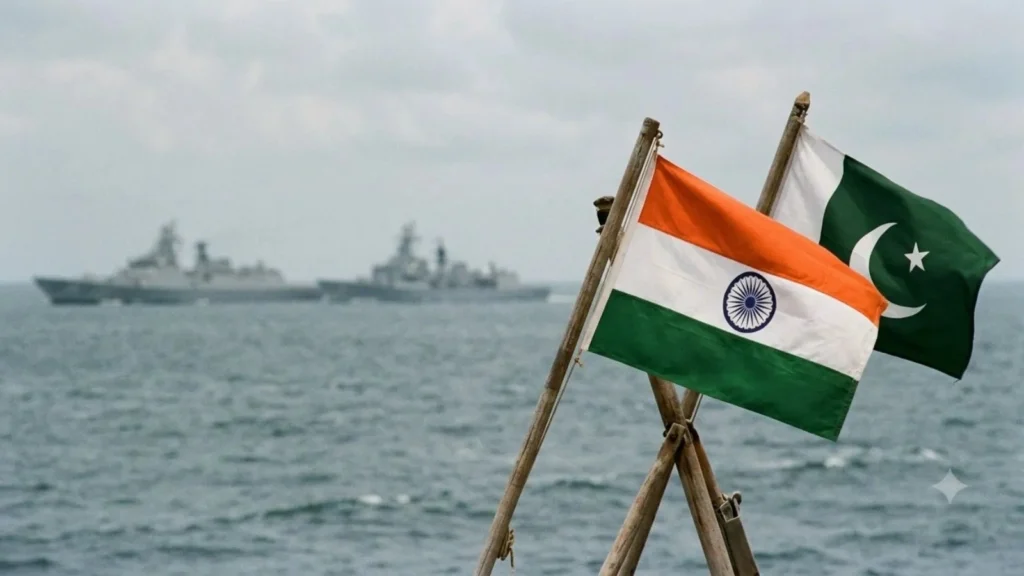
Saudi Arabia, Turkey, and Pakistan are set to sign a joint defense agreement in Jeddah today, as Saudi Crown Prince Mohammed bin Salman prepares to meet Turkish President Erdogan and Pakistani Prime Minister Shehbaz Sharif in the Red Sea city. The pact will be based on a structured framework of joint military exercises, intelligence sharing, defence industrial production and technology transfers. Field Marshal Asim Munir arrived in the Kingdom on Thursday and is present in Jeddah for the talks. A source close to the Saudi government confirmed the signing to AFP, saying: “It was under discussion for a long time, but the latest developments in the region expedited it.” The pact’s timing, urgency and strategic logic can be summed up in that one sentence.
The latest developments are the Iran war, the Houthi-Saudi escalation, the Red Sea blockade, and the Damietta drone strike that reached Egypt’s Mediterranean coast last week. The trilateral pact is a reflection in institutional form of five months of a conflict that has shown in reality that no single Muslim state has sufficient military manpower to defend its interests on its own. Oil facilities in Saudi Arabia have come under attack from the north. Turkey’s maritime trade routes have been disrupted through the Red Sea. Pakistan has deployed 8,000 troops and a JF-17 squadron to King Abdulaziz Air Base. Every country contributed something that the others can’t. What the war has shown, the pact being signed today formalizes.
The foundation was already in place. In September 2025, Saudi Arabia and Pakistan inked a Strategic Mutual Defence Agreement (SMDA) in Al-Yamamah Palace in Riyadh, where any act of aggression against one country is considered an act of aggression against the other. As early as May 2026, the Defense Minister of Pakistan had pointed out that the framework was being expanded and was in the process at various stages to involve Qatar and Turkey. Today’s Jeddah signing is not a surprise. It’s the next institutional move in a security architecture that has been developing since before the Iran war began to speed it up.
What Each Party Brings
The trilateral is not a symbolic gesture. Both sides have unique and non-replicable competencies. Saudi Arabia brings financial depth, Gulf geographic centrality, and the diplomatic relationships with Washington that no Muslim-majority state can match on energy and security matters. Turkey’s membership of NATO, the Bayraktar drone programme which has revolutionized the cost of modern warfare, one of the world’s largest standing armies, and a maritime stance from the Mediterranean to the Black Sea. Pakistan has nuclear deterrence, a combat-proven air force that proved in May 2025 that J-10C fighters from China are capable of downing NATO-standard Rafale fighter planes in real engagement, and the Iran-US ceasefire and the diplomatic image of the success of efforts to broker peace.
The pact has already reignited calls for an ‘Islamic NATO’, a military alliance of Islamic countries to ensure collective defence of shared interests. The coalition is being watched closely in New Delhi, particularly following Turkey’s public stance against Operation Sindoor and Ankara’s deteriorated relations with India in its aftermath. The Islamic NATO framing is analytically useful as shorthand but understates the specificity of what today’s agreement will actually create. This is not a generic solidarity statement. It is a formal operational plan agreed to by three States that have already been working cooperatively in live conflict for five months.
The Jeddah trilateral is embedded in a broader maritime defense alliance Pakistan has been working to put together, which also includes Kuwait, Bahrain, Qatar, Egypt, Jordan, Yemen, Bangladesh, Nigeria, Sudan, Djibouti, and Somalia. The trilateral is the backbone of a more comprehensive security system. Saudi Arabia, Turkey, and Pakistan have the military strength, diplomatic influence, and institutional legitimacy to build a regional security construct around which the other 11 can pivot.
In Pakistan’s case, Jeddah marks the strategic apex of a year that started with an Indian Operation Sindoor and concluded with Pakistan as a founding signatory of the Muslim world’s most vital defense pact. The country that was diplomatically isolated in April 2025 is now the nuclear anchor of a trilateral security pact being signed in the presence of two of the world’s most consequential Muslim-majority leaders. President Erdogan is scheduled for a one-day working visit today, meeting Muhammad Bin Salman and PM Sharif in a ceremony that regional sources confirm will produce the signed agreement before day’s end. Pakistan’s strategic importance has not been generated due to the Iran war. It revealed it. The Jeddah pact is about to institutionalize it.

Our Editorial Desk is the intellectual engine of Digital Debate, responsible for the rigorous research that anchors every conversation. Our team deep-dives into data, checks every source, and consults academic literature to move beyond headlines and identify the questions behind the questions.