
On August 5, 2019, India’s parliament revoked Article 370 of its constitution, stripping Indian-administered Jammu and Kashmir of its special autonomous status. It took less than four minutes to make the announcement. What ensued was documented over the course of years. Today, on the seventh anniversary of that decision, Pakistan observes Youm-e-Istehsal-e-Kashmir. Rallies are being held on Constitution Avenue in Islamabad. Sirens are being blown across four provinces, AJK, and Gilgit-Baltistan. One minute of silence is being observed at 9 am. The aim of the day is to maintain the international record of what India has been trying to delete from it over the past seven years.
The abrogation was followed by an unprecedented military lockdown, mass detentions, a total communication blackout, a sweeping ban on civil liberties, and a massive attack on the cultural and artistic heritage. Political leaders were taken under house arrest. New laws were introduced allowing non-residents to buy land in the territory, raising documented fears of demographic changes that could structurally marginalize Kashmiris in their own homeland. These were not temporary measures taken in a moment of security urgency. Seven years later, they remain in place and have been deepened through successive legislation.
The human cost accumulated over those seven years is not contested in its direction, only in its precise magnitude. From January 1989 through July 2025, a total of 96,461 people were killed in IIOJK, of whom 7,397 were killed in custody and fake encounters. In the same period, 176,500 civilians were arrested, 22,984 women were widowed, 107,983 children were orphaned, and 11,267 women were subjected to gang rape and molestation by Indian forces. These figures are compounded in the post 2019 period when the situation of intensified occupation and the limited access of external monitoring have prevailed. Since the lockdown, India has not allowed independent human rights investigators to work freely in IIOJK. What is documented is what reaches the outside despite the restrictions, not the full picture behind them.
The size of the property has increased vastly since 2019. The continued seizure of property, arbitrary arrests and detention, torture, and inhuman legal measures represent a systematic policy implemented after the revocation of Article 370. New domicile laws introduced since 2019 have allowed non-Kashmiris to settle and acquire property in the territory, with property confiscations used against individuals under various pretexts including allegations of militancy, drug trafficking, and unlawful activities. In January 2026, the Indian army conducted a profiling of mosques and the boards of management in IIOJK, which Pakistan’s foreign ministry called a “blatant intrusion into religious affairs” and “a grave violation of the fundamental right to freedom of religion and belief.
The Legal Status India Cannot Alter
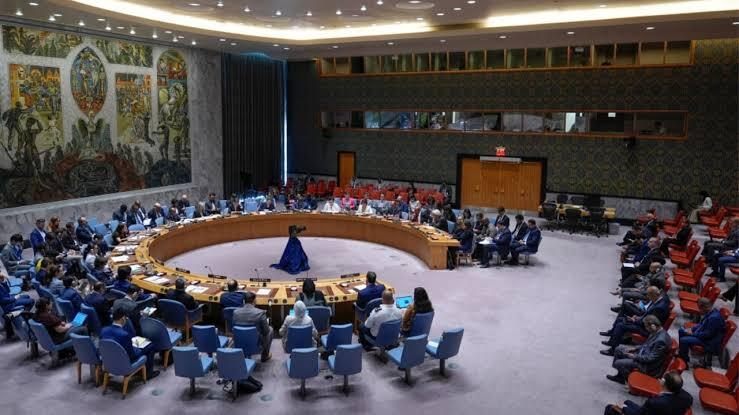
India’s unilateral abrogation of Articles 370 and 35A violated international law, UN Security Council resolutions, and the Shimla Agreement, all of which recognize Kashmir’s disputed status. In 2018 and 2019, India was subject to comprehensive reports on its state-sponsored, systematic, and flagrant human rights violations in IIOJK by the UNHCHR, which included arbitrary detentions under draconian laws, extrajudicial killings under the pretense of cordon-and-search operations, and the excessive use of force such as pellet gunshots. Those reports have never been retracted. These have been supplemented by subsequent documentation by the Independent Permanent Human Rights Commission of the OIC and by civil society groups that have limited access.
In June 2025, during the 51st Council of Foreign Ministers in Istanbul, the OIC issued a comprehensive resolution calling out India’s illegal and unilateral actions to alter the demographic composition of IIOJK, in violation of the UN Charter and relevant Security Council resolutions. All 57 member states of OIC are unanimous on the international legal status of Kashmir. India has not succeeded in normalizing what it did in four minutes on August 5, 2019, as settled domestic policy, because the international community has not accepted it as such.
Youm-e-Istehsal is not a symbolic occasion. It is a legal and political act. It is observed every year and constantly raises Pakistan’s demand on every international forum, reiterates the disputed nature of the territory which India considers settled, and records the actual situation before and after the abrogation of Article 370, and the failure by India to fulfill its promise of economic prosperity and development to Kashmiris. The APHC stated today that the people of IIOJK are being subjected to collective punishment for demanding the implementation of the UN-mandated plebiscite and called on the international community and global human rights organizations to take notice of the situation. Seven years later, that notice remains the minimum that the international community owes a people living under a military occupation whose human cost is documented in numbers that run into the hundreds of thousands.

Our Editorial Desk is the intellectual engine of Digital Debate, responsible for the rigorous research that anchors every conversation. Our team deep-dives into data, checks every source, and consults academic literature to move beyond headlines and identify the questions behind the questions.