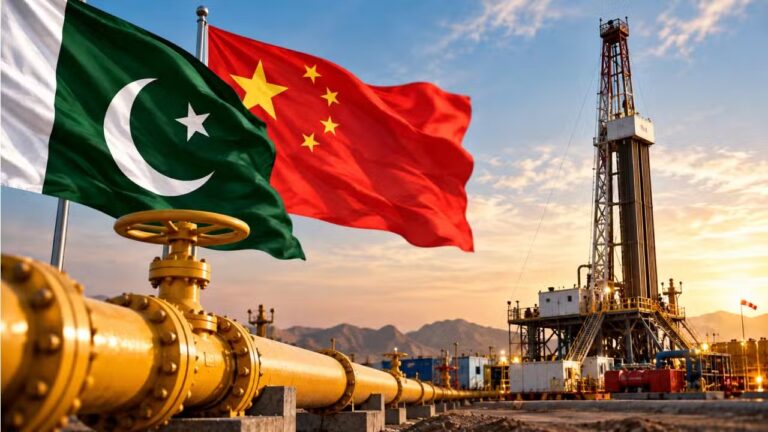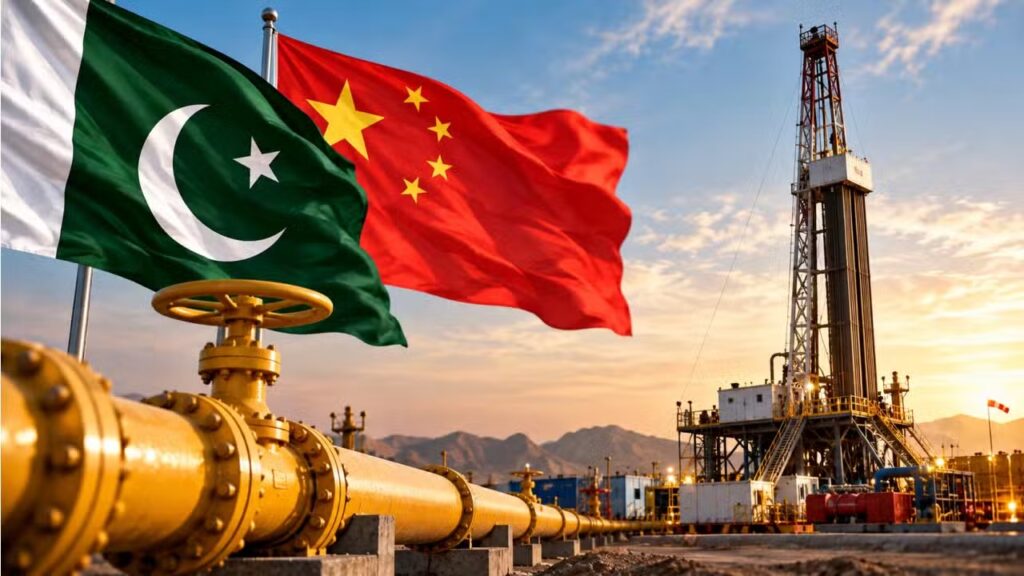

Pakistan’s Shaheen Energy and China’s Anton Oilfield Services Group have signed a memorandum of understanding to explore around Rs 20 billion in investment over the next three to five years for gas and upstream energy projects across Pakistan.
The agreement focuses on unlocking stranded and low‑pressure gas resources, enhancing production from existing fields, and expanding gas‑processing capacity by using new rules that allow exploration and production companies to sell a portion of their gas to licensed third‑party buyers.
Under the tie‑up, Shaheen Energy will contribute its local operational experience and gas‑processing infrastructure, including its Sinjhoro plant that already treats low‑pressure permeate gas and upgrades it to pipeline specification.
Anton Oilfield Services will bring international oilfield technology, upstream development expertise, and access to Chinese capital and equipment to help monetise fields that have so far remained underutilised or economically marginal.
The companies will jointly study commercially viable projects involving production enhancement, field development, and gas processing, with the aim of converting otherwise flared or stranded gas into saleable, pipeline‑quality supply.
The initiative leans on amendments to Pakistan’s Petroleum (Exploration and Production) Policy 2012, approved by the Council of Common Interests in January 2024 and notified in January 2025, which allow E&P companies to sell up to 35 per cent of their pipeline‑specification gas from new discoveries to OGRA‑licensed third parties through competitive bidding.
This policy shift is intended to encourage investment in difficult or marginal gas resources, reduce flaring, and attract private and foreign capital into the upstream sector while still ensuring that the bulk of gas continues to flow to the national grid through SSGCL and SNGPL.
The government has also been preparing to extend the off‑grid levy to such private gas sales, signalling that third‑party transactions will be taxed in line with other off‑grid gas use.
If the proposed projects move from this exploratory MoU to binding agreements and actual investment, the partnership could help raise domestic gas supply, cut wasteful flaring, and introduce more advanced Chinese technology and financing into Pakistan’s upstream oil and gas industry.
At present, the arrangement remains a framework for cooperation, with specific fields, commercial terms, and final investment decisions still to be worked out between the two companies and relevant regulators.

Our News Desk represents a rapidly expanding frontier in contemporary journalism, focusing on the intersection of technological advancement, geopolitical narratives, and the shifting dynamics of public information.