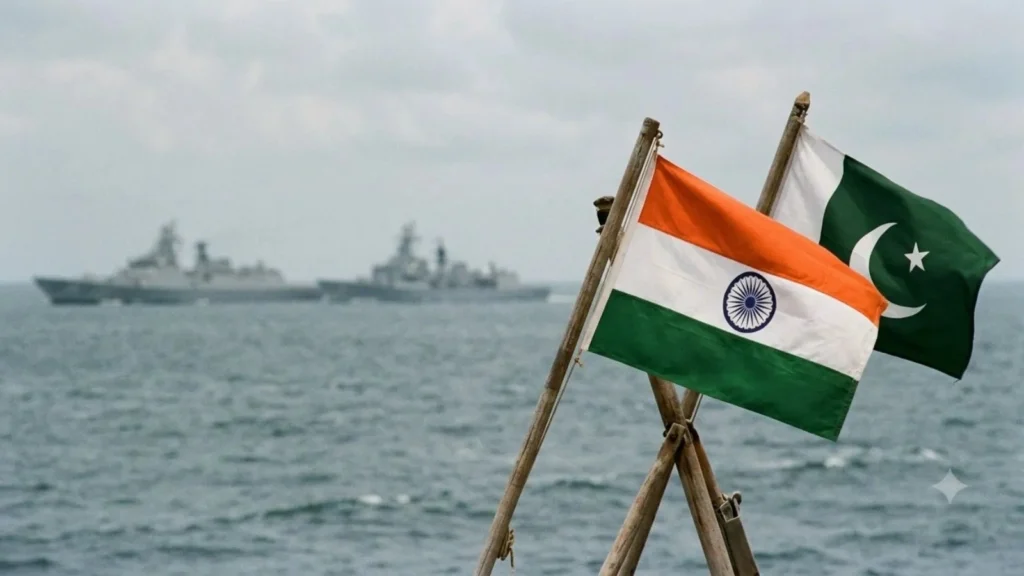
On August 2, 2026, the Pakistan Maritime Security Agency signed a landmark contract for the installation of a Vessel Monitoring System on Pakistan’s fishing fleet at a ceremony attended by the Secretary of Defence at PMSA Headquarters in Karachi. The contract signing is one such quiet but impactful development in the maritime governance of Pakistan, which happened in the same week when Pakistan was removed from Lloyd’s war risk register and a 14-nation maritime defense alliance formed. The three developments together tell a single story about a country that is finally treating its maritime domain as a strategic asset rather than an administrative afterthought.
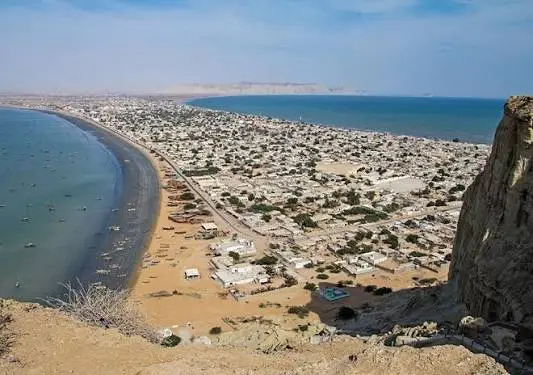
Pakistan has a 1,046-kilometre Arabian Sea coastline with a 240,000 square kilometer Exclusive Economic Zone that supports more than 1.5 million livelihoods and important marine biodiversity. Its fishing fleet operates across that zone without the tracking infrastructure that maritime nations have deployed for decades. Vessel Monitoring Systems use satellite transponders to send the vessel’s position, speed, and heading to the monitoring center on shore at regular intervals. All coastal countries with a serious maritime enforcement system employ them. Pakistan has not had one at scale until now.
The PMSA stated that the VMS project will deliver multiple benefits, including improved safety and security for fishermen, enhanced maritime domain awareness, and the sustainable management and exploitation of marine resources across Pakistan’s maritime zones and beyond. All three of these benefits are designed to correct a specific failure that has been apparent over the years. Historically, fishermen lost at sea have been hard to find as their boats lacked tracking devices. In the Arabian Sea, Search and Rescue is conducted primarily based on distress calls and visual sightings rather than on known Last Positions. A VMS that relays location information every half hour to a shore station will allow a vessel to be located in half an hour, not after a few days of searching.
The Resource Protection Argument
The marine resource management dimension carries its own urgency. Pakistan’s EEZ is abundantly rich in both living and non-living marine resources, especially in the Indus Delta region where illegal fishing is responsible for documented annual loss of Rs 8.1 billion to the government exchequer. Illegal fishing in the EEZ is undertaken without any vessel tracking across Pakistani waters and is enforced through sporadic patrol activities instead of a systematic approach. A VMS network changes the enforcement model from reactive to proactive. If all the legally registered Pakistani ships are equipped with transponders to report their location, then ships without transponders will be detected as they will not be reporting. The system not only records who is fishing, but it also records what they are catching. It identifies who is not being tracked, which is where enforcement attention needs to go.
According to a study by Frontiers in Marine Science, Pakistan’s marine ecosystem is witnessing convergence of anthropogenic stress and climate stress at an accelerating rate, due to unregulated fishing, differential regulation by the Sindh and Balochistan provincial governments, and the absence of effective licensing monitoring. Research shows a weak licensing system as a primary cause of illegal fishing in territorial marine waters, with large-sized mechanical launch fishing unregulated and under no check from the Ministry of Fisheries. A VMS does not directly tackle enforcement, but it is impossible to know which licenses are being infringed on without addressing enforcement.
The timing of the contract is significant for one additional reason. Pakistan was delisted from Lloyd’s war risk register three days before the VMS signing. The delisting implies that international shipping firms will be allowed to dock in Pakistani ports without paying war risk insurance premiums. Moreover, with the VMS system, which will enhance domain awareness in maritime and enhance fisheries management, Pakistan is developing institutional infrastructure that will make its maritime sector credible for international partners, shipping lines and investors at the same time. These are not unrelated developments. They are components of a maritime governance strategy that has gained significant momentum in 2026.
Pakistan’s coastal areas have been underutilized when compared to their geographical potential. The PMSA’s commitment to adopting modern technologies and measures to safeguard Pakistan’s maritime interests and protect the country’s vital marine resources is stated directly in the contract signing announcement. At its core, the VMS system is a safety technology for the 300,000 fishermen who operate on the Arabian Sea, many of whom have never been fitted with a tracking system on board. It is also a resource management tool, an enforcement mechanism, and a signal to the world that Pakistan is serious about governing the maritime domain it has largely allowed to govern itself.

Our Editorial Desk is the intellectual engine of Digital Debate, responsible for the rigorous research that anchors every conversation. Our team deep-dives into data, checks every source, and consults academic literature to move beyond headlines and identify the questions behind the questions.