On July 29, 2026, the Joint War Committee of Lloyd’s of London published JWLA-034, its latest revision of the Hull War, Piracy, Terrorism and Related Perils Listed Areas. Under the circular’s amendments, a single word appears next to Pakistan: Deleted. After 25 years on a list that added war-risk insurance premiums and surcharges to every vessel calling at Pakistani ports, Pakistan’s territorial waters and coastline have been formally removed. The war risk premium, which had been fluctuating for a quarter century, has dived to zero.
Pakistan’s Maritime Affairs Minister Muhammad Junaid Anwar Chaudhry announced the decision at the Pakistan Logistics and Shipping Summit in Islamabad, calling it a landmark development for the economy and maritime sector, and said the issue was formally taken up with Lloyd’s on March 13 after it was noted that Pakistan had remained on the JWC’s Listed Areas since 2001 following the September 11 attacks in the United States.
The origin of that listing is important context. Pakistan was not placed on the war risk list because of domestic maritime insecurity. It was reported as a by-product of its proximity to post-9/11 conflict regions and the ensuing regional instability. It was a legacy cost that Pakistan’s ports, exporters and shipping lines paid for during the 25 years that they have been on that list without formal objections, until this year.
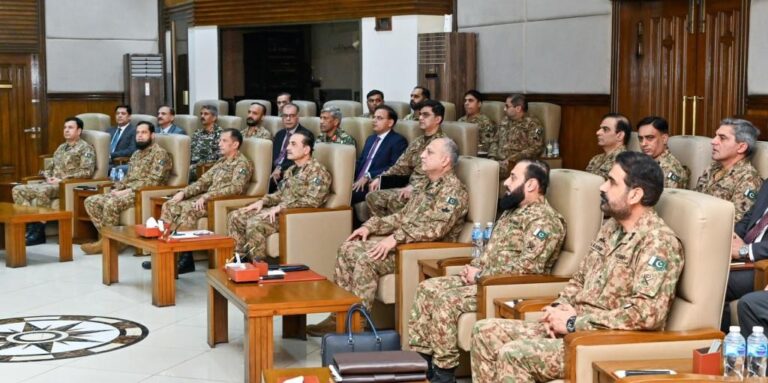
The Chief of the Naval Staff also met with the Joint War Committee and Lloyd’s Market Association in London on July 14 and submitted a comprehensive case for Pakistan’s maritime security before the committee, which takes the final decision on delisting. The CNS’s intervention, meeting the JWC directly rather than routing the case through diplomatic channels alone, was the mechanism that moved after decades of inertia.
It was revealed that the decision to remove Pakistan from the Listed Areas was one of the major modifications in the circular, along with other changes to the Saudi Arabian listed area and changes to the boundary of the Gulf of Aden. For a market that moves on real-time intelligence and continuous geopolitical monitoring, Pakistan’s removal at this moment, during an active regional war that added Bahrain, Djibouti, Kuwait, Oman, and Qatar to the listed areas in March 2026, is a significant institutional signal.
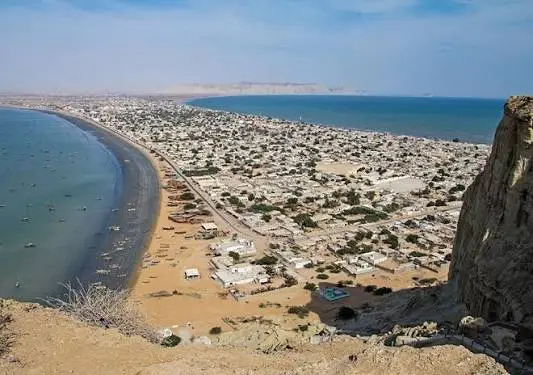
The implications of the practical implications are spread throughout Pakistan’s external trade structure. Being listed in a JWC Listed Area affects insurance premiums, charter party obligations, financing, and the overall commercial viability of a voyage. All shipping lines calling at Karachi, Port Qasim or Gwadar had to take out insurance to cover additional war risk on the voyage. This burden was borne by the Pakistani importers and exporters in the form of increased freight charges. Over 25 years, the cumulative impact on Pakistan’s export competitiveness, measured against regional competitors in ports that did not carry the same premium, is significant and largely uncounted in official economic analysis.
The delisting coincides with the particular urgency of Pakistan’s port competitiveness issue. The minister of Maritime Affairs said he was hopeful that the move would make Karachi Port, Port Qasim and Gwadar more attractive to international shipping lines and investors, which would facilitate regional trade, cargo transit and transshipment.
One of the major arguments for years, about the potential for Gwadar as a transshipment port for Central Asian trade, has been undermined in part by the insurance cost signal that the Lloyd’s war risk classification provides to carriers when considering routes. This signal has been removed. Whether shipping lines convert the removal into actual route additions depends on port infrastructure, turnaround times, and handling costs, but the insurance barrier that made the conversation harder to start no longer exists.
The Maritime Defense Alliance Dimension
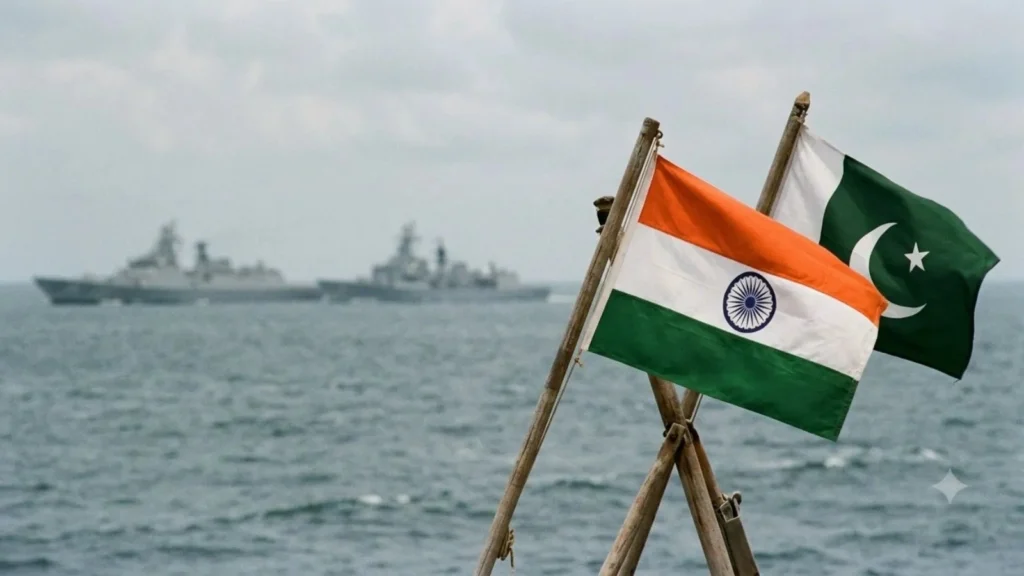
The delisting also comes amid Pakistan’s ongoing efforts to build a new regional maritime security structure. Fourteen countries have announced support for a maritime defense alliance project that Pakistan is co-leading, including Saudi Arabia, Kuwait, Bahrain, Qatar, Turkey, Egypt, Jordan, Yemen, Bangladesh, Nigeria, Sudan, Djibouti, and Somalia. The Iran war proved that no single country in the region has sufficient maritime security depth to safeguard its energy exports, which is why smaller Gulf and Indian Ocean countries have been keen on establishing collective security frameworks. Pakistan’s Navy, which has been constantly deployed in multi-nation counter-piracy operations in the Gulf of Aden under the Combined Maritime Forces, adds to this coalition-building exercise operational credibility and an institutional relationship.
The Lloyd’s delisting and the maritime defense alliance are not unrelated. The JWC makes its listing decisions based on real-time intelligence about maritime security conditions. Pakistan presenting a comprehensive maritime security case to the committee in July 2026, while simultaneously building a 14-nation maritime defense coalition, demonstrated institutional capacity and security commitment that informed the committee’s assessment. The circular’s publication date, July 29, and the CNS’s London meetings on July 14 suggest a two-week turnaround between the formal presentation and the decision. That is not a slow bureaucratic process. It is a fast market response to a well-prepared case. During the last 25 years, Pakistan paid a price it did not deserve. That cost is now settled.

Our Editorial Desk is the intellectual engine of Digital Debate, responsible for the rigorous research that anchors every conversation. Our team deep-dives into data, checks every source, and consults academic literature to move beyond headlines and identify the questions behind the questions.