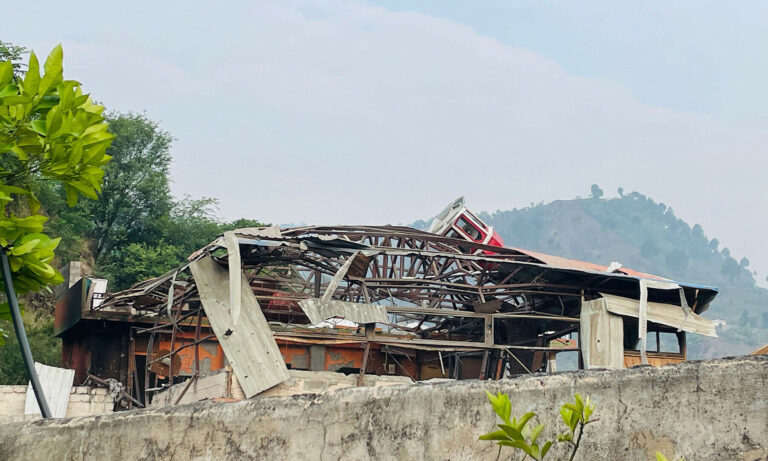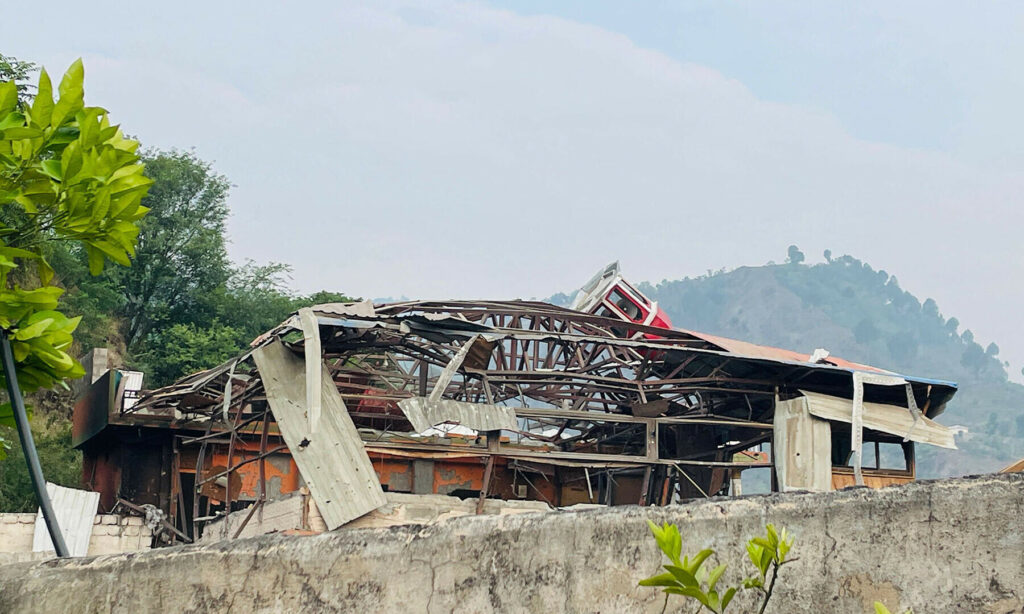
A drone hit a US-owned gas storage tanker at Egypt’s Mediterranean port of Damietta on Wednesday, with British maritime security firm Ambrey reporting that the floating storage tanker Energos Winter was struck, causing a fire that spread to a second vessel, the Gaslog Salem. Two security sources said the probable cause was a drone attack. No party claimed responsibility. Egypt’s Petroleum Ministry confirmed a fire at the port but did not identify the cause. Oil prices shot up in one of the sharpest spikes of the five-month war, with Brent crude futures rising more than 8 percent to push the benchmark well above $90 a barrel, reversing much of a plunge earlier this week. Egypt had not been struck before. The Middle East war has now reached the Mediterranean.
The significance of Damietta is not only geographic. Fighting resumed this month after the US-Iran interim deal reached in June collapsed over the fate of the Strait of Hormuz, which Iran says it controls and where it aims to collect fees. The Damietta strike is not an isolated incident. It is the latest point in a pattern of energy infrastructure targeting that began with Iranian drone strikes forcing Qatar to halt LNG production at Ras Laffan, the world’s largest LNG export facility, in early March 2026, causing Europe’s benchmark natural gas futures to surge by the largest margin since the 2022 Ukraine war energy crisis. Between March and July, the targets have moved from the Persian Gulf to the Red Sea to the Mediterranean in five months. The conflict’s geographic footprint is growing at a rate greater than the process of diplomacy to end it.
The Strait of Hormuz is used by more than a quarter of all seaborne traded oil, and one-fifth of global LNG trade, of which 83 percent is destined for markets in Asia, such as China, India, Japan, and South Korea. A major share of energy and cargo movements between Asia and Europe currently go through Bab el-Mandeb and the Suez Canal route, which has been blocked by Houthis in the Red Sea since late July. The Suez Canal is the route that leads to the Mediterranean port of Damietta. Two tankers are not the only things damaged when a drone strikes Damietta. Two separate security sources said the likely cause of the blast was a drone strike, in what could signal a further spread of the conflict. It issued a warning to all LNG ships on the way through that corridor that there is no operational security point in the extended conflict zone.
What Import-Dependent Economies Are Absorbing
In Pakistan, Bangladesh, Sri Lanka, and most of sub-Saharan Africa, where imports account for the bulk of energy demand, chokepoint contagion is a real geopolitical threat. Several tanker owners, oil majors, and trading houses suspended crude, fuel, and LNG shipments via the Strait of Hormuz as operators reassessed risk, with at least three LNG carriers traveling to or from Qatar pausing voyages to avoid the strait. In five months of disruption, Pakistan imported just three LNG cargoes from Qatar. Each disruption adds up in terms of the fiscal impact. Higher shipping insurance premiums, longer rerouting distances, spot market LNG at $22 to $25 per MMBtu against pre-war contract rates, and petroleum development levy adjustments passed to consumers: these are the mechanisms through which a drone strike in Egypt translates into electricity costs in Karachi or Dhaka within weeks.
This crisis requires a strategic solution with two elements that most import-dependent countries lack in their plans or budgets. The first is Strategic Petroleum Reserves. The International Energy Agency has set the 90-day rule as a minimum level of energy security, which is considered standard import cover. Pakistan has been consistently below this standard, rendering it vulnerable within weeks of interruption in supplies. A country that exhausted its LNG buffer by April and was scrambling for spot cargoes by May had no structural defence against a five-month closure. Building an SPR adequate for a 90-day closure of both Hormuz and the Red Sea simultaneously is expensive in the short term and existentially necessary in the medium term.
The second is the diversification of the supply routes. The Iran-Pakistan gas pipeline, passing through the territory of Balochistan, will bring 750 million cubic feet of gas per day to Pakistan, bypassing the Strait of Hormuz completely. The construction process started with the Geneva MOU’s sanctions waiver. The coalition strikes in late July were the first time that Riyadh has publicly participated in attacks alongside Washington, creating a broader conflict and perhaps prolonging the timeline until a final deal brings the war to a close. Every additional week the war runs is another week the sanctions waiver exists, another week construction could begin, and another week Pakistan does not use it.
Today’s Damietta strike is the clearest possible demonstration of why chokepoint diversification and strategic reserves are not long-term planning aspirations. They are the minimum infrastructure requirement for any import-dependent economy that wants to survive the next five-month closure, wherever it comes from and whatever route it targets.

Our Editorial Desk is the intellectual engine of Digital Debate, responsible for the rigorous research that anchors every conversation. Our team deep-dives into data, checks every source, and consults academic literature to move beyond headlines and identify the questions behind the questions.