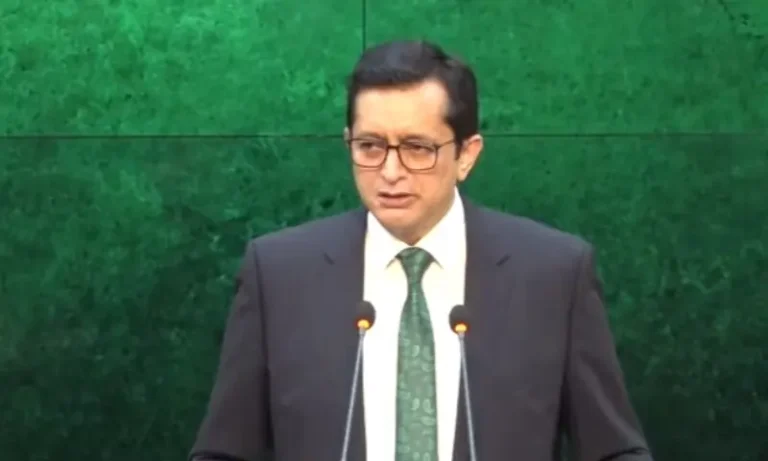
US Secretary of State Marco Rubio told the ASEAN Foreign Ministers’ Meeting in Manila on Wednesday that the United States is still willing to negotiate an end to the Iran crisis, but that Tehran is not serious about talks. “The problem we’re having right now is that they’re not serious about talks,” Rubio said. “If they’re not, then we will do what’s necessary to protect our interests, and also the interests of our allies.” This came on Day 145 of a conflict that’s become both financially and humanly unsustainable for both sides.
The numbers are specific and staggering. Direct US military operations in Iran are estimated at up to $42 billion, with the Pentagon submitting an $87.6 billion supplemental funding request to Congress to cover ongoing operations. The first six days alone cost $11.3 billion, approximately $1.88 billion per day, based on Pentagon briefings to Congress. The total estimated cost to the American taxpayers for the first 108-day combat phase was $113.3 billion. With nine consecutive nights of strikes from July 11 to 19 now added to that figure, including strikes reaching as far as Tabriz and hitting the Darkhovin nuclear plant on July 19, the running total has climbed further. Three US service members were killed on July 17 and 18, the first combat deaths since March, when Iranian missiles struck Jordan’s Muwaffaq Salti Air Base. The US human toll now stands at 17 killed in action, one missing, and over 553 wounded.
The broader economic disruption is the figure that dwarfs the military spending. In June, the Institute for Economics and Peace estimated that the Iran war is costing global GDP $2.2 trillion per year, a sum that could be compounded exponentially if the fighting escalates to the high-intensity mode. Brent crude jumped from around $70 per barrel in early February to a high of $126 per barrel in April. Nationally, U.S. gasoline averaged more than $5.40 per gallon, with California stations averaging more than $7.00 per gallon. American families have seen an estimated total of $100 billion in collective energy cost increases, or about $1,000 per family. They are expenses spread throughout an economy in which congressional elections are four months away.
What Iran Has Absorbed
Iran’s cost accounting is harder to verify but no less severe. The Iranian military casualties have been estimated at 1,800 to 7,650, while civilian losses have been recorded throughout Iran, Lebanon and the Gulf States, and US equipment losses were estimated at $5.14 billion. The war’s aim was to sabotage Iran’s decades-old nuclear programme, and at least three facilities have been documented as having suffered damage, including Natanz, Fordow, Isfahan and Darkhovin. During the Hormuz closure, its oil export revenues, the backbone of the Islamic Republic, dropped to almost zero, and have not yet reached pre-war levels. The IRGC is being pushed to its limits as it continues to operate in multiple theaters, including the Hormuz, Lebanon, Yemen, and Iraq.
The Houthis announced a naval blockade on Saudi Arabia on Monday, causing three oil tankers carrying Saudi crude to Asia to reverse course in the Red Sea. Saudi Bab el-Mandeb crude loadings have fallen 36 percent in two weeks as a result. Rubio has raised the issue of the Houthi blockade during the ASEAN meeting, stating that giving Iran or its proxies control over international waterways would set a precedent that would be dangerous for Southeast Asian countries with their own territorial disputes to follow. The argument is strategically sound. Its audience in Manila is also geographically removed from the Strait of Hormuz and the Red Sea, which limits the operational support Washington can realistically expect from ASEAN partners.
Why Both Sides Are Still Talking
The explanation for Rubio striking Iran and their readiness to negotiate is the same as the explanation for every other step along this conflict since February 28. Neither side has achieved its core objectives. The US has degraded Iran’s nuclear sites but not eliminated the enrichment capability. While Iran has caused disruption in global energy supply, it has not split the US-led coalition. Both sides are both paying costs that are way beyond what continued fighting can accomplish that negotiations can’t. One analysis observed that the Iran strikes had the reverse effect of the goals it was intended to accomplish, with the largest military response in the history of the Islamic Republic, and activating a network of proxy forces, not to mention a potential closer relationship between the United States and Iran’s adversaries, Russia and China.
The 60-day final deal window closes on August 16. Twenty-five days remain. Rubio is in Manila, saying Washington is ready to talk. Tehran’s negotiators are in Doha, saying the US is not serious. Both sides are right in saying that the other side is not serious. The price for that mutual inadequacy is $113 billion in US military expenses, 17 American lives lost, thousands of Iranian lives lost, $2.2 trillion in annual global GDP losses, and a Houthis blockade that just opened a second energy chokepoint while the first one stands unresolved.

Our Editorial Desk is the intellectual engine of Digital Debate, responsible for the rigorous research that anchors every conversation. Our team deep-dives into data, checks every source, and consults academic literature to move beyond headlines and identify the questions behind the questions.