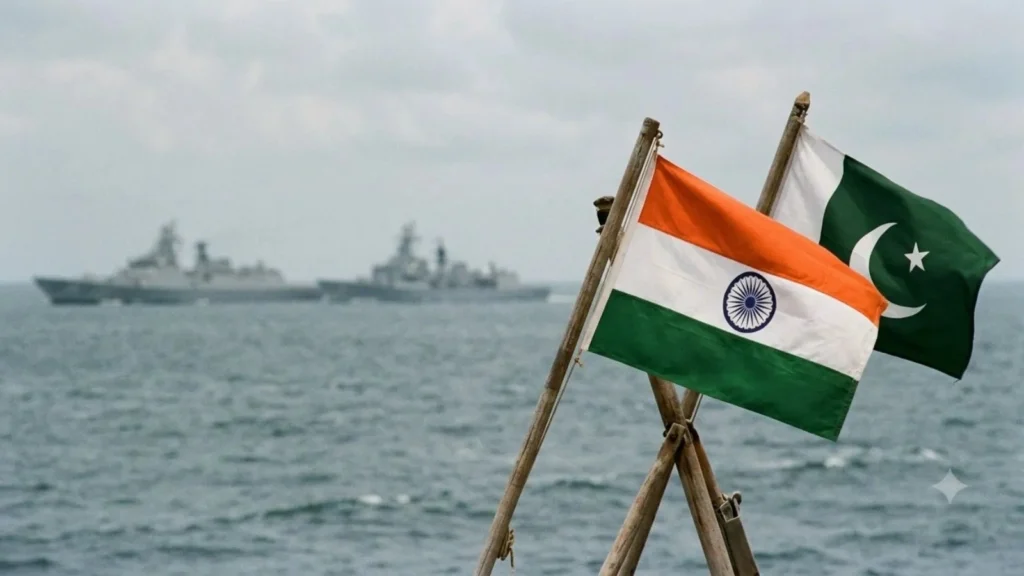
There is a pattern worth naming directly. Every time Pakistan defeats India on a conventional battlefield, the attacks on Pakistan’s western front intensify. It occurred after Kargil. It came after the surgical strikes in 2016 did not yield the strategic impact India had envisioned. It’s happening right now, thirteen months after Operation Bunyan-un-Marsoos downed Rafale jets, attacked 26 military installations in India and forced a ceasefire brokered by the United States that New Delhi tried to wash its hands of for weeks.
India cannot say it is retaliating. It cannot put uniforms on the militants operating in Balochistan’s mountains. It cannot stand in front of the UN Security Council and explain why its consulates in Kandahar and Jalalabad were channeling funds to groups that block highways and shoot Punjabi passengers after checking their identity cards. So, it does not say any of those things. It maintains silence and plausible deniability, and the attacks continue.
The BLA removed that deniability itself. After Marka-e-Haq, the group openly declared itself India’s “military arm” from Pakistan’s Western Front. This was no over-exaggeration. It was an operational declaration from an organization that understands its relationship with its patron well enough to name it publicly. The British American Security Information Council, a Western-based body with no vested interests in Pakistani domestic politics, pointed out the declaration undermined India’s possible deniability on the issue. Funding trails are becoming traceable. The confession is on record.
Pakistan’s complaint at international forums about Indian involvement in Balochistan included the evidence of $22 million funneled through Indian consulates in Kandahar and Jalalabad to Baloch terrorist groups. Kulbhushan Jadhav, an Indian Naval Commander arrested in Balochistan, admitted to working for RAW since 2001 and to sabotaging CPEC infrastructure. These are not allegations manufactured in Rawalpindi. They are documented cases with named individuals, admitted affiliations, and physical evidence. This evidence has been presented to the international community. Its response has been measured where it should have been categorical.
The Two-Front Architecture
The geography of Operation Shaban is a story about the strategy that Pakistan is facing. The operation is conducted on two parallel fronts: the TTP in Ziarat, in the North of Pashtun society, and Baluchistan’s BLA in Lasbela and Khuzdar in the South of Baloch society. Two different militant groups. Two different ethnic communities. Two different ideological frameworks. However, one geo-effect: maximum pressure on Pakistan’s biggest province from both sides at the same time. That coordination does not emerge from organizational coincidence. Analysts have documented India’s intelligence apparatus providing advanced weaponry to the TTP through Afghan channels while simultaneously funding the BLA in the south. The two-front pressure is a designed architecture, not a coincidence of grievances.
Pakistan has tried to raise the Afghan dimension of the TTP multiple times but without receiving any proper international response. The Taliban government in Kabul has never admitted to harboring TTP militants despite the security forces of Pakistan capturing them in one operation after another across the border. In the 2025 and 2026 press releases, the ISPR has mentioned that in intelligence-based operations in Kalat, Duki, Awaran and Kachhi, Indian sponsored militant groups have recovered weapons and ammunition from the killed militants who were identified as belonging to “Fitna al Hindustan. Documentation is specific, month-by-month and district-specific. It describes an operational network, not an occasional incident.
The civilian dimension of this proxy war is what distinguishes it from a conventional insurgency and makes it morally indefensible regardless of the political grievance claimed. Balochistan Chief Minister Sarfraz Bugti has stated that the people being killed on blocked highways are not Punjabis but Pakistanis, and that the BLA has no ties to Baloch traditions or the Baloch people. The identity cards of workers heading to construction sites, truck drivers on the national highway, teachers commuting to rural schools are among those that are checked at improvised road blockades before armed men decide whether they live or die based on their province of birth. This isn’t a political insurgency which can be dealt with at a negotiating table. It is ethnic terror meant to expel non-Baloch workers out of Balochistan, slow down CPEC and create fissures between Balochistan and the Pakistani state.
Since July 5, Operation Shaban has claimed the lives of 129 militants through aerial strikes, ground operations and helicopter gunship raids in territory where the defenders have all the advantages. The results are real, and the security forces are doing so in dangerous conditions in some of the toughest terrain in the country. But military operations degrade capacity. They do not cut into supply lines that pass through foreign territory protected by foreign troops. Every militant killed in Ziarat or Khuzdar can potentially be replaced by a recruit trained across the border, financed by funds routed through networks that Pakistani intelligence has documented but international institutions have been slow to sanction.
The Diplomatic Argument Pakistan Must Now Make
Pakistan has built an unprecedented diplomatic record this year. It brokered the Iran-US ceasefire. It hosted the Islamabad Talks. It secured a joint EU communique that mentioned Kashmir. It presented its IWT case at an international seminar with foreign delegates in attendance. It is a nation that has proved its credibility at all levels of international diplomacy. The same credibility should now be applied to the Balochistan issue, as they explicitly mentioned India’s proxy role in the UN Security Council, presented the documented proof of TTP-Afghanistan’s connection to the Financial Action Task Force, and held Kabul accountable as Pakistan chairs this year’s SCO in this regard.
The proxy war India will not name is the war Pakistan must name, loudly, specifically, and with the same international audience it built during the Iran mediation. The mountainous area of Balochistan is not a domestic security challenge. They are its front line of a regional strategy aimed at territorial integrity, economic corridors, and the civilian population of Pakistan. Treating it as anything less is the only mistake Pakistan cannot afford to make.

Our Editorial Desk is the intellectual engine of Digital Debate, responsible for the rigorous research that anchors every conversation. Our team deep-dives into data, checks every source, and consults academic literature to move beyond headlines and identify the questions behind the questions.