When the Strait of Hormuz closed on February 28, Pakistan did not have an energy crisis plan ready for a multi-month closure. It had emergency procurement procedures, diplomatic channels, and a fragile LNG spot market it could theoretically access. It lacked an architecture of supply that could withstand five months of a closed sea route to the Gulf. This 110-day Iran war proved that point, in a way no policy paper could ever have done.
Pakistan’s LNG supply came to a halt in March 2026, when Qatar’s Ras Laffan facility was caught in the crossfire of the US-Israel conflict with Iran. Since the conflict began, Qatar, which accounts for approximately 20 percent of global LNG supply and 90 percent of Pakistan’s LNG supply, has shipped only three cargoes through the Strait of Hormuz to Pakistan. Three cargoes in five months from a supplier providing nine-tenths of Pakistan’s LNG is not a supply chain disruption. It is a supply chain collapse. Even if the strait is fully reopened under the Geneva MOU, 17 percent of Qatar’s Ras Laffan production capacity has sustained long-term damage and will require up to five years to repair. The disruption’s consequences do not end when the shooting stops.
Pakistan urgently sought LNG for immediate delivery as the crisis deepened, but spot prices had jumped to $22 to $25 per MMBtu, compared to pre-war contract prices that were a fraction of that level. Pakistan was structurally priced out of the emergency market at the moment it most needed access to it. The International Energy Agency (IEA) has suggested that for import cover, there should be at least 90 days. However, Pakistan has often not maintained this standard and has been vulnerable to even weeks of supply disruption. A nation with less than 90 days of energy buffer and importing 85 percent of its electricity supply is not going to be able to withstand a five-month disruption without significant economic harm.
What the Crisis Revealed and What It Did Not Create
What is important here is that this is not the Hormuz crisis itself that has made Pakistan energy vulnerable. It revealed one that predates the Iran war by more than a decade. It is not the first time that Pakistan is facing such a supply shock, operating on long-term contracts that are not structurally viable in the current market scenario. The centralization of LNG supply around a single supplier was a known risk in the country, and so was its single maritime chokepoint. The crisis converted that risk into a lived consequence.
Two structural alternatives have been available and discussed for years. The first is the Iran-Pakistan gas pipeline. Iran completed its section over a decade ago. Pakistan has not built the 80 km connecting stretch from Gwadar to the Iranian border. The IP pipeline would deliver 750 million cubic feet of gas daily through Balochistan, bypassing the Strait of Hormuz entirely. During the five months that Hormuz was contested, gas through that pipeline would not have been interrupted for a single day. The Geneva MOU’s sanctions waiver has now removed the main legal obstacle to building it. The most critical energy policy decision Pakistan is going to take in 2026 is whether the construction will commence before the next narrowing of the waiver period.
The second is domestic solar and renewable capacity, which the crisis unexpectedly validated in a positive direction. In January 2026, Pakistan enjoyed an LNG surplus, and record LNG plant utilization was below minimum dispatch levels due to a decrease in grid consumption by the record solar additions. The solar revolution being experienced by Pakistan’s households across the provinces of Punjab and Sindh played a more or less inadvertent role in cushioning the impact of the worst part of the supply shock. The quick expansion of solar generation and the reduction of electricity demand provided a partial buffer to LNG reliance, which was not anticipated by central policy or was created through a natural process of distributed investment. That is an important signal. It was not the top-down but the bottom-up diversification that saved Pakistan some of its worst exposure.
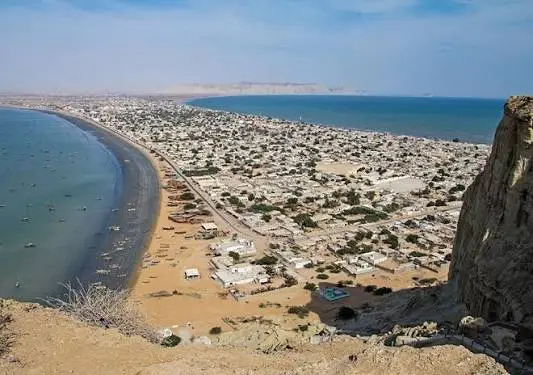
Pakistan’s energy pipelines under the CPEC are a long-term solution to the threat of the sea routes, but the construction would take years to complete. Expanding regasification capacity at multiple ports to reduce single-terminal exposure is a more near-term achievable objective. The second regasification terminal at Gwadar, together with the one at Port Qasim, would minimize the SPOF vulnerability that the crisis exposed. These are not new recommendations. They are featured in various energy security evaluations by various institutions in various years. Those assessments have now been given the political impetus they need by the Hormuz crisis.
The war ended on June 18. The MOU was signed. The Strait is nominally open. Pakistan’s LNG supply is recovering slowly. However, if the final deal negotiations wither after August 16 and the Strait is closed once again, then Pakistan will be stuck in the same structural exposure that it faced on February 28, albeit with the added experience of five months of the price tag of that exposure. The second Regas terminal, the solar power expansion, and diversification of LNG suppliers are not short- or medium-term goals. They are the specific policy responses the Hormuz crisis has made urgent. The window is open for Pakistan. The question is whether it uses it before the next crisis arrives.

Our Editorial Desk is the intellectual engine of Digital Debate, responsible for the rigorous research that anchors every conversation. Our team deep-dives into data, checks every source, and consults academic literature to move beyond headlines and identify the questions behind the questions.