For about five hours on Tuesday, there was a price on the Strait of Hormuz. Trump has suggested a 20 percent “United States Reimbursement Fee” on all ships crossing the waterway, a charge he estimated would raise in the region of $240 million per day on pre-war shipping levels. The straightforward reason given was that the world, including “China,” benefited from the protection of the strait and it was the United States’ right to be reimbursed for that. It was, by any measure, one of the more audacious proposals in the history of maritime law. It lasted less than a working day.
Less than five hours before the fee was due to take effect at 2000 GMT, Trump posted on Truth Social that he had decided to replace it with “Trade and Investment Deals” from Gulf states instead. No specific commitments were mentioned. No figures were confirmed. Trump told reporters in the Oval Office he did not like the concept of a fee, but that it was unfair for the US to be protecting the strait for the entire world without compensation, and that Gulf states investing in America achieved the same goal differently. It is still unclear whether they are new pledges or repackaged versions of pledges already made following Trump’s visit to the Gulf last year. Bloomberg reported that at least one Gulf Cooperation Council member state said it had not agreed to increase its existing financial commitments in exchange for the fee being waived.
The collapse of the fee was not due to mere change of heart. It was a direct response to a wall of legal and commercial opposition that arrived within hours of the proposal. The UN’s International Maritime Organization (IMO) rejected proposals for charges on straits used for international navigation, saying there was no legal basis for imposing compulsory tolls on international strait passages. Germany’s Hapag-Lloyd, the world’s fifth-largest container shipping company, described the proposed fee as “fundamentally wrong.” Trump’s U-turn was a sign of slapdash decision-making, and a repeat of the “TACO” phenomenon, or “Trump Always Chickens Out,” traders pointed out during his tariff policy flip-flops last year, according to Bloomberg’s analysis. That framing is commercially pointed. The shipping markets are already under immense pressure, and risk pricing is not that good in a world where the regulatory environment shifts twice in 24 hours.
The Escalation That the Fee Did Not Stop
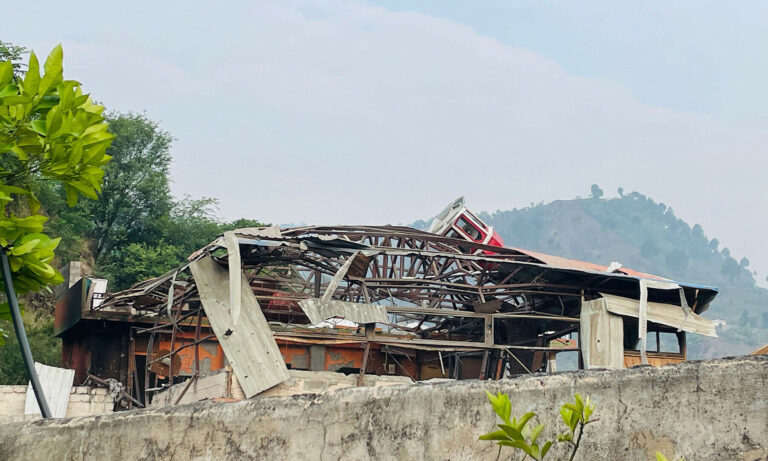
The withdrawal of the fee proposal did not slow the military tempo. US forces carried out strikes for the fourth consecutive night. Iran’s Qeshm Island and Kish Island were both hit. Iran responded by launching ballistic missiles at a US Army base in Jordan, which shot down four of them. Aerial attacks by Iran were reported in Bahrain. Kuwait said its armed forces were engaging hostile aerial targets with sirens sounding across the country. Iran attacked three tankers passing through the strait. Two were associated with the UAE. The Emirati Defense Ministry confirmed the attacks on the tankers Mombasa and Al Bahiyah killed one mariner and wounded eight others. The Emirates threatened to retaliate. The EU Aviation Safety Agency warned airlines against operating in the airspace of Bahrain, Kuwait, Qatar, and the UAE, as well as over the Gulf of Oman.
Oil prices rose nearly 2 percent to close at $84.73 a barrel, the highest level in about a month, driven by the reinstated naval blockade on Iranian ports and the resumed attacks. The naval blockade Trump reimposed on Monday remains fully in place, covering all ships traveling to and from Iranian ports or carrying Iranian cargo. The fee idea was new. The blockade is not. The fault energy disruption has been ongoing since February 28.
A Carnegie Middle East Center senior fellow evaluated that both sides were still hoping to extract concessions from one another in the long run but noted that the danger of the conflict escalating was always present, and that Iran in particular had a potential for playing a dangerous game. That bilateral risk applies symmetrically. Trump threatened to impose an unconstitutional levy on an international waterway, rescinded the proposal within hours of making it as a result of allied pressure, and has already ordered his fourth night of airstrikes against Iran while insisting a deal still exists. Each action creates facts that the other side uses to justify its own escalation. The 60-day MOU window closes on August 16. Half of Americans surveyed in a Reuters poll said the war was not worth its costs, with gasoline prices still elevated and congressional elections approaching in November. That domestic pressure is now running alongside the Hormuz legal problem, the Gulf ally coordination challenge, and the military escalation simultaneously.
Trump dropped the fee. The political and strategic pressures that produced it have not gone away. Every 48 hours, new strikes, new targets, new proposals are coming out of the war that was supposed to end on June 17. Lebanon and Israel on Tuesday began a process in a different city, with a different mediator, to reach progress toward Israeli withdrawal from south Lebanon, as the Hormuz front escalates separately. Whether the 60-day window closes with a final deal or a full resumption of hostilities depends on decisions being made right now in rooms that the transit fee proposal briefly and revealingly illuminated.

Our Editorial Desk is the intellectual engine of Digital Debate, responsible for the rigorous research that anchors every conversation. Our team deep-dives into data, checks every source, and consults academic literature to move beyond headlines and identify the questions behind the questions.