Pakistan’s Prime Minister arrived in Istanbul on July 4 at the invitation of President Erdogan, fresh from attending the funeral of Iran’s assassinated Supreme Leader in Tehran. That route from Tehran to Istanbul in two days is the pace with which Pakistan’s diplomatic calendar has been going these days. All the bilateral meetings at Vahdettin Palace, the joint press conference, the business-to-business conference, and the series of meetings with Turkish business groups took place within one working day. It was a visit built for output, not ceremony.
The headline figure is $5bn per annum of bilateral trade. Both leaders reaffirmed this target, first set in 2022 and pledged again in May 2024. Bilateral trade, currently, is significantly lower than that. The gap between the target and the current level is not new information. What is new is the institutional infrastructure being built around it. Türkiye’s trade ministry is working with Pakistan’s counterpart on establishing a special economic zone in Karachi for Turkish businesses. Negotiations are also ongoing to expand the scope of the existing preferential trade agreement. During the TOBB meeting, it was suggested to have a structured forum for regular dialogue with the private sector between the two countries, and the invitation was extended for a high-level business delegation from Turkey to visit Pakistan.
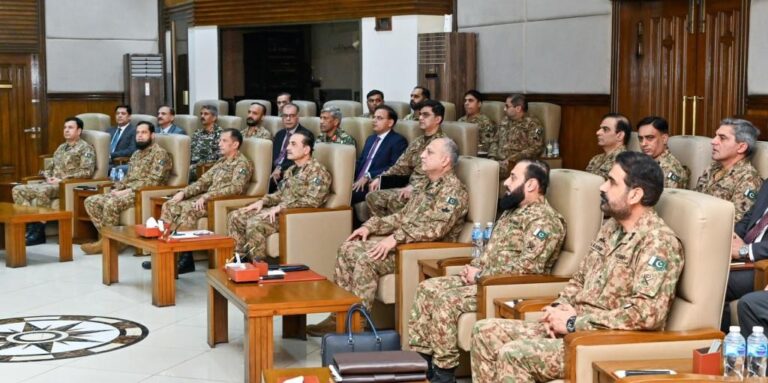
The defence cooperation dimension is the relationship’s most durable economic thread. Erdogan described defence industry collaboration as one of the cornerstones of bilateral economic relations, growing stronger with new projects each year. The two countries are jointly working on several active projects to develop drones, armoured vehicles and naval platforms. Turkish defence cooperation also has strategic value, especially after Pakistan’s defence export profile gained popularity on the international level following the dawn of Marka-e-Haq. Both countries have demonstrated that their equipment performs under live combat conditions. This shared credibility opens up opportunities in third markets that they wouldn’t have been able to enter without it.
The Digital Corridor and What It Requires
The most touted part of the visit was the proposed Pakistan-Turkiye Digital Corridor. The Prime Minister shared the vision with Turkcell’s CEO, covering 5G deployment, network optimization, spectrum management, digital infrastructure, technology transfer, local manufacturing of telecom equipment, and digital skills development. Turkcell expressed keen interest. If implemented, this corridor will serve as a link between Pakistan’s vision of a skilled workforce in the technology sector and Turkiye’s proven expertise in manufacturing telecommunications and providing digital services.
The word “proposed” carries weight here. Over the last decade, Pakistan has signed several digital cooperation agreements with various countries. The distinction in the Turkcell discussion is the specificity of what was requested: not general interest but concrete partnerships in local manufacturing, software development, and capacity building. Whether the SIFC’s one-window facilitation mechanism delivers on that specificity is a different question from whether the meeting took place.
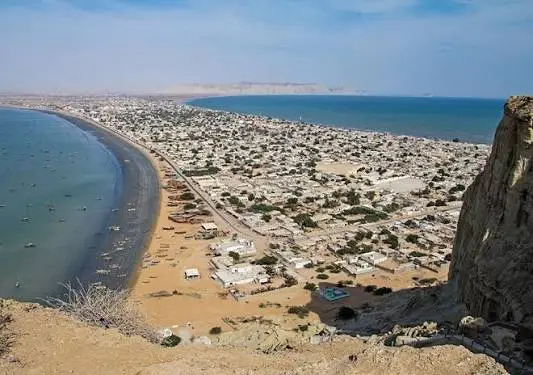
Last week, Pakistan and Turkiye signed three MoUs on power sector cooperation covering institutional collaboration, technical cooperation, and knowledge sharing. The energy track runs alongside the trade and digital tracks. Turkiye’s interest in Pakistan’s offshore and onshore petroleum exploration, mines and minerals, and energy infrastructure was explicitly discussed during the bilateral meeting. Pakistan’s energy geography is more relevant to the regional partners since Iran’s restrictions were lifted and the revival of IP is under consideration. Turkiye is located at the crossroads of energy demand in Europe and energy supply in the Middle East. Pakistan has the IP pipeline as well as Gwadar port and is at the crossroads of the Central Asian and Gulf supply chains. The geometry works.
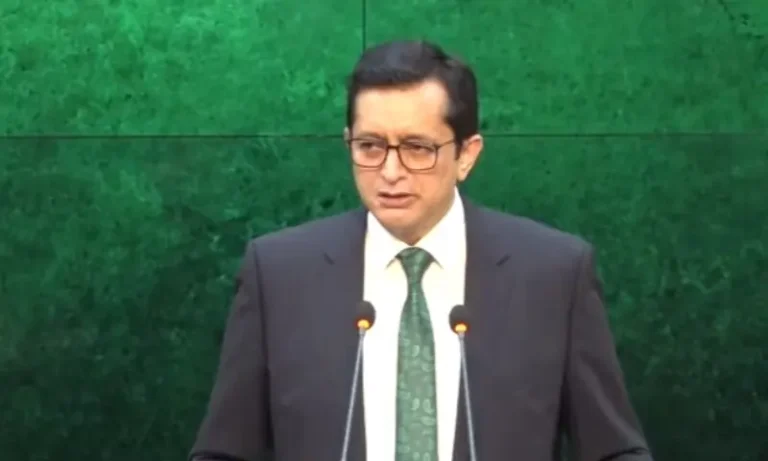
The Prime Minister was direct about what the relationship demands. At the B2B conference, he told Turkish business leaders that the beautiful words from both sides must now be converted into something concrete. The sentence admits that there’s been a practice of high-level meetings leading to low-level follow-through. The next milestone will be the eighth session of the High-Level Strategic Cooperation Council in Turkiye later this year. The Karachi SEZ, the expanded preferential trade agreement, the digital corridor, and the defence co-production pipeline all need to show deliverables before that session. The relationship is strong. What is left to do is to develop the institutional framework that can turn it into economic production.

Our Editorial Desk is the intellectual engine of Digital Debate, responsible for the rigorous research that anchors every conversation. Our team deep-dives into data, checks every source, and consults academic literature to move beyond headlines and identify the questions behind the questions.